


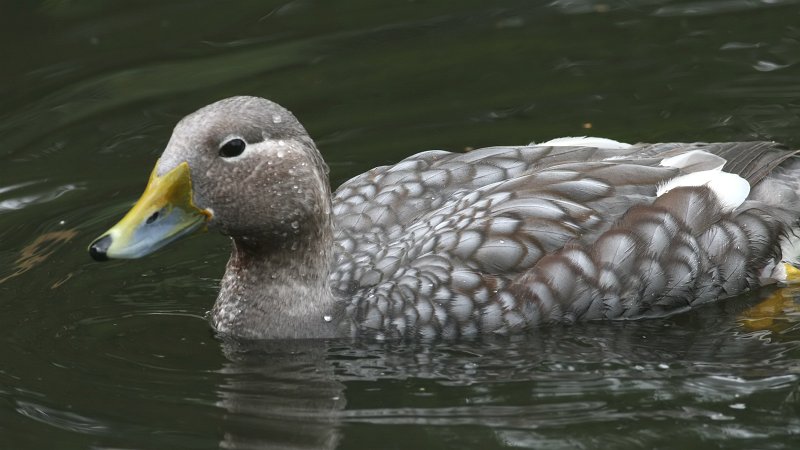
FLYING STEAMER DUCK
Tachyeres patachonicus
DESCRIPTION
Flying Steamer Duck (Tachyeres patachonicus) is a large, flightless duck native to the southern coasts of South America. It is characterized by its stout body, short neck, and distinctive plumage, which is predominantly brown with lighter mottling. Unlike many other duck species, this bird is known for its unique behavior of using its wings to 'steamer' across the water's surface, giving it a distinctive appearance when swimming.
FUN FACTS
- Flying Steamer Ducks are unique among ducks for their ability to use their wings to 'fly' across the water's surface, resembling a steamer boat
- This behavior not only aids in locomotion but also helps them evade predators quickly.| These ducks are also known for their strong social bonds, often seen foraging and swimming together in small groups, which enhances their safety from predators
QUICK INFO
Lifespan10-15 years in the wild
Average Weight1.5-2.5 kg
Average Length60-70 cm
Diet TypeOmnivore
Social Structuregroup — they are often found in small flocks, especially during foraging.
Activity PatternDiurnal
Breeding SeasonSpring (September-November)
- Habitat
- Flying Steamer Ducks inhabit coastal areas, particularly in estuaries, bays, and lagoons. They prefer regions with abundant vegetation and shallow waters for foraging.
- Biomes
- Wetlands, Coastal
- Native Range
- The native range of the Flying Steamer Duck includes the southern parts of South America, particularly in Argentina and Chile.
- Continent
- South America
- Countries
- Argentina, Chile
- Diet
- The diet of the Flying Steamer Duck primarily consists of aquatic plants, invertebrates, and small fish. They forage in shallow waters and along shorelines, using their strong bills to probe for food.
- Diet Type
- Omnivore
- Favorite Food
- aquatic plants, invertebrates
- Social Structure
- group — they are often found in small flocks, especially during foraging.
- Activity Pattern
- Diurnal
- Group Size
- 5-15
- Territorial
- 0

 VU
VU
1.5-2.5 kg
Weight
60-70 cm
Length
- Coloration
- brown with lighter mottling and a darker crown
- Sexual Dimorphism
- males are generally larger than females
- Lifespan
- 10-15 years in the wild
- Offspring per Birth
- 5-10
- Sexual Maturity
- 1-2 years
- Breeding Season
- Spring (September-November)
LC
Least Concern
IUCN Red List Status
- Population Status
- The population of Flying Steamer Ducks is currently stable, but they face habitat loss.
- Wild Population Estimate
- 10,000-20,000
- Population Trend
- Stable
- Endangered
- 0
- Threats
- Main threats include habitat destruction due to coastal development and pollution. Additionally, hunting in some areas poses a risk to their populations.
- Predators
- foxes, large birds of prey, and domestic animals such as dogs
- Defense Mechanisms
- They rely on their ability to swim quickly and dive to escape predators.
- Found in Zoos
- Uncommon