


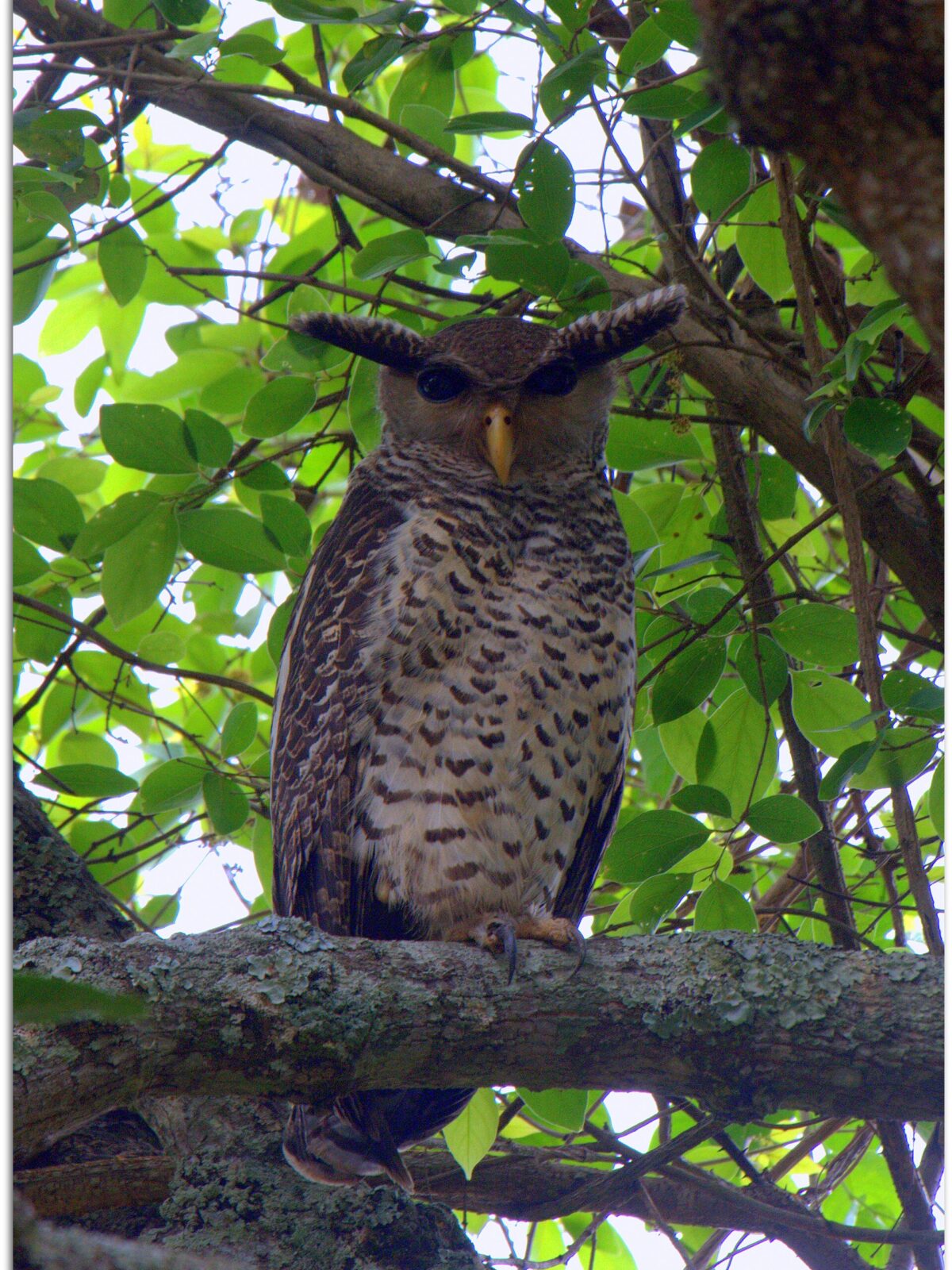
FOREST EAGLE OWL
Bubo nipalensis
DESCRIPTION
Forest Eagle Owl (Bubo nipalensis) is a large and powerful owl known for its striking appearance, featuring prominent ear tufts and a distinctive facial disc. This species exhibits a rich brown plumage with intricate patterns that provide excellent camouflage in its forested habitat. Primarily nocturnal, the Forest Eagle Owl is an adept hunter, utilizing its keen eyesight and acute hearing to locate prey in the dark.
FUN FACTS
- Forest Eagle Owls have a unique ability to rotate their heads up to 270 degrees, allowing them to survey their surroundings without moving their bodies
- | These owls are known for their deep, resonant calls that can be heard over long distances, often echoing through the forests they inhabit
QUICK INFO
Lifespan10-15 years in the wild, up to 20 in captivity
Average Weight1.5-2.5 kg
Average Length50-60 cm
Diet TypeCarnivore
Social Structuresolitary, pairs during breeding season
Activity PatternNocturnal
Breeding SeasonWinter (December-February)
- Habitat
- This owl inhabits dense forests, often favoring areas with a mix of open spaces and thick underbrush. It can also be found in hilly and mountainous regions, where it roosts in tree cavities or on ledges.
- Biomes
- Temperate Forest, Montane Forest
- Native Range
- The Forest Eagle Owl is native to the Himalayan region, extending from northern India to Nepal and Bhutan.
- Continent
- Asia
- Countries
- India, Nepal, Bhutan
- Diet
- The Forest Eagle Owl primarily preys on small mammals, birds, and occasionally reptiles. It is known to hunt both on the ground and in trees, showcasing its versatility as a predator.
- Diet Type
- Carnivore
- Favorite Food
- small mammals, birds
- Social Structure
- solitary, pairs during breeding season
- Activity Pattern
- Nocturnal
- Group Size
- 1-2
- Territorial
- 1
1.5-2.5 kg
Weight
50-60 cm
Length
- Coloration
- rich brown with darker streaks and spots
- Sexual Dimorphism
- females are generally larger than males
- Lifespan
- 10-15 years in the wild, up to 20 in captivity
- Offspring per Birth
- 1-4
- Sexual Maturity
- 2-3 years
- Breeding Season
- Winter (December-February)
LC
Least Concern
IUCN Red List Status
- Population Status
- The population of Forest Eagle Owls is currently stable, but habitat loss poses a potential threat.
- Wild Population Estimate
- unknown
- Population Trend
- Stable
- Endangered
- 0
- Threats
- Main threats include habitat destruction due to deforestation and human encroachment. Additionally, hunting and trapping for the pet trade can impact local populations.
- Predators
- larger birds of prey, humans
- Defense Mechanisms
- Forest Eagle Owls rely on their camouflage and silent flight to avoid detection by predators.
- Found in Zoos
- Uncommon