


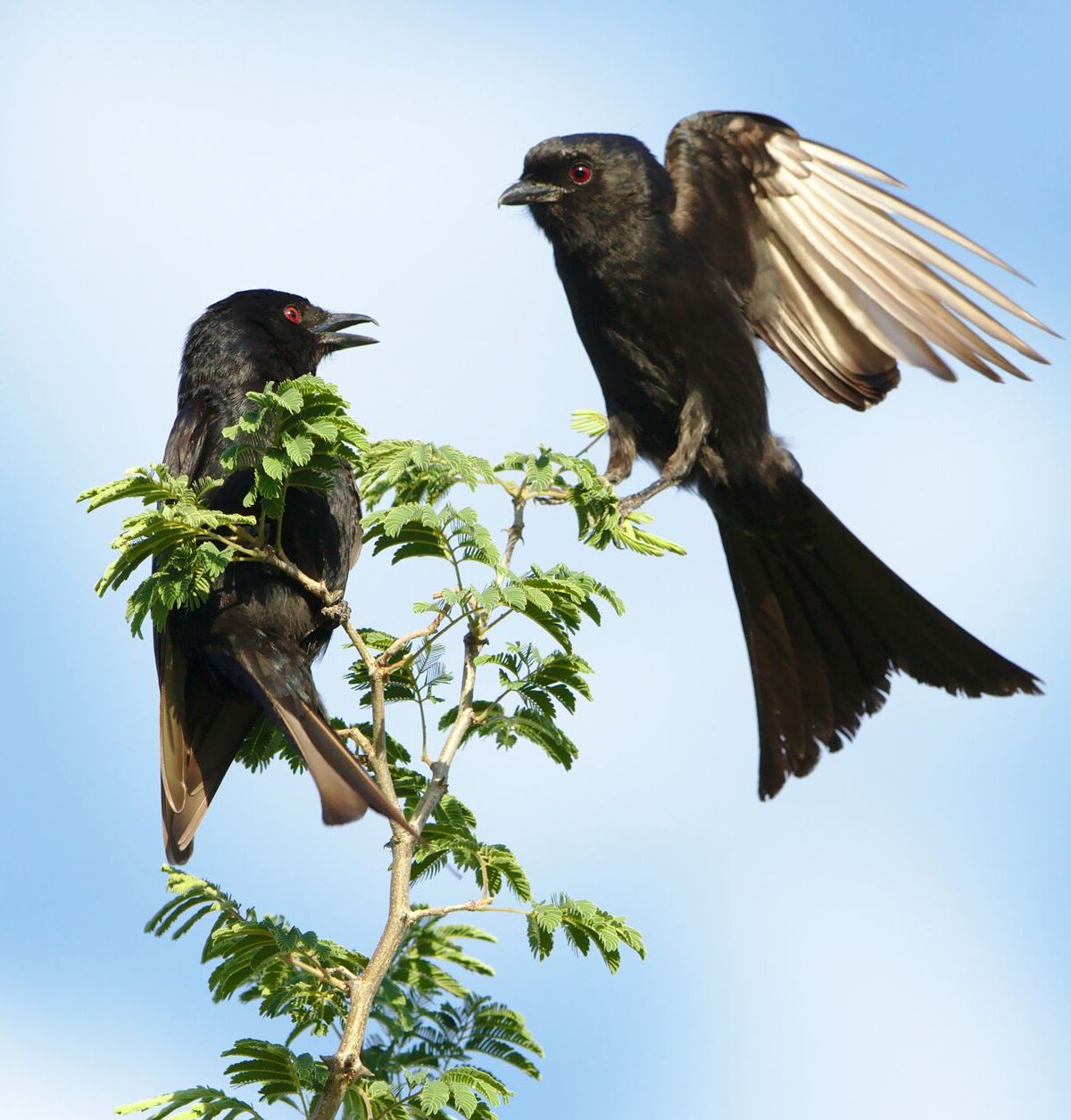
FORK-TAILED DRONGO
Dicrurus adsimilis
DESCRIPTION
Fork-Tailed Drongo (Dicrurus adsimilis) is commonly known as the Black Drongo and is characterized by its glossy black plumage and distinctive forked tail. This bird is highly adaptable and can be found in a variety of habitats, including open woodlands, savannas, and urban areas. Known for its intelligence and mimicry, the Fork-Tailed Drongo often imitates the calls of other birds to deceive them and steal their food.
FUN FACTS
- Fork-Tailed Drongos are remarkable mimics, capable of imitating the calls of various bird species, which they use to trick other birds into abandoning their food
- This clever behavior showcases their intelligence and adaptability in the wild
- | In addition to their mimicry, Fork-Tailed Drongos are known to engage in a behavior called 'kleptoparasitism,' where they steal food from other birds, demonstrating their opportunistic feeding strategies and social interactions in mixed-species flocks
QUICK INFO
Lifespan5-10 years in the wild
Average Weight80-100 g
Average Length28-30 cm
Diet TypeInsectivore
Social StructureThey are often seen in pairs or small groups, displaying social behaviors such as cooperative foraging.
Activity PatternDiurnal
Breeding SeasonVaries by region, typically during the rainy season
- Habitat
- This species thrives in open habitats such as savannas, grasslands, and urban areas, often perching on exposed branches or wires. It prefers areas with scattered trees or shrubs for nesting and foraging.
- Biomes
- Savanna, Grassland, Urban
- Native Range
- The Fork-Tailed Drongo is native to a wide range across Africa and parts of South Asia.
- Continent
- Africa, Asia
- Countries
- South Africa, Kenya, India, Sri Lanka, Bangladesh
- Diet
- The Fork-Tailed Drongo primarily feeds on insects, but it also consumes small fruits and occasionally small vertebrates. Its opportunistic feeding behavior allows it to thrive in diverse environments.
- Diet Type
- Insectivore
- Favorite Food
- insects
- Social Structure
- They are often seen in pairs or small groups, displaying social behaviors such as cooperative foraging.
- Activity Pattern
- Diurnal
- Group Size
- 2-10
- Territorial
- 1
 LC
LC
80-100 g
Weight
28-30 cm
Length
- Coloration
- glossy black with a forked tail
- Lifespan
- 5-10 years in the wild
- Offspring per Birth
- 2-4
- Sexual Maturity
- 1 year
- Breeding Season
- Varies by region, typically during the rainy season
LC
Least Concern
IUCN Red List Status
- Population Status
- The population of Fork-Tailed Drongos is currently stable and widespread.
- Wild Population Estimate
- Not precisely estimated, but considered common in many areas
- Population Trend
- Stable
- Endangered
- 0
- Threats
- The main threats to Fork-Tailed Drongos include habitat loss due to agricultural expansion and urbanization. However, they are generally adaptable and can thrive in modified environments.
- Predators
- Snakes, larger birds of prey, and domestic cats are known predators of Fork-Tailed Drongos.
- Defense Mechanisms
- They use aggressive mobbing behavior to defend their nests and territory from potential threats.
- Found in Zoos
- Uncommon