


FOSA
Cryptoprocta ferox
DESCRIPTION
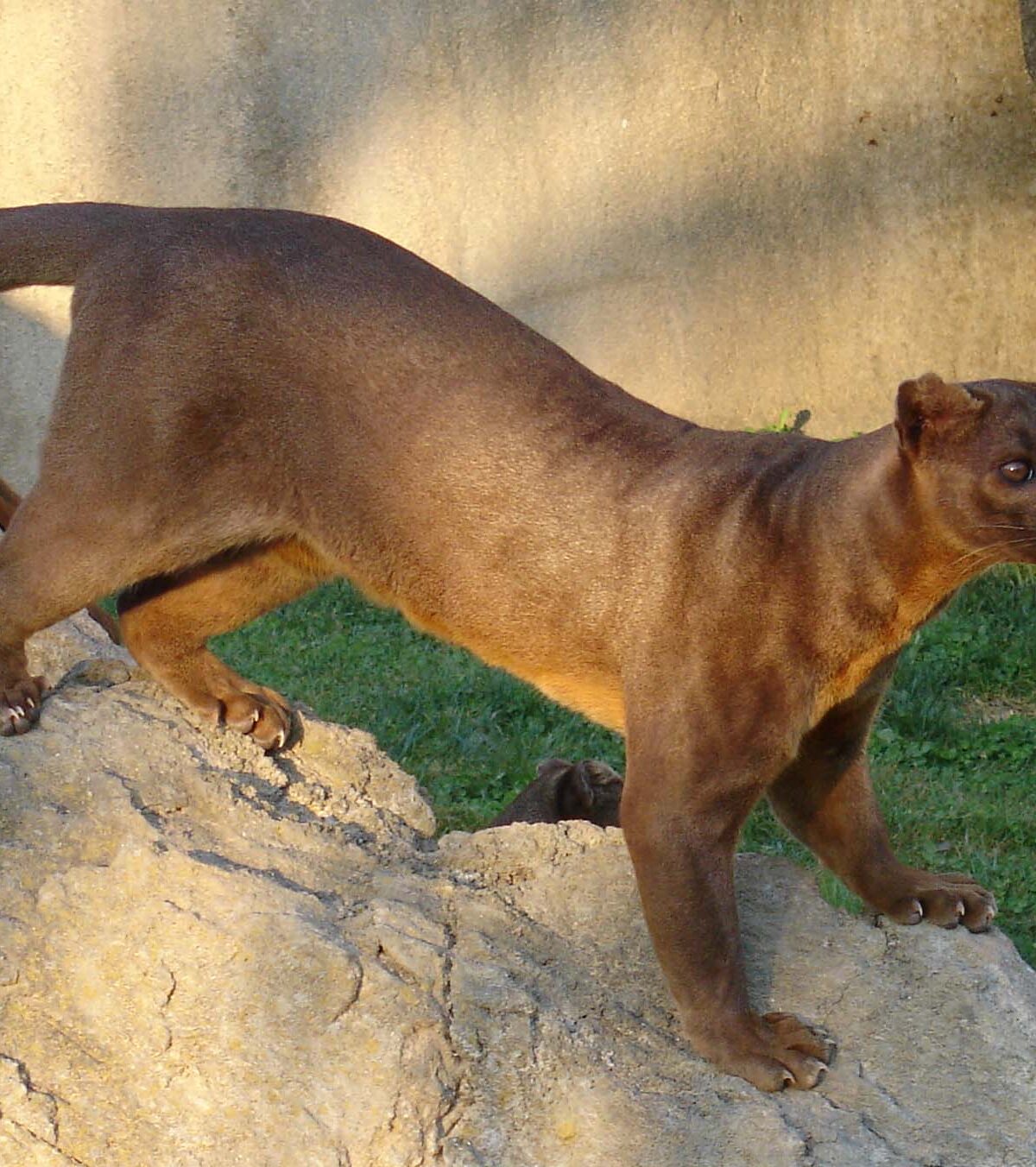
Fosa (Cryptoprocta ferox) is commonly known as the Madagascar Fosa, a unique carnivorous mammal endemic to Madagascar. It resembles a small cougar with a long body, short legs, and a long tail, which aids in balance as it navigates the trees of its forest habitat. Fosas are solitary and territorial, primarily hunting lemurs and other small to medium-sized animals, showcasing a blend of feline and canine characteristics in their behavior and ecology.
FUN FACTS
- Fosas are the largest carnivorous mammals in Madagascar and play a crucial role in the island's ecosystem as top predators
- They have a unique method of hunting, often using their keen sense of smell and excellent climbing abilities to pursue prey in the trees.|Fosas are known for their distinctive vocalizations, which include a range of sounds such as growls, hisses, and even a unique 'scream' that can be heard over long distances
- This vocal communication is particularly important during the mating season when males and females are trying to locate each other
QUICK INFO
Lifespan15-20 years in the wild, up to 25 years in captivi
Average Weight5-10 kg
Average Length70-80 cm
Diet TypeCarnivore
Social Structuresolitary
Activity PatternCathemeral
Breeding SeasonSeptember to December
- Habitat
- Fosas inhabit a variety of forest types, including rainforests, dry deciduous forests, and spiny forests. They are highly adaptable and can also be found in disturbed habitats.
- Biomes
- Tropical Rainforest, Dry Forest
- Native Range
- Fosas are native to Madagascar, where they are found throughout the island.
- Continent
- Africa
- Countries
- Madagascar
- Diet
- Fosas primarily eat lemurs, but they also consume small mammals, birds, and reptiles. Their hunting strategy involves stealth and agility, allowing them to ambush their prey.
- Diet Type
- Carnivore
- Favorite Food
- lemurs
- Social Structure
- solitary
- Activity Pattern
- Cathemeral
- Group Size
- 1
- Territorial
- 1
5-10 kg
Weight
70-80 cm
Length
- Coloration
- Fosas have a short, reddish-brown coat with a lighter underbelly.
- Sexual Dimorphism
- Males are generally larger than females.
- Lifespan
- 15-20 years in the wild, up to 25 years in captivi
- Gestation Period
- 90-95 days
- Offspring per Birth
- 2-4
- Sexual Maturity
- 2-3 years
- Breeding Season
- September to December
VU
Vulnerable
IUCN Red List Status
- Population Status
- The population of Fosas is currently declining due to habitat loss and hunting.
- Wild Population Estimate
- unknown
- Population Trend
- Decreasing
- Endangered
- 1
- Threats
- The main threats to Fosas include habitat destruction due to deforestation and hunting for bushmeat. Additionally, they face competition from domestic animals and loss of prey species.
- Predators
- Humans are the primary threat, but young Fosas may be vulnerable to larger carnivores.
- Defense Mechanisms
- Fosas use their agility and climbing skills to escape predators, and they can also emit loud vocalizations to deter threats.
- Found in Zoos
- Uncommon