


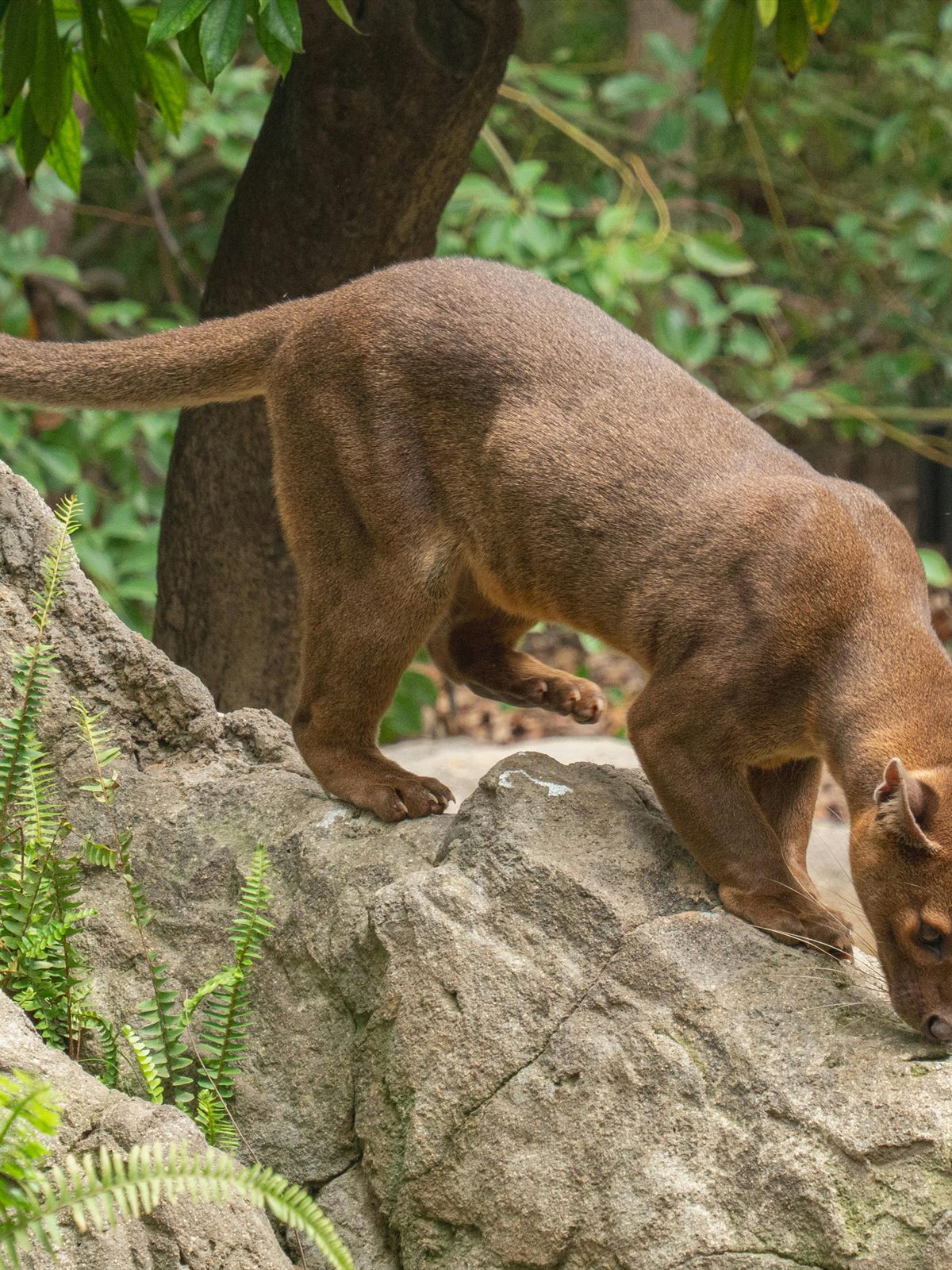
FOSSA
DESCRIPTION
The fossa is a carnivorous mammal native to Madagascar, resembling a small cougar. It is the largest predator on the island and plays a crucial role in its ecosystem.
FUN FACTS
- Fossas are more closely related to mongooses than to cats | They can leap up to 10 feet between trees | Fossas have a unique mating ritual that involves vocalizations and scent marking
QUICK INFO
Lifespan15-20 years in the wild, up to 25 in captivity
Average Weight5-10 kg
Average Length70-80 cm
Diet TypeCarnivore
Social Structuresolitary, typically live alone except during mating season
Activity PatternCathemeral
Breeding SeasonSeptember to December
- Habitat
- Fossas inhabit a variety of forest types, including rainforests and dry deciduous forests. They are arboreal and terrestrial, often climbing trees to hunt.
- Biomes
- Tropical Rainforest, Dry Forest
- Native Range
- Endemic to Madagascar, found throughout the island.
- Continent
- Africa
- Countries
- Madagascar
- Diet
- Fossas primarily eat lemurs, but they also consume birds, reptiles, and small mammals. Their diet is diverse, allowing them to adapt to different environments.
- Diet Type
- Carnivore
- Favorite Food
- lemurs
- Social Structure
- solitary, typically live alone except during mating season
- Activity Pattern
- Cathemeral
- Group Size
- 1
- Territorial
- 1
5-10 kg
Weight
70-80 cm
Length
- Coloration
- short, reddish-brown fur with a lighter underbelly
- Sexual Dimorphism
- males are generally larger than females
- Lifespan
- 15-20 years in the wild, up to 25 in captivity
- Gestation Period
- 90-100 days
- Offspring per Birth
- 2-4
- Sexual Maturity
- 2-3 years
- Breeding Season
- September to December
EN
Endangered
IUCN Red List Status
- Population Status
- The population is currently declining due to habitat loss and hunting.
- Wild Population Estimate
- unknown
- Population Trend
- Decreasing
- Endangered
- 1
- Threats
- Main threats include deforestation and hunting for bushmeat. Habitat destruction due to agriculture also poses a significant risk.
- Conservation Program
- Various local conservation efforts are in place, but more comprehensive programs are needed.
- Defense Mechanisms
- Fossas use agility and speed to escape threats, and they can also emit loud vocalizations to deter predators.
- Found in Zoos
- Uncommon