


FOUR-EYED TURTLE
Sacalia quadriocellata
DESCRIPTION
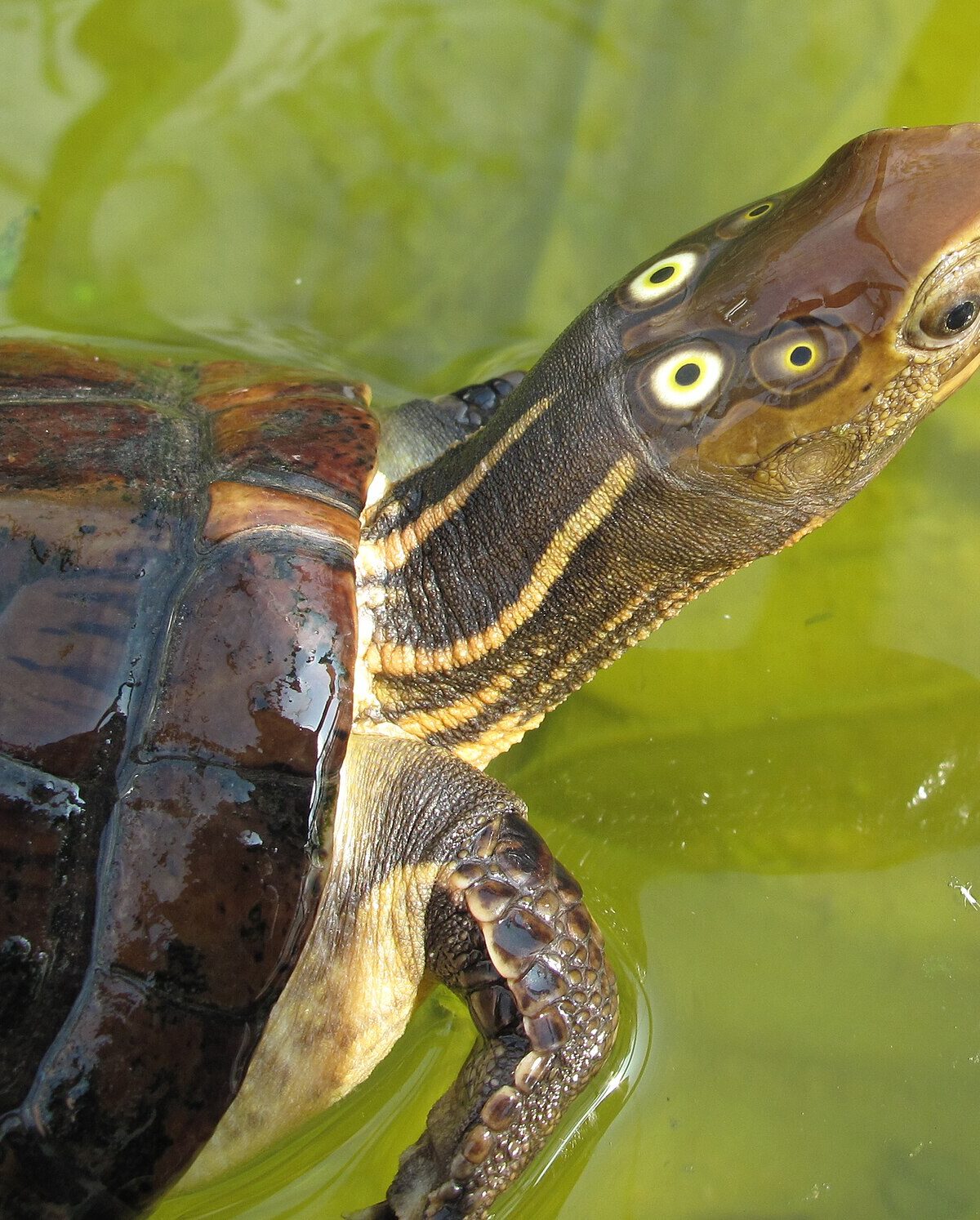
Four-eyed Turtle (Sacalia quadriocellata) is a unique species known for its distinctive eye-like markings on the top of its head, which resemble eyes and may serve as a defense mechanism against predators. This turtle has a flattened, oval-shaped shell that is typically dark brown or olive in color, with yellow or cream-colored patterns. Inhabiting freshwater environments, it is often found basking on logs or rocks, displaying a calm demeanor when not disturbed.
FUN FACTS
- The Four-eyed Turtle is named for its unique markings that resemble eyes, which can confuse potential predators
- This adaptation is thought to help them avoid being eaten by larger animals
- | Unlike many other turtle species, Four-eyed Turtles are known to be quite social, often basking together in small groups, which is a behavior not commonly observed in other turtle species
QUICK INFO
Lifespan20-30 years in captivity
Average Weight1-2 kg
Average Length20-30 cm
Diet TypeHerbivore
Social Structuresolitary or in small groups, often seen basking together
Activity PatternDiurnal
Breeding SeasonSpring to early summer
- Habitat
- These turtles thrive in freshwater habitats such as rivers, ponds, and swamps, often preferring areas with abundant vegetation. They require both aquatic and terrestrial environments for foraging and basking.
- Biomes
- Freshwater, Wetlands
- Native Range
- The Four-eyed Turtle is native to Southeast Asia, particularly found in countries like Vietnam, Thailand, and Laos.
- Continent
- Asia
- Countries
- Vietnam, Thailand, Laos
- Diet
- Four-eyed Turtles are primarily herbivorous, feeding on a variety of aquatic plants, fruits, and vegetables. They may occasionally consume small invertebrates.
- Diet Type
- Herbivore
- Favorite Food
- aquatic plants, fruits
- Social Structure
- solitary or in small groups, often seen basking together
- Activity Pattern
- Diurnal
- Group Size
- 1-5
- Territorial
- 0
 VU
VU

1-2 kg
Weight
20-30 cm
Length
- Coloration
- dark brown or olive shell with yellow or cream markings
- Sexual Dimorphism
- males are generally smaller than females and have a more pronounced concave plastron
- Lifespan
- 20-30 years in captivity
- Offspring per Birth
- 3-10
- Sexual Maturity
- 4-5 years
- Breeding Season
- Spring to early summer
EN
Endangered
IUCN Red List Status
- Population Status
- The population of Four-eyed Turtles is currently declining due to habitat loss and illegal trade.
- Wild Population Estimate
- unknown
- Population Trend
- Decreasing
- Endangered
- 1
- Threats
- Main threats include habitat destruction due to urbanization and agriculture, as well as poaching for the pet trade. These factors have significantly impacted their populations in the wild.
- Predators
- large birds, mammals, and other reptiles may prey on juvenile Four-eyed Turtles.
- Defense Mechanisms
- They can retract into their shells for protection and rely on their camouflage to avoid detection.
- Found in Zoos
- Uncommon