


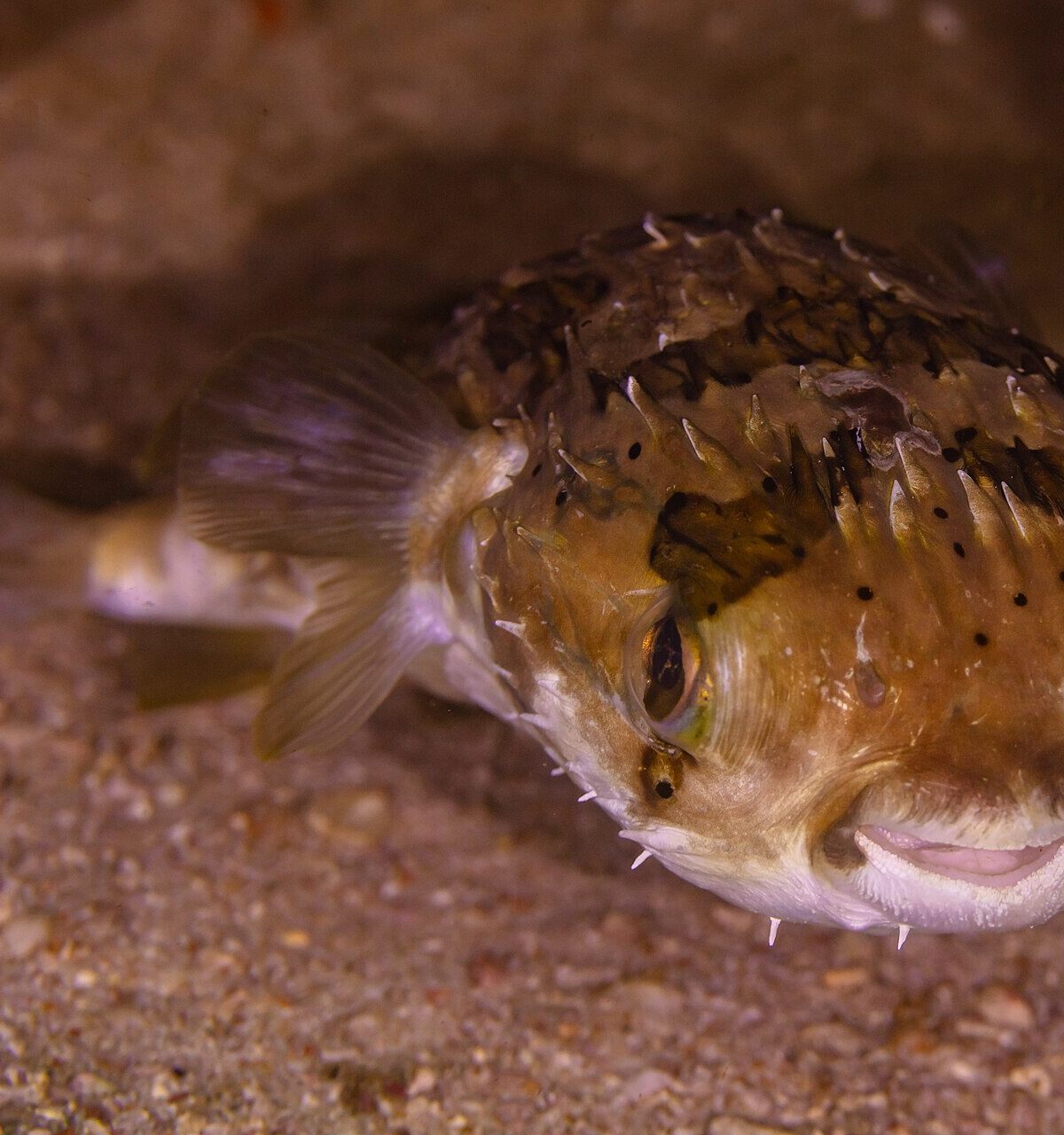
FRECKLED PORCUPINEFISH
DESCRIPTION
Freckled Porcupinefish is a unique species known for its distinctive appearance, characterized by a spiny exterior and a rounded body that can inflate when threatened. This fish exhibits a mottled pattern of brown and yellow spots, which helps it blend into its coral reef habitat. Behaviorally, it is generally solitary and can often be found resting on the ocean floor or swimming slowly among the reefs, where it plays a crucial role in the ecosystem by controlling algae growth.
FUN FACTS
- Freckled Porcupinefish can inflate its body by swallowing water or air, which not only makes it larger but also exposes its spines, deterring potential predators
- Additionally, this species has a unique ability to produce a toxin called tetrodotoxin, which makes it unpalatable to many predators, adding another layer of protection in the wild
QUICK INFO
Lifespan10-15 years in the wild
Average Weight1-2 kg
Average Length30-50 cm
Diet TypeCarnivore
Social Structuresolitary, occasionally found in pairs during breeding
Activity PatternDiurnal
- Habitat
- This species inhabits shallow coastal waters, particularly around coral reefs and rocky substrates. They prefer areas with plenty of hiding spots and abundant food sources.
- Biomes
- Coral Reef, Coastal
- Native Range
- Freckled Porcupinefish is found in the warm waters of the Indo-Pacific region, including the Red Sea and extending to the central Pacific.
- Continent
- Asia, Australia, Africa
- Countries
- Egypt, Indonesia, Australia, Philippines, Maldives
- Diet
- Freckled Porcupinefish primarily feeds on hard-shelled invertebrates such as sea urchins, crabs, and mollusks. Its strong beak-like teeth allow it to crack open these tough exoskeletons.
- Diet Type
- Carnivore
- Favorite Food
- sea urchins, crabs, mollusks
- Social Structure
- solitary, occasionally found in pairs during breeding
- Activity Pattern
- Diurnal
- Group Size
- 1-2
- Territorial
- 0
 LC
LC
1-2 kg
Weight
30-50 cm
Length
- Coloration
- mottled brown and yellow spots
- Sexual Dimorphism
- males and females are similar in appearance
- Lifespan
- 10-15 years in the wild
- Sexual Maturity
- 2-3 years
LC
Least Concern
IUCN Red List Status
- Population Status
- The population of Freckled Porcupinefish is currently stable, but habitat degradation poses potential risks.
- Wild Population Estimate
- unknown
- Population Trend
- Stable
- Endangered
- 0
- Threats
- Main threats include habitat loss due to coral reef degradation and pollution. Overfishing can also impact their populations indirectly by reducing their food sources.
- Predators
- larger fish, sharks, and some marine mammals
- Defense Mechanisms
- Freckled Porcupinefish can inflate its body to deter predators, making it more difficult to swallow.
- Found in Zoos
- Uncommon