


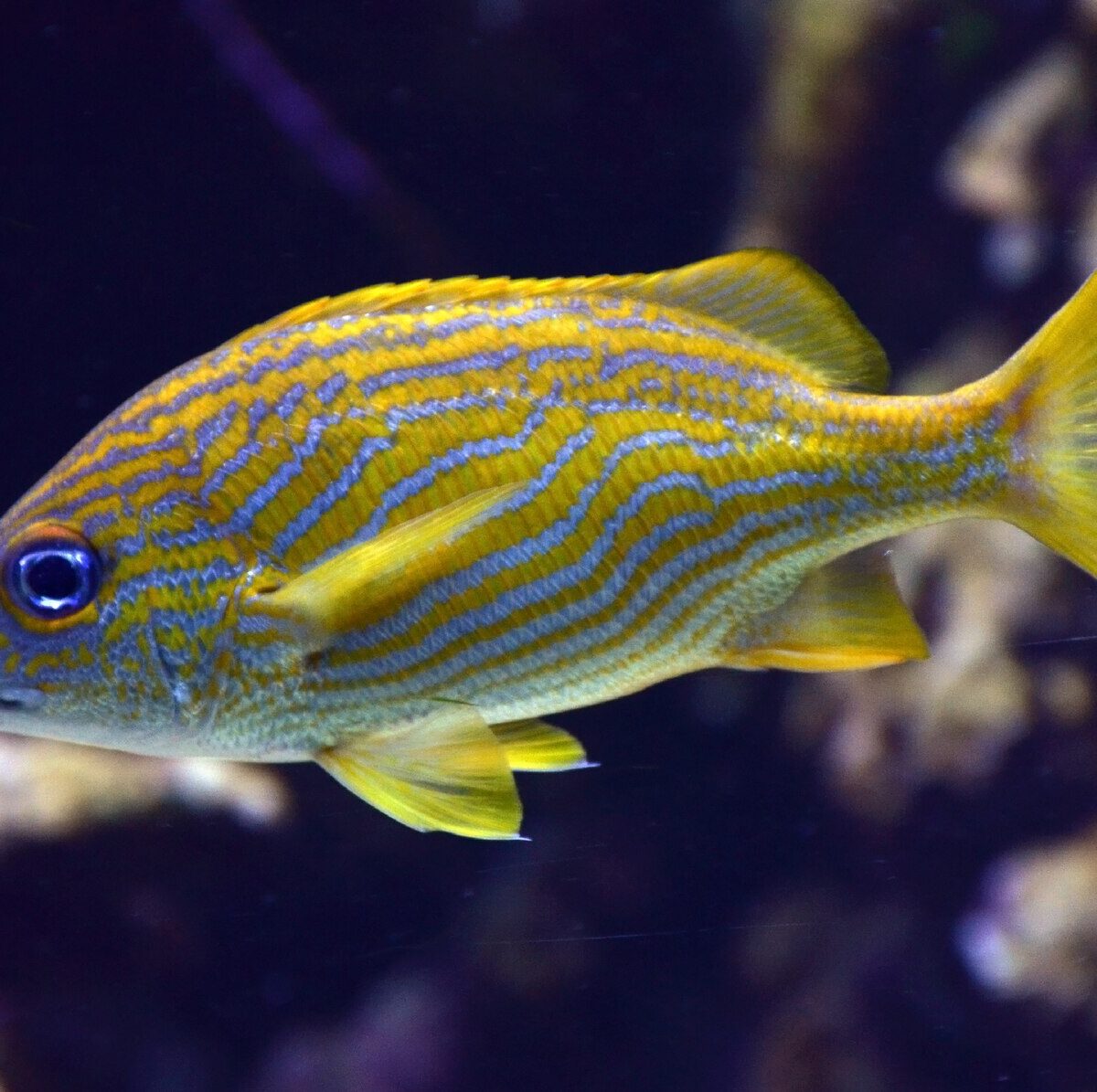
FRENCH GRUNT
DESCRIPTION
Also called Grunts, French Grunt is a species of fish known for its vibrant coloration and distinctive grunt-like sounds produced by their swim bladders. They typically exhibit a yellowish body with blue or greenish stripes, making them visually striking in their natural habitat. French Grunts are social fish often found in schools, displaying a range of behaviors from foraging to mating rituals.
FUN FACTS
- French Grunts are known for their unique ability to produce sounds by contracting their swim bladders, which is a form of communication among the species
- This grunting sound can be heard during mating rituals and when they are startled, making them quite vocal compared to other fish species
- | They play an important role in their ecosystem by helping to control algae growth on coral reefs, contributing to the overall health of the reef environment
- Their presence indicates a healthy reef system, as they thrive in areas with abundant food and shelter
QUICK INFO
Lifespan5-10 years in the wild
Average Weight0.5-1 kg
Average Length20-30 cm
Diet TypeOmnivore
Social Structuregroup — they are typically found in schools, which provide safety in numbers.
Activity PatternDiurnal
Breeding SeasonSpring to early summer
- Habitat
- French Grunts inhabit coral reefs and rocky substrates, often found in shallow waters. They prefer areas with plenty of cover and structure to hide from predators.
- Biomes
- Coral Reef, Coastal
- Native Range
- The native range of French Grunt extends throughout the western Atlantic Ocean, from Florida to Brazil, including the Caribbean Sea.
- Continent
- North America, South America
- Countries
- United States, Bahamas, Cuba, Jamaica, Mexico, Brazil
- Diet
- French Grunts primarily feed on small invertebrates and algae, foraging in the reef environment. Their diet is supplemented by small crustaceans and other organic matter found in their habitat.
- Diet Type
- Omnivore
- Favorite Food
- small invertebrates, algae
- Social Structure
- group — they are typically found in schools, which provide safety in numbers.
- Activity Pattern
- Diurnal
- Group Size
- 10-100
- Territorial
- 0

0.5-1 kg
Weight
20-30 cm
Length
- Coloration
- yellowish body with blue or greenish stripes
- Lifespan
- 5-10 years in the wild
- Offspring per Birth
- up to 100,000 eggs
- Sexual Maturity
- 1-2 years
- Breeding Season
- Spring to early summer
LC
Least Concern
IUCN Red List Status
- Population Status
- The population of French Grunt is currently stable, with no significant declines reported.
- Wild Population Estimate
- Unknown
- Population Trend
- Stable
- Endangered
- 0
- Threats
- Main threats to French Grunt include habitat degradation due to coral reef destruction and overfishing. Pollution and climate change also pose risks to their populations and habitats.
- Predators
- Larger fish species, such as groupers and barracudas, as well as sharks, are known predators of French Grunt.
- Defense Mechanisms
- They often rely on their schooling behavior to evade predators, using the confusion of a large group to escape.
- Compatible Animals
- other reef fish, such as parrotfish and damselfish
- Found in Zoos
- Uncommon