


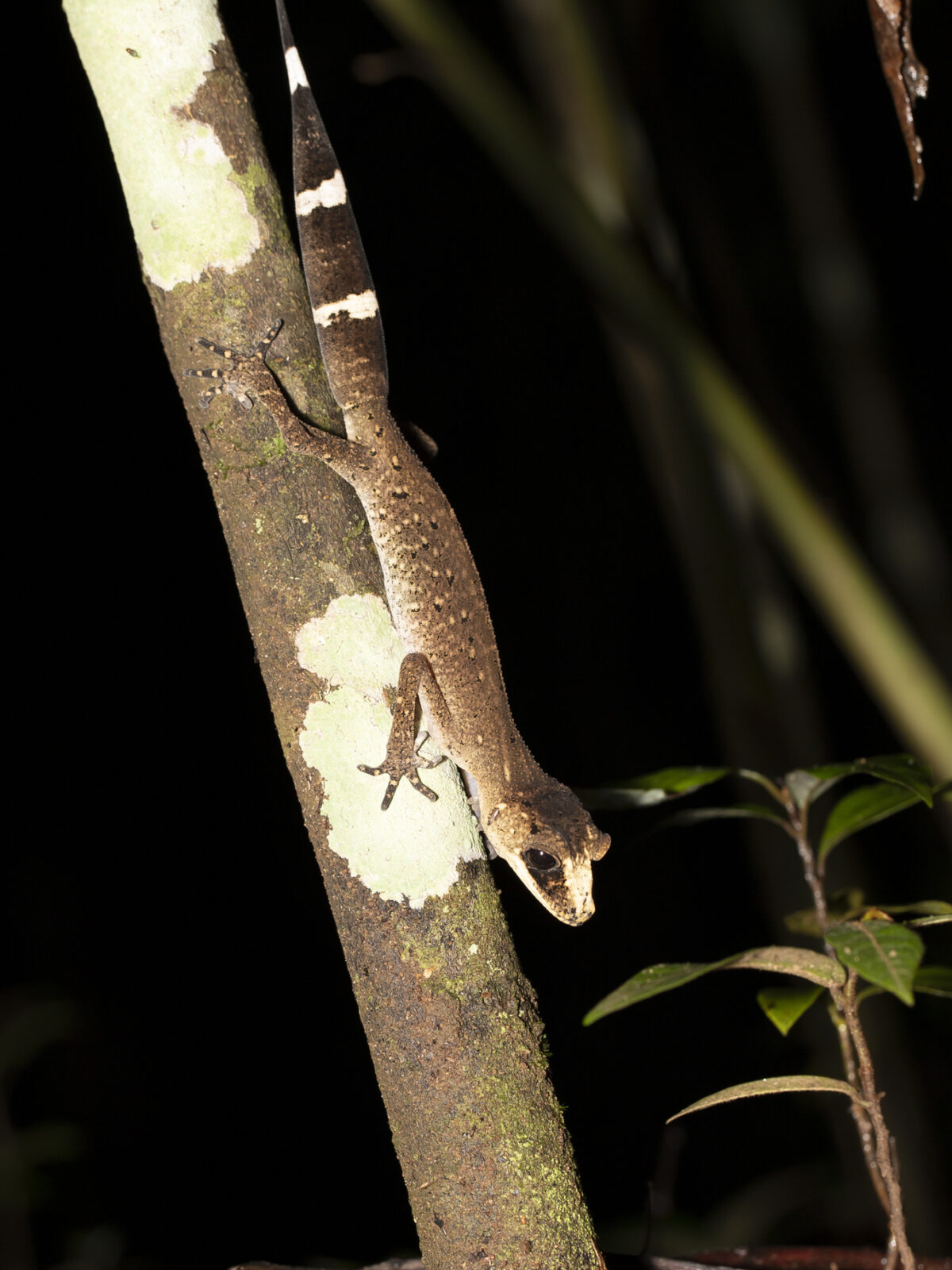
FRILLED GECKO
Carphodactylus laevis
DESCRIPTION
Frilled Gecko (Carphodactylus laevis) is a unique species known for its distinctive frill of skin around its neck, which it can expand when threatened. This gecko exhibits a range of colors, typically brown or gray with patterns that help it blend into its arboreal habitat. It is primarily nocturnal, spending its nights foraging for food and hiding from predators in the trees of its native environment.
FUN FACTS
- Frilled Geckos are excellent climbers and can often be seen hanging upside down on branches
- Their frill not only serves as a defense mechanism but also plays a role in communication during mating displays.| These geckos have a unique ability to drop their tails when threatened, allowing them to escape while the predator is distracted by the detached tail
QUICK INFO
Lifespan5-10 years in the wild, up to 15 years in captivit
Average Length15-20 cm
Diet TypeInsectivore
Social Structuresolitary
Activity PatternNocturnal
Breeding SeasonSpring to early summer
- Habitat
- Frilled Geckos inhabit tropical and subtropical forests, often found in trees and shrubs where they can easily camouflage. They prefer humid environments that provide ample cover and food sources.
- Biomes
- Tropical Rainforest, Subtropical Forest
- Native Range
- This species is native to the forests of New Guinea and surrounding islands.
- Continent
- Oceania
- Countries
- Papua New Guinea, Indonesia
- Diet
- Frilled Geckos primarily feed on insects and other small invertebrates, using their quick reflexes to catch prey. They may also consume small fruits occasionally.
- Diet Type
- Insectivore
- Favorite Food
- insects
- Social Structure
- solitary
- Activity Pattern
- Nocturnal
- Group Size
- 1
- Territorial
- 1
 VU
VU
 LC
LC
15-20 cm
Length
- Coloration
- brown or gray with patterns for camouflage
- Sexual Dimorphism
- males tend to be slightly larger than females
- Lifespan
- 5-10 years in the wild, up to 15 years in captivit
- Offspring per Birth
- 2-3
- Sexual Maturity
- 1-2 years
- Breeding Season
- Spring to early summer
LC
Least Concern
IUCN Red List Status
- Population Status
- The population status is currently stable, but habitat loss poses a potential threat.
- Wild Population Estimate
- unknown
- Population Trend
- Stable
- Endangered
- 0
- Threats
- Main threats include habitat destruction due to logging and land conversion for agriculture. Additionally, climate change may impact their forest habitats.
- Predators
- birds of prey, snakes, and larger reptiles
- Defense Mechanisms
- Frilled Geckos can expand the frill of skin around their necks to appear larger and more intimidating to potential predators.
- Found in Zoos
- Uncommon