


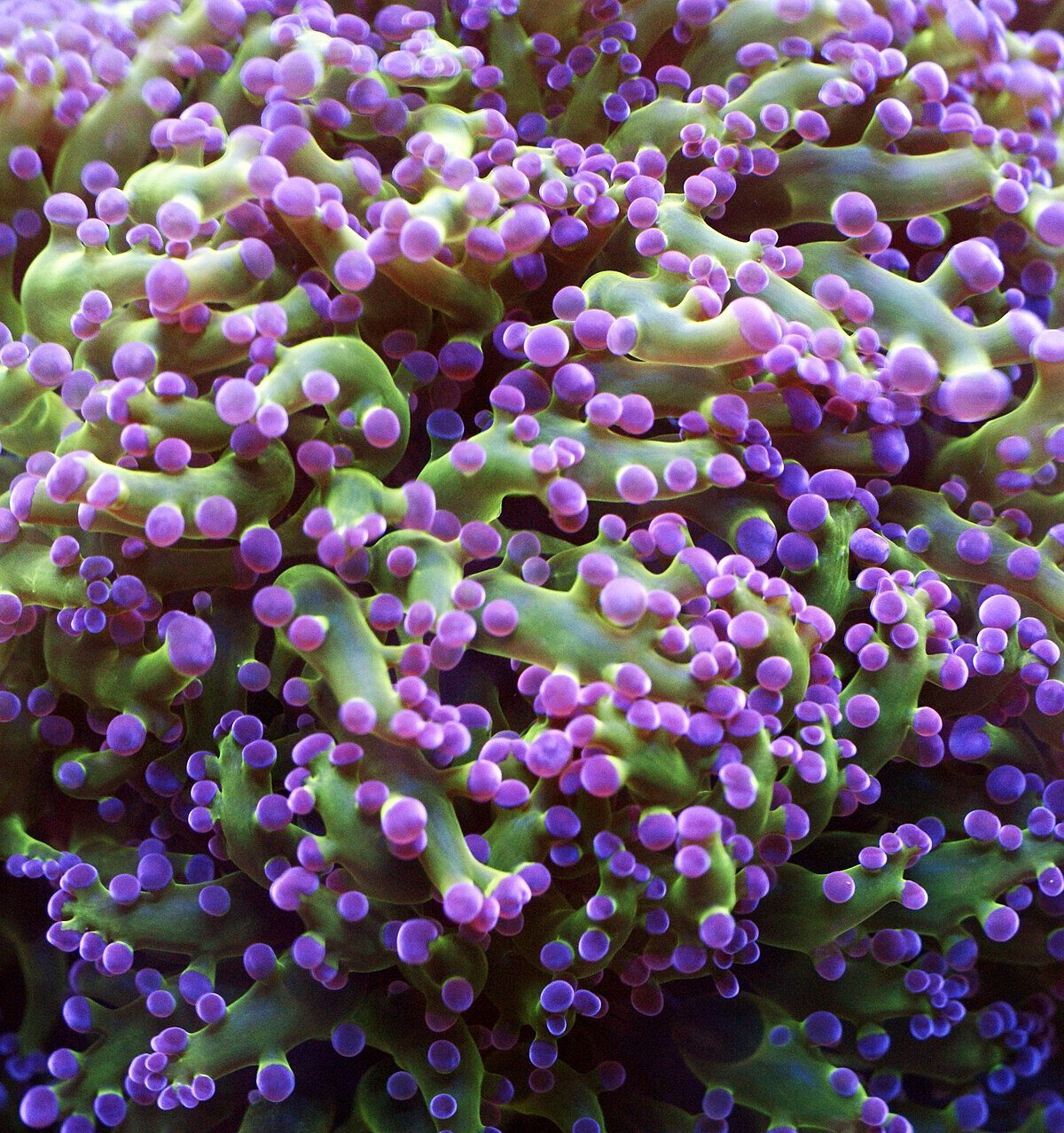
FROGSPAWN CORAL
DESCRIPTION
Frogspawn Coral is a type of stony coral known for its distinctive appearance, resembling clusters of frogspawn or jelly-like blobs. It typically exhibits a range of colors, including greens, browns, and purples, and has a unique texture that adds to its visual appeal. This coral species plays a crucial role in reef ecosystems, providing habitat and shelter for various marine organisms.
FUN FACTS
- Frogspawn Coral is known for its unique reproductive strategy, which involves both sexual and asexual reproduction
- During spawning events, large numbers of corals release eggs and sperm into the water simultaneously, leading to mass fertilization
- | This coral species is also a vital part of the marine ecosystem, providing shelter and food for numerous marine species, including small fish and invertebrates
- Its health is an indicator of the overall health of the reef ecosystem
QUICK INFO
Lifespanup to 50 years in the wild
Diet TypeOmnivore
Social Structuregroup — often found in colonies that can cover large areas of the reef.
Activity PatternNocturnal
- Habitat
- Frogspawn Coral is typically found in shallow, warm waters of tropical and subtropical regions. It thrives in reef environments, often growing on rocky substrates or in areas with moderate water flow.
- Biomes
- Coral Reef
- Native Range
- Frogspawn Coral is native to the Indo-Pacific region, including areas around the Great Barrier Reef and various islands in the Pacific Ocean.
- Continent
- Australia, Asia
- Countries
- Australia, Indonesia, Philippines, Papua New Guinea
- Diet
- Frogspawn Coral primarily feeds on zooplankton and phytoplankton, capturing these tiny organisms with its tentacles. It also derives energy through photosynthesis from the symbiotic algae living within its tissues.
- Diet Type
- Omnivore
- Favorite Food
- zooplankton, phytoplankton
- Social Structure
- group — often found in colonies that can cover large areas of the reef.
- Activity Pattern
- Nocturnal
- Group Size
- varies widely, can be hundreds of polyps in a colo
- Territorial
- 0

- Coloration
- varies from green to brown to purple, often with a textured surface
- Lifespan
- up to 50 years in the wild
- Sexual Maturity
- 3-5 years
LC
Least Concern
IUCN Red List Status
- Population Status
- Frogspawn Coral populations are generally stable, but they are affected by environmental changes and human activities.
- Population Trend
- Stable
- Endangered
- 0
- Threats
- Main threats include coral bleaching due to climate change, pollution, and habitat destruction from coastal development. These factors can significantly impact the health and survival of coral reefs.
- Predators
- crown-of-thorns starfish, certain fish species, and sea turtles.
- Defense Mechanisms
- Frogspawn Coral can retract its tentacles to protect itself from predators and can also produce toxic substances to deter herbivores.
- Compatible Animals
- clownfish, various reef fish species, shrimp
- Found in Zoos
- Uncommon