


FRUIT BAT
DESCRIPTION
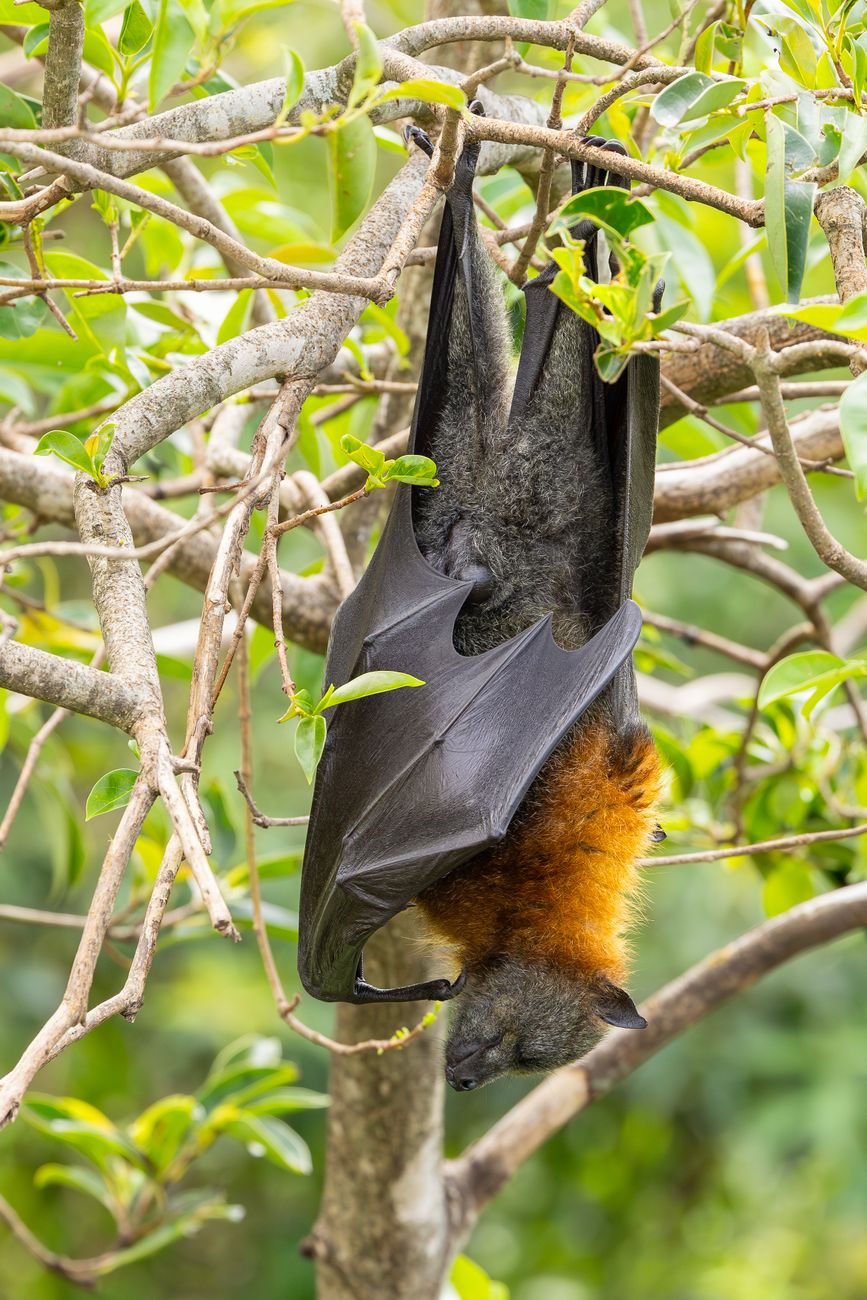
Fruit Bat, also known as Flying Fox, is a large bat species characterized by its long wingspan and fox-like face. They have a robust body covered in soft fur, which can vary in color from brown to black, and some species have distinctive markings. These bats are primarily nocturnal and play a crucial role in their ecosystems as pollinators and seed dispersers, helping to maintain the health of tropical forests.
FUN FACTS
- Fruit Bats have a wingspan that can reach up to 1.5 meters, making them one of the largest bat species in the world
- They are also known for their excellent sense of smell, which they use to locate ripe fruits from great distances.| These bats play a vital role in their ecosystems, as they are key pollinators for many fruit-bearing plants and trees
- Their feeding habits help to maintain the biodiversity of their habitats, making them essential for the health of tropical and subtropical forests
QUICK INFO
Lifespan15-30 years in the wild, up to 40 in captivity
Average Weight0.5-1.2 kg
Average Length0.5-1.5 m
Diet TypeHerbivore
Social Structuregroup — they roost in large colonies, which can consist of hundreds to thousands of individuals.
Activity PatternNocturnal
Breeding SeasonVaries by region, often during the wet season
- Habitat
- Fruit Bats inhabit tropical and subtropical forests, often roosting in large colonies in trees. They prefer areas with abundant food sources and suitable roosting sites.
- Biomes
- Tropical Rainforest, Subtropical Forest
- Native Range
- Fruit Bats are found in various regions across Africa, Asia, Australia, and the Pacific Islands.
- Continent
- Africa, Asia, Australia, Oceania
- Countries
- Australia, Indonesia, Philippines, Madagascar, India
- Diet
- Fruit Bats primarily consume fruits, nectar, and flowers, which they locate using their keen sense of smell. They are essential for the pollination of many plants and the dispersal of seeds.
- Diet Type
- Herbivore
- Favorite Food
- Fruits, nectar
- Social Structure
- group — they roost in large colonies, which can consist of hundreds to thousands of individuals.
- Activity Pattern
- Nocturnal
- Group Size
- 100-1,000
- Territorial
- 0
 VU
VU
 LC
LC

0.5-1.2 kg
Weight
0.5-1.5 m
Length
- Coloration
- Fur color ranges from brown to black, often with lighter underparts.
- Sexual Dimorphism
- Males are generally larger than females.
- Lifespan
- 15-30 years in the wild, up to 40 in captivity
- Gestation Period
- 150 days
- Offspring per Birth
- 1
- Sexual Maturity
- 1-2 years
- Breeding Season
- Varies by region, often during the wet season
VU
Vulnerable
IUCN Red List Status
- Population Status
- Some species of Fruit Bats are abundant, while others are threatened due to habitat loss.
- Wild Population Estimate
- Unknown for many species, but some populations are in decline.
- Population Trend
- Decreasing
- Endangered
- 1
- Threats
- Main threats include habitat destruction, hunting, and climate change. These factors have led to significant declines in certain populations.
- Predators
- Birds of prey, snakes, and large mammals such as cats and dogs.
- Defense Mechanisms
- They rely on their ability to fly and roost high in trees to avoid predators.
- Found in Zoos
- Common