


GALAH
Eolophus roseicapilla
DESCRIPTION
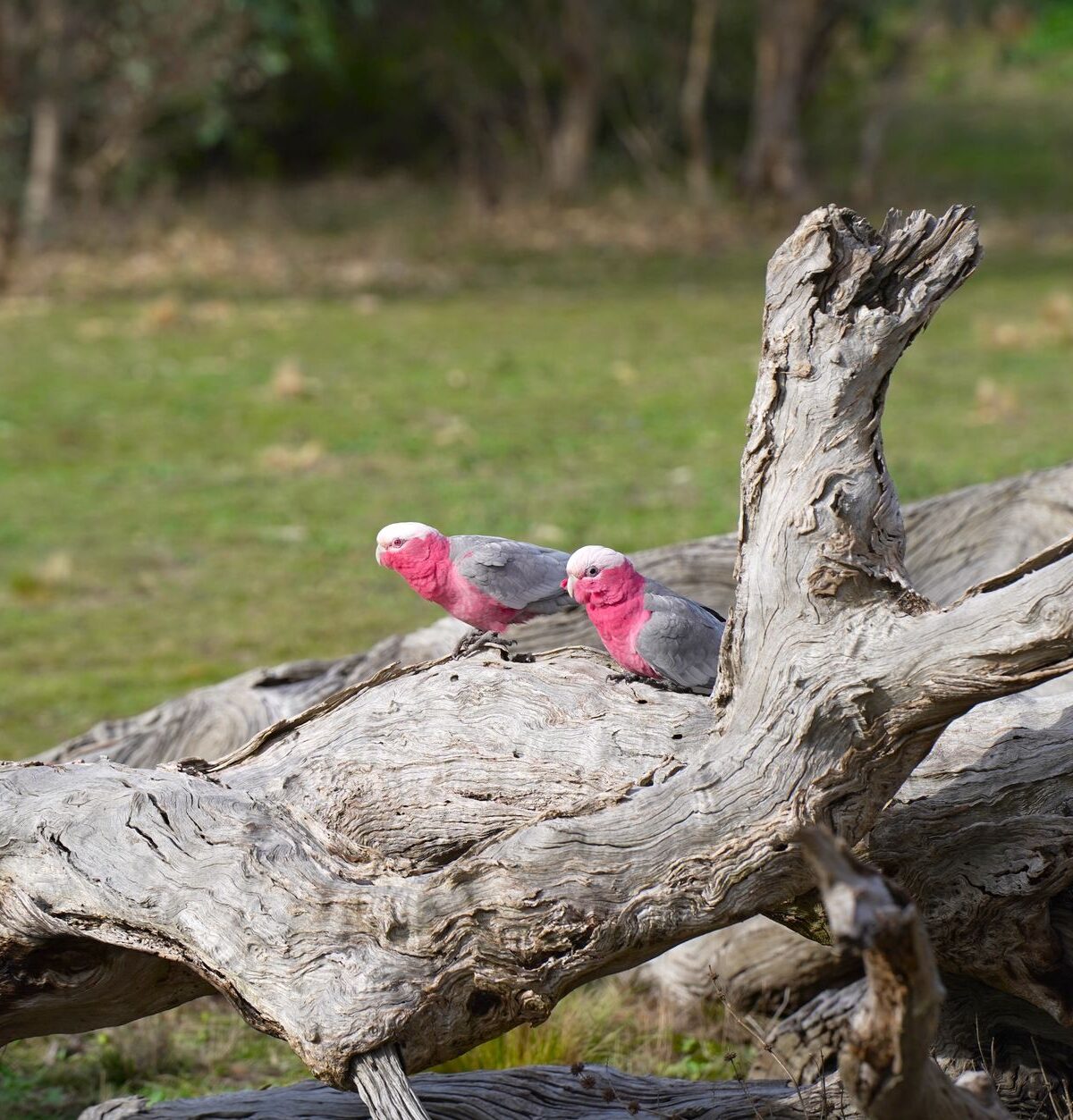
Galah (Eolophus roseicapilla) is commonly known as the Rose-breasted Cockatoo due to its distinctive pink and grey plumage. This medium-sized parrot is characterized by its striking crest and sociable nature, often seen in large flocks. Galahs are highly intelligent and playful, exhibiting a range of vocalizations and behaviors that reflect their adaptability to various environments.
FUN FACTS
- Galahs are known for their playful and social nature, often engaging in acrobatic displays and vocal mimicry
- They have a unique ability to adapt to urban environments, frequently seen in parks and gardens, where they forage for food.|In Australia, Galahs are often considered a symbol of the outback and are featured in various cultural references, including songs and literature
- Their striking appearance and lively behavior make them a favorite among birdwatchers and nature enthusiasts
QUICK INFO
Lifespan15-20 years in the wild, up to 40 years in captivi
Average Weight250-350 g
Average Length32-37 cm
Diet TypeHerbivore
Social StructureGalahs are typically found in groups, often seen in flocks of 10-100 individuals. They exhibit strong social behaviors and communication within their groups.
Activity PatternDiurnal
Breeding SeasonSpring to early summer (August to January)
- Habitat
- Galahs inhabit open woodlands, grasslands, and urban areas, often near water sources. They are highly adaptable and can thrive in both natural and modified environments.
- Biomes
- Grassland, Savanna, Woodland
- Native Range
- Galahs are native to Australia, with a range that extends to parts of New Guinea.
- Continent
- Australia
- Countries
- Australia, New Guinea
- Diet
- Galahs primarily feed on seeds, fruits, and nuts, often foraging on the ground. They are known to enjoy a variety of plant materials, making them opportunistic feeders.
- Diet Type
- Herbivore
- Favorite Food
- seeds, fruits, nuts
- Social Structure
- Galahs are typically found in groups, often seen in flocks of 10-100 individuals. They exhibit strong social behaviors and communication within their groups.
- Activity Pattern
- Diurnal
- Group Size
- 10-100
- Territorial
- 0
 VU
VU
 CR
CR
250-350 g
Weight
32-37 cm
Length
- Coloration
- pink and grey plumage with a distinctive crest
- Sexual Dimorphism
- Males have darker eye coloration compared to females, which have lighter eyes.
- Lifespan
- 15-20 years in the wild, up to 40 years in captivi
- Offspring per Birth
- 1-3
- Sexual Maturity
- 2-3 years
- Breeding Season
- Spring to early summer (August to January)
LC
Least Concern
IUCN Red List Status
- Population Status
- The Galah population is currently stable and widespread across its native range.
- Wild Population Estimate
- 1,000,000+
- Population Trend
- Stable
- Endangered
- 0
- Threats
- Galahs face threats from habitat loss and degradation, particularly due to urban development and agriculture. However, they are generally resilient and adaptable to changing environments.
- Predators
- Birds of prey, such as eagles and hawks, as well as feral cats and foxes pose threats to Galah populations.
- Defense Mechanisms
- Galahs use their vocalizations and flocking behavior to warn each other of potential threats.
- Compatible Animals
- Other cockatoos, parrots, and compatible bird species
- Found in Zoos
- Common