


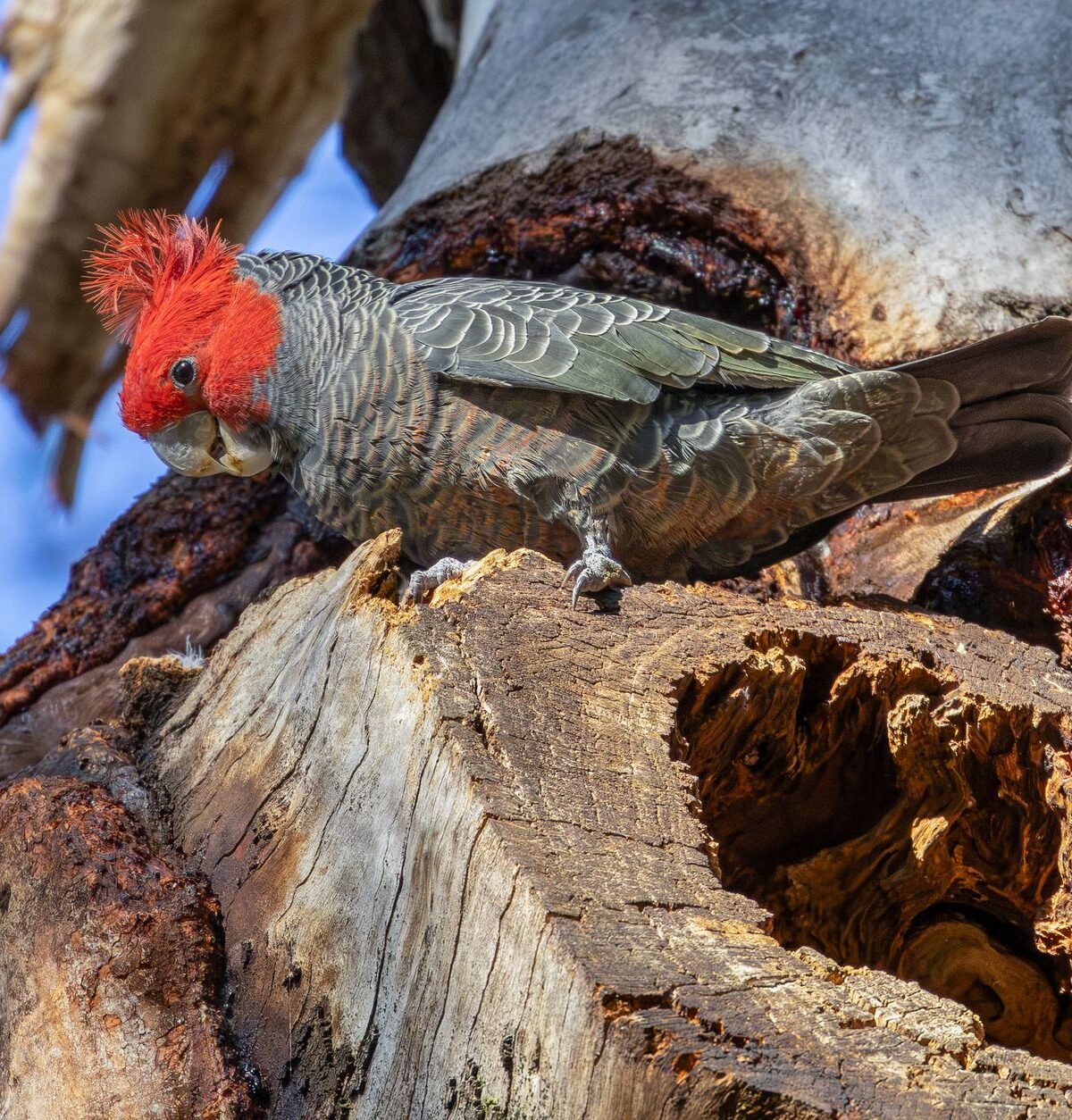
GANG-GANG COCKATOO
Callocephalon fimbriatum
DESCRIPTION
Gang-gang Cockatoo (Callocephalon fimbriatum) is also known as the Fimbriated Cockatoo, a distinctive bird native to Australia. This medium-sized cockatoo features a unique crest that resembles a shaggy mop, with males displaying a striking red coloration while females are predominantly grey. They are known for their gentle and social behavior, often seen foraging in pairs or small groups in their natural habitat.
FUN FACTS
- Gang-gang Cockatoos are known for their unique vocalizations, which can include a variety of sounds ranging from soft whistles to loud squawks, making them quite expressive
- Additionally, they have a fascinating courtship display where males will perform acrobatic flights and show off their colorful crests to attract females
QUICK INFO
Lifespan15-20 years in the wild, up to 30 years in captivi
Average Weight200-300 g
Average Length32-36 cm
Diet TypeHerbivore
Social StructureThey are typically found in pairs or small groups, often forming loose flocks during foraging.
Activity PatternDiurnal
Breeding SeasonSpring (September-November)
- Habitat
- These cockatoos inhabit woodlands, forests, and open areas with scattered trees, particularly favoring regions with eucalypt trees. They are often found in both urban and rural settings where suitable food sources are available.
- Biomes
- Temperate Forest, Woodland
- Native Range
- Gang-gang Cockatoos are native to southeastern Australia, including Tasmania and parts of Victoria, New South Wales, and South Australia.
- Continent
- Australia
- Countries
- Australia, Tasmania
- Diet
- Gang-gang Cockatoos primarily feed on seeds, fruits, and nuts, particularly favoring the seeds of native eucalypt trees. They are adept at using their strong beaks to crack open hard seeds.
- Diet Type
- Herbivore
- Favorite Food
- eucalypt seeds, fruits, nuts
- Social Structure
- They are typically found in pairs or small groups, often forming loose flocks during foraging.
- Activity Pattern
- Diurnal
- Group Size
- 2-10
- Territorial
- 0
 CR
CR
200-300 g
Weight
32-36 cm
Length
- Coloration
- Males are characterized by their grey body and bright red crest, while females are mostly grey with a less vibrant crest.
- Sexual Dimorphism
- Males have a more vibrant red crest compared to the females.
- Lifespan
- 15-20 years in the wild, up to 30 years in captivi
- Offspring per Birth
- 1-3
- Sexual Maturity
- 2-3 years
- Breeding Season
- Spring (September-November)
LC
Least Concern
IUCN Red List Status
- Population Status
- The population of Gang-gang Cockatoos is currently stable, but they face habitat loss and other threats.
- Wild Population Estimate
- 20,000-50,000
- Population Trend
- Stable
- Endangered
- 0
- Threats
- Main threats include habitat destruction due to land clearing and urban development, as well as competition for food with invasive species. Climate change also poses a potential risk to their habitat.
- Predators
- Natural predators include birds of prey such as eagles and hawks, as well as introduced species like cats and foxes.
- Defense Mechanisms
- They may use their loud calls to warn others of danger and can also fly away quickly to escape predators.
- Compatible Animals
- other cockatoos, parrots
- Found in Zoos
- Uncommon