


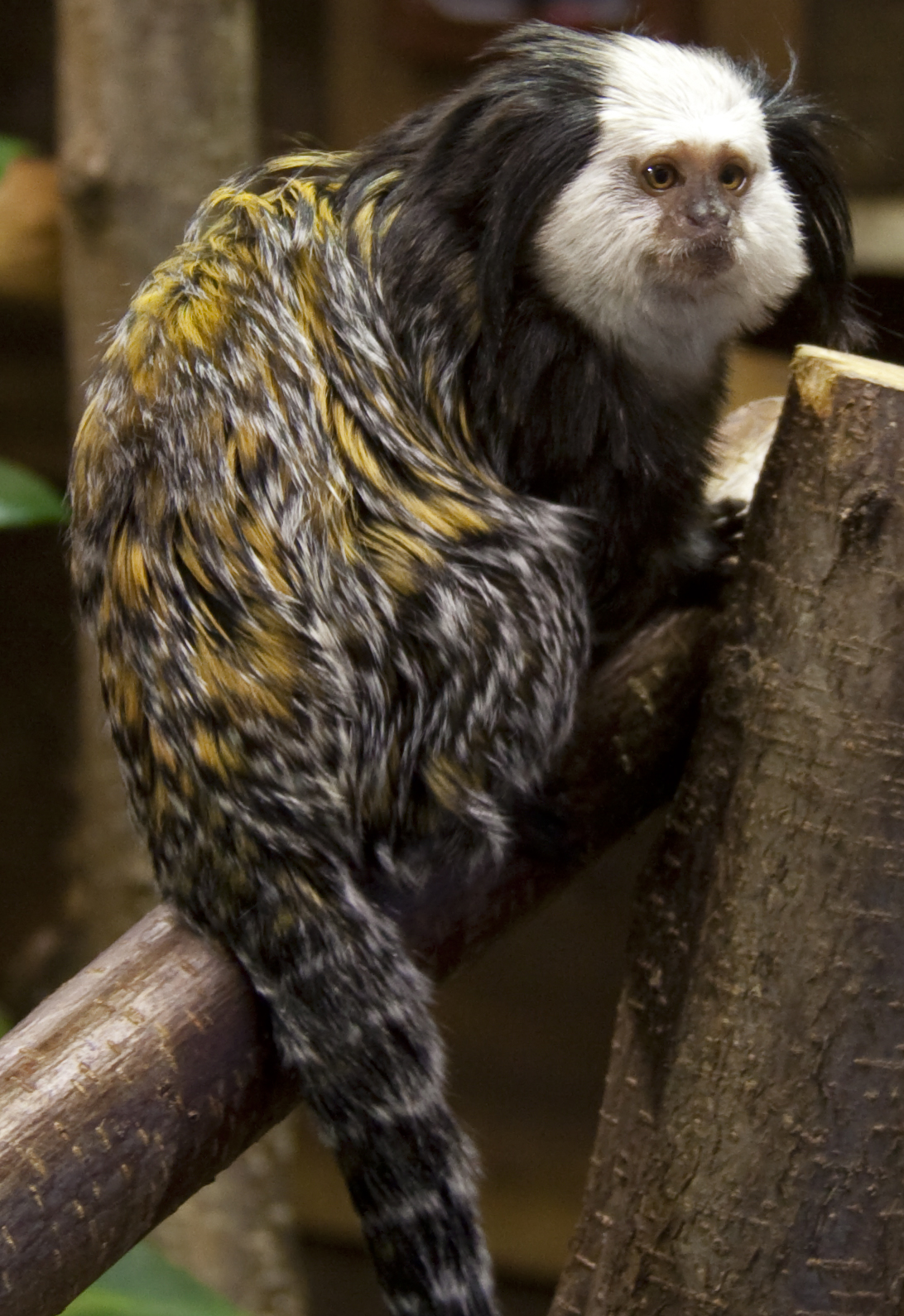
GEOFFROY’S MARMOSET
Callithrix geoffroyi
DESCRIPTION
Geoffroy’s Marmoset is a small primate characterized by its distinctive black and white facial markings and a tuft of white fur on its ears. It has a slender body with a long tail that is often longer than its body, aiding in balance as it navigates through the trees. These marmosets are highly social animals, often found in family groups, and are known for their vocalizations and playful behavior.
FUN FACTS
- Geoffroy’s Marmoset is known for its complex social structures and communication methods, which include a variety of calls and vocalizations that help maintain group cohesion
- They are also one of the few primate species that practice cooperative breeding, where older siblings help care for the younger ones, ensuring the survival of the group
- | These marmosets have a unique adaptation in their diet, as they can digest the sap from certain trees, which provides them with essential nutrients
- This ability allows them to thrive in their forest habitats, where food sources can be variable throughout the year
QUICK INFO
Lifespan10-15 years in the wild, up to 20 years in captivi
Average Weight300-500 g
Average Length20-25 cm
Diet TypeOmnivore
Social StructureGroup, typically consisting of family units with a dominant breeding pair.
Activity PatternDiurnal
Breeding SeasonYear-round, with peaks depending on local conditions
- Habitat
- This species inhabits tropical and subtropical forests, often favoring areas with dense vegetation. They are arboreal, spending most of their time in the trees where they find food and shelter.
- Biomes
- Tropical Rainforest, Subtropical Forest
- Native Range
- Geoffroy’s Marmoset is native to the Atlantic Forest region of Brazil, particularly in the states of São Paulo and Paraná.
- Continent
- South America
- Countries
- Brazil
- Diet
- Geoffroy’s Marmoset primarily feeds on a variety of fruits, insects, and small vertebrates. They are known to forage in trees, using their sharp claws to extract insects from bark and crevices.
- Diet Type
- Omnivore
- Favorite Food
- Fruits, insects
- Social Structure
- Group, typically consisting of family units with a dominant breeding pair.
- Activity Pattern
- Diurnal
- Group Size
- 5-15
- Territorial
- 1
 VU
VU
 LC
LC
300-500 g
Weight
20-25 cm
Length
- Coloration
- They have a mix of brown and gray fur with white facial markings and ear tufts.
- Sexual Dimorphism
- Males and females are similar in size and appearance.
- Lifespan
- 10-15 years in the wild, up to 20 years in captivi
- Gestation Period
- 145 days
- Offspring per Birth
- 1-3
- Sexual Maturity
- 1-2 years
- Breeding Season
- Year-round, with peaks depending on local conditions
LC
Least Concern
IUCN Red List Status
- Population Status
- The population is currently stable but faces habitat loss due to deforestation.
- Wild Population Estimate
- Unknown
- Population Trend
- Stable
- Endangered
- 0
- Threats
- Main threats include habitat destruction due to logging and agricultural expansion. Additionally, they are sometimes captured for the pet trade.
- Predators
- Birds of prey, snakes, and larger mammals such as felids.
- Defense Mechanisms
- They rely on their agility and ability to escape into the trees to avoid predators.
- Compatible Animals
- Other small primates, such as tamarins, in controlled environments.
- Found in Zoos
- Common