


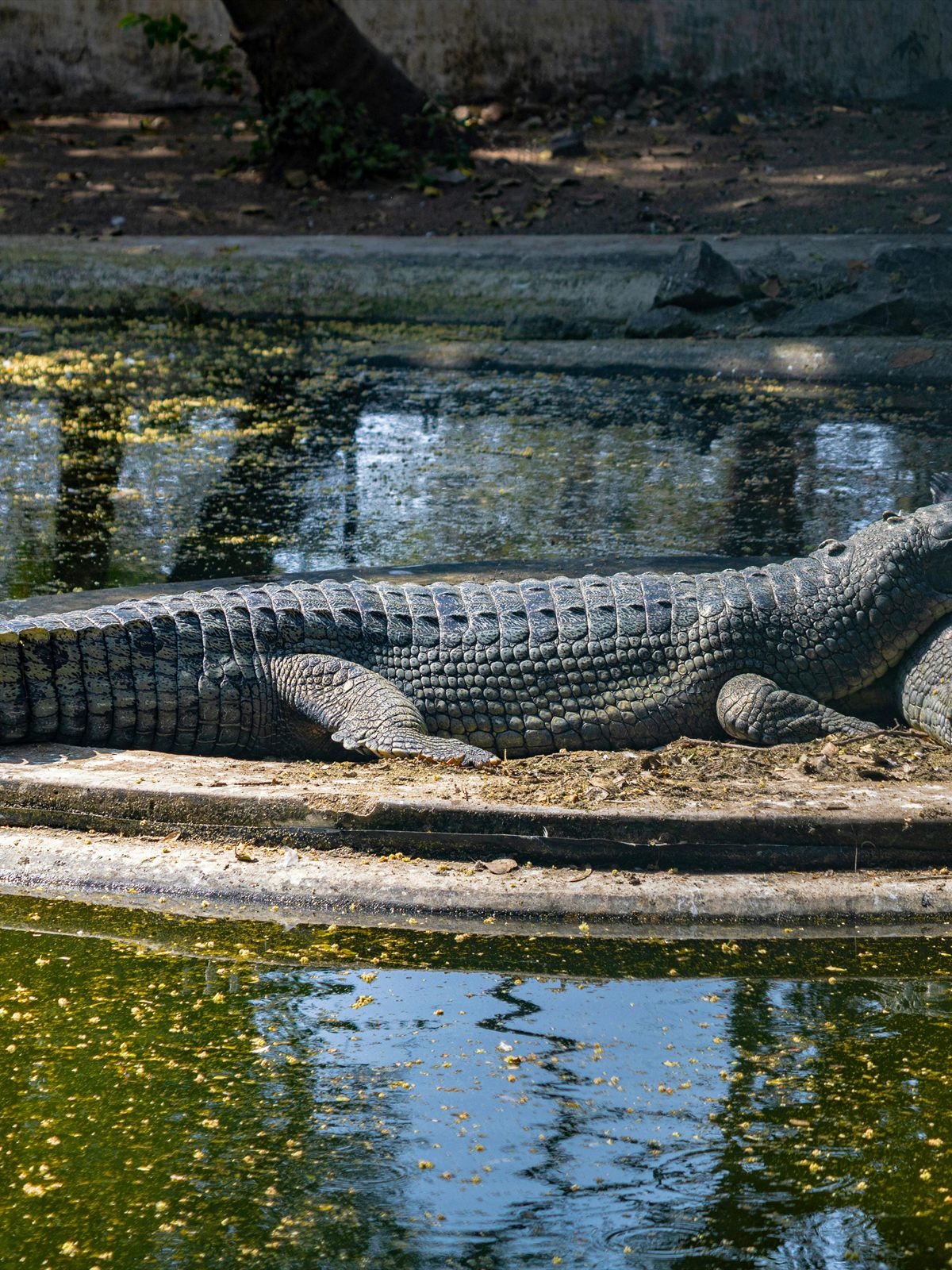
GHARIAL
DESCRIPTION
The gharial is a distinctive crocodilian known for its long, narrow snout and large, interlocking teeth. It is primarily found in the rivers of the Indian subcontinent and is adapted for a piscivorous diet.
FUN FACTS
- Gharials can hold their breath underwater for up to an hour | They are one of the longest crocodilians, with some individuals reaching lengths of over 6 meters | The gharial's unique snout shape is specifically adapted for catching fish
QUICK INFO
Lifespan30-40 years in the wild, up to 60 in captivity
Average Weight150-250 kg
Average Length3-4 m
Diet TypePiscivore
Social Structuresolitary, occasionally seen in small groups during basking
Activity PatternDiurnal
Breeding SeasonWinter (December-February)
- Habitat
- Gharials inhabit freshwater rivers and riverine systems with sandy banks and deep pools. They prefer areas with a slow current and abundant fish populations.
- Biomes
- Freshwater, Riverine
- Native Range
- The gharial is native to the Indian subcontinent, primarily found in northern India and parts of Nepal.
- Continent
- Asia
- Countries
- India, Nepal, Bangladesh
- Diet
- Gharials primarily feed on fish, using their specialized snouts to catch slippery prey. They are not known to consume larger animals due to their jaw structure.
- Diet Type
- Piscivore
- Favorite Food
- fish
- Social Structure
- solitary, occasionally seen in small groups during basking
- Activity Pattern
- Diurnal
- Group Size
- 1-5
- Territorial
- 0
150-250 kg
Weight
3-4 m
Length
- Coloration
- Gharials have a dark olive-brown coloration with lighter underbellies.
- Sexual Dimorphism
- Males have a distinctive bulbous growth on the tip of their snouts during the breeding season.
- Lifespan
- 30-40 years in the wild, up to 60 in captivity
- Offspring per Birth
- 20-50
- Sexual Maturity
- 10-12 years
- Breeding Season
- Winter (December-February)
CR
Critically Endangered
IUCN Red List Status
- Population Status
- The gharial population has significantly declined due to habitat loss and hunting.
- Wild Population Estimate
- Less than 2000
- Population Trend
- Decreasing
- Endangered
- 1
- Threats
- Main threats include habitat destruction, fishing nets, and poaching for their skin and meat. Pollution and reduced fish populations also pose significant risks.
- Conservation Program
- Various conservation programs are in place, including breeding and reintroduction efforts in protected areas.
- Defense Mechanisms
- Gharials rely on their aquatic environment for protection, using their speed in water to evade threats.
- Found in Zoos
- Uncommon