


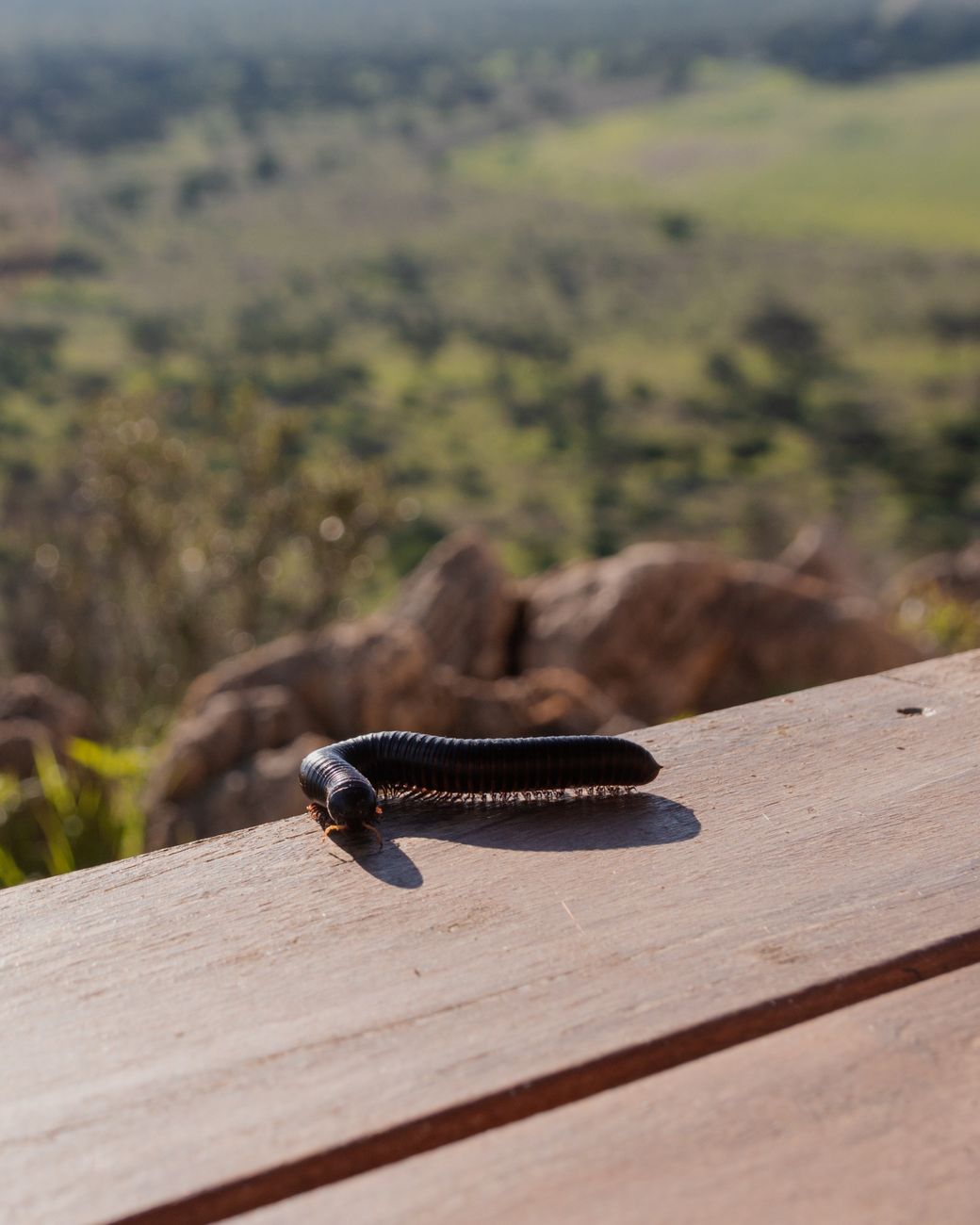
GIANT AFRICAN MILLIPEDE
DESCRIPTION
Also called the African Giant Millipede, the Giant African Millipede is one of the largest millipede species, capable of reaching lengths of up to 30 centimeters. Its body is composed of numerous segments, each adorned with two pairs of legs, giving it a distinctive appearance. These millipedes are primarily nocturnal and are known for their slow movement, often curling into a spiral when threatened.
FUN FACTS
- Giant African Millipedes can produce a defensive secretion that has a strong odor and can irritate the skin of potential predators
- This secretion is a unique adaptation that helps them survive in the wild
- | They are not actually insects but belong to the class Diplopoda, which is distinct from insects and arachnids
- Millipedes have a fascinating ability to regenerate lost legs, making them resilient in their natural habitats
QUICK INFO
Lifespan7-10 years in the wild, up to 20 years in captivit
Average Weight100-200 grams
Average Length25-30 cm
Diet TypeHerbivore
Social Structuresolitary, occasionally found in small groups
Activity PatternNocturnal
Breeding SeasonYear-round in suitable conditions
- Habitat
- They inhabit moist, tropical environments, often found in leaf litter or under logs in forests. Their preference for humid conditions makes them vulnerable to desiccation.
- Biomes
- Tropical Rainforest, Savanna
- Native Range
- The native range of the Giant African Millipede includes various regions across sub-Saharan Africa.
- Continent
- Africa
- Countries
- Kenya, Tanzania, Uganda, Democratic Republic of the Congo
- Diet
- Giant African Millipedes are detritivores, primarily feeding on decaying plant material, leaf litter, and decomposing wood.
- Diet Type
- Herbivore
- Favorite Food
- decaying leaves, decomposing wood
- Social Structure
- solitary, occasionally found in small groups
- Activity Pattern
- Nocturnal
- Group Size
- 1-5
- Territorial
- 0
 VU
VU

100-200 grams
Weight
25-30 cm
Length
- Coloration
- Typically dark brown or black with a glossy appearance, sometimes featuring lighter bands.
- Lifespan
- 7-10 years in the wild, up to 20 years in captivit
- Offspring per Birth
- 30-300
- Sexual Maturity
- 1-2 years
- Breeding Season
- Year-round in suitable conditions
LC
Least Concern
IUCN Red List Status
- Population Status
- The population is currently stable, but habitat destruction poses a potential threat.
- Wild Population Estimate
- Unknown
- Population Trend
- Stable
- Endangered
- 0
- Threats
- Main threats include habitat loss due to deforestation and agricultural expansion. Additionally, they are sometimes collected for the pet trade.
- Predators
- Birds, small mammals, and reptiles are known to prey on Giant African Millipedes.
- Defense Mechanisms
- They can secrete a toxic fluid that can deter predators and may cause irritation to the skin.
- Found in Zoos
- Common