


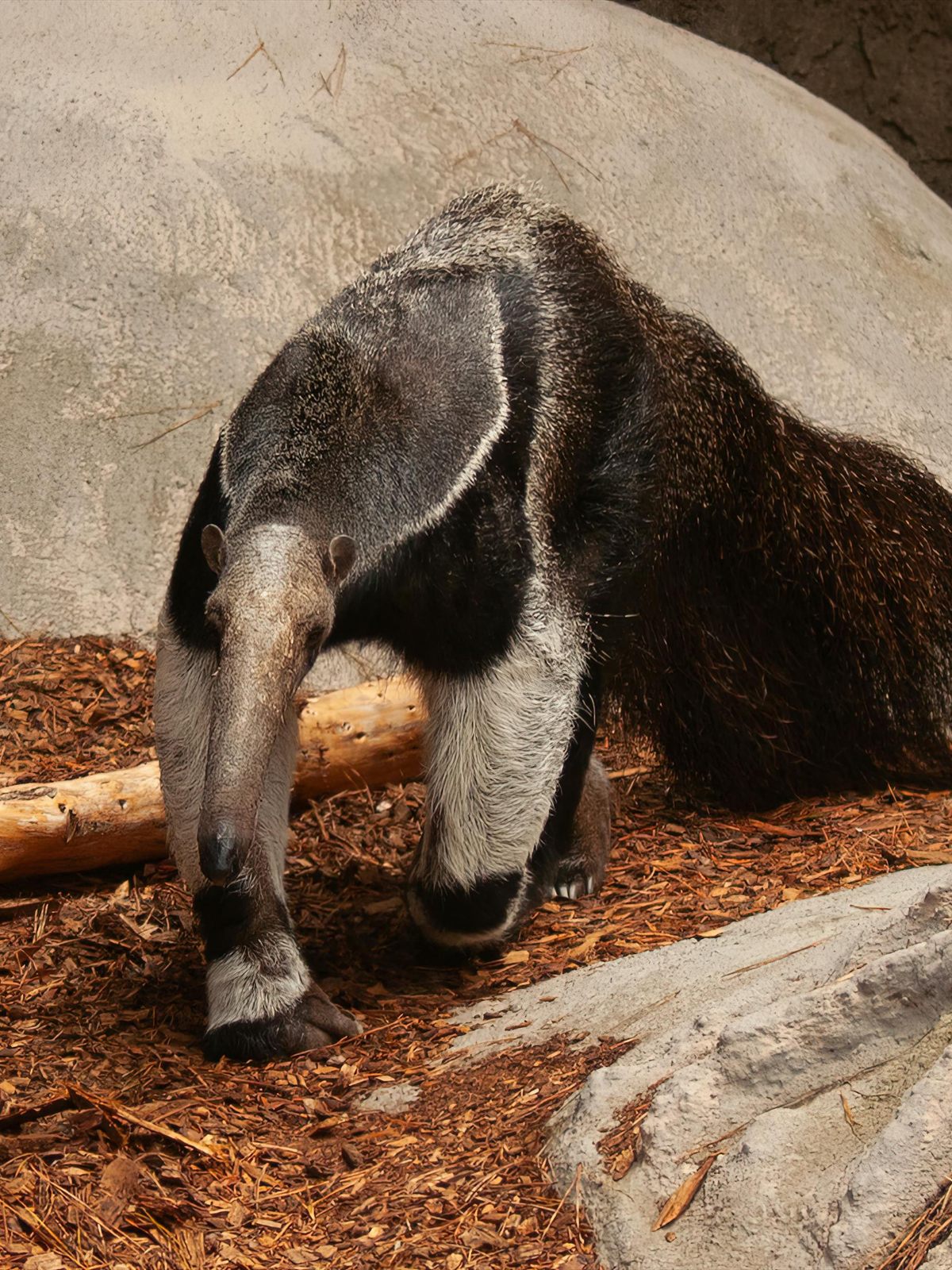
GIANT ANTEATER
Myrmecophaga tridactyla
DESCRIPTION
Also called Ant Bear, the Giant Anteater is a large, terrestrial mammal known for its elongated snout and specialized tongue, which can extend up to 16 inches. It has a distinctive coat of coarse fur, typically grayish-brown with black and white markings, and can reach lengths of up to 2.5 meters. This species is primarily solitary and is known for its unique foraging behavior, using its powerful forelimbs and sharp claws to break open ant and termite mounds.
FUN FACTS
- Giant Anteaters have a unique method of locomotion, often walking on their knuckles to protect their long claws
- They are also known for their keen sense of smell, which they use to locate ant and termite mounds from a distance.|Despite their size, Giant Anteaters are surprisingly agile and can run at speeds of up to 30 km/h when threatened
- Their long tongues are not only effective for feeding but also help them to clean their fur by removing dirt and parasites
QUICK INFO
Lifespan14-16 years in the wild, up to 25 years in captivi
Average Weight40-65 kg
Average Length1.8-2.5 m
Diet TypeInsectivore
Social Structuresolitary, typically found alone except during mating season or when a mother is with her young
Activity PatternDiurnal
Breeding SeasonYear-round, with peaks depending on the region
- Habitat
- Giant Anteaters inhabit a variety of environments, including grasslands, savannas, and tropical forests. They prefer areas with abundant insect populations and sufficient cover for resting.
- Biomes
- Savanna, Tropical Rainforest, Grassland
- Native Range
- Giant Anteaters are native to Central and South America, ranging from Honduras to Argentina.
- Continent
- North America, South America
- Countries
- Honduras, Nicaragua, Costa Rica, Panama, Colombia, Venezuela, Brazil, Paraguay, Argentina
- Diet
- Giant Anteaters primarily feed on ants and termites, using their long tongues to extract these insects from their nests. They can consume thousands of insects in a single day.
- Diet Type
- Insectivore
- Favorite Food
- ants, termites
- Social Structure
- solitary, typically found alone except during mating season or when a mother is with her young
- Activity Pattern
- Diurnal
- Group Size
- 1
- Territorial
- 0
 NT
NT

40-65 kg
Weight
1.8-2.5 m
Length
- Coloration
- grayish-brown fur with black and white markings
- Sexual Dimorphism
- males are generally larger than females
- Lifespan
- 14-16 years in the wild, up to 25 years in captivi
- Gestation Period
- 190 days
- Offspring per Birth
- 1
- Sexual Maturity
- 2-3 years
- Breeding Season
- Year-round, with peaks depending on the region
VU
Vulnerable
IUCN Red List Status
- Population Status
- The population of Giant Anteaters is currently declining due to habitat loss and hunting.
- Wild Population Estimate
- 20,000-30,000
- Population Trend
- Decreasing
- Endangered
- 1
- Threats
- Main threats to Giant Anteaters include habitat destruction due to agriculture and urban development, as well as hunting. These factors have led to a significant decline in their populations across their range.
- Conservation Program
- Various conservation programs are in place to protect their habitats and raise awareness about their ecological importance.
- Predators
- Jaguars, pumas, and large birds of prey are known to prey on young or vulnerable Giant Anteaters.
- Defense Mechanisms
- Giant Anteaters can defend themselves with their sharp claws and strong forelimbs, which they use to fend off predators.
- Found in Zoos
- Common