


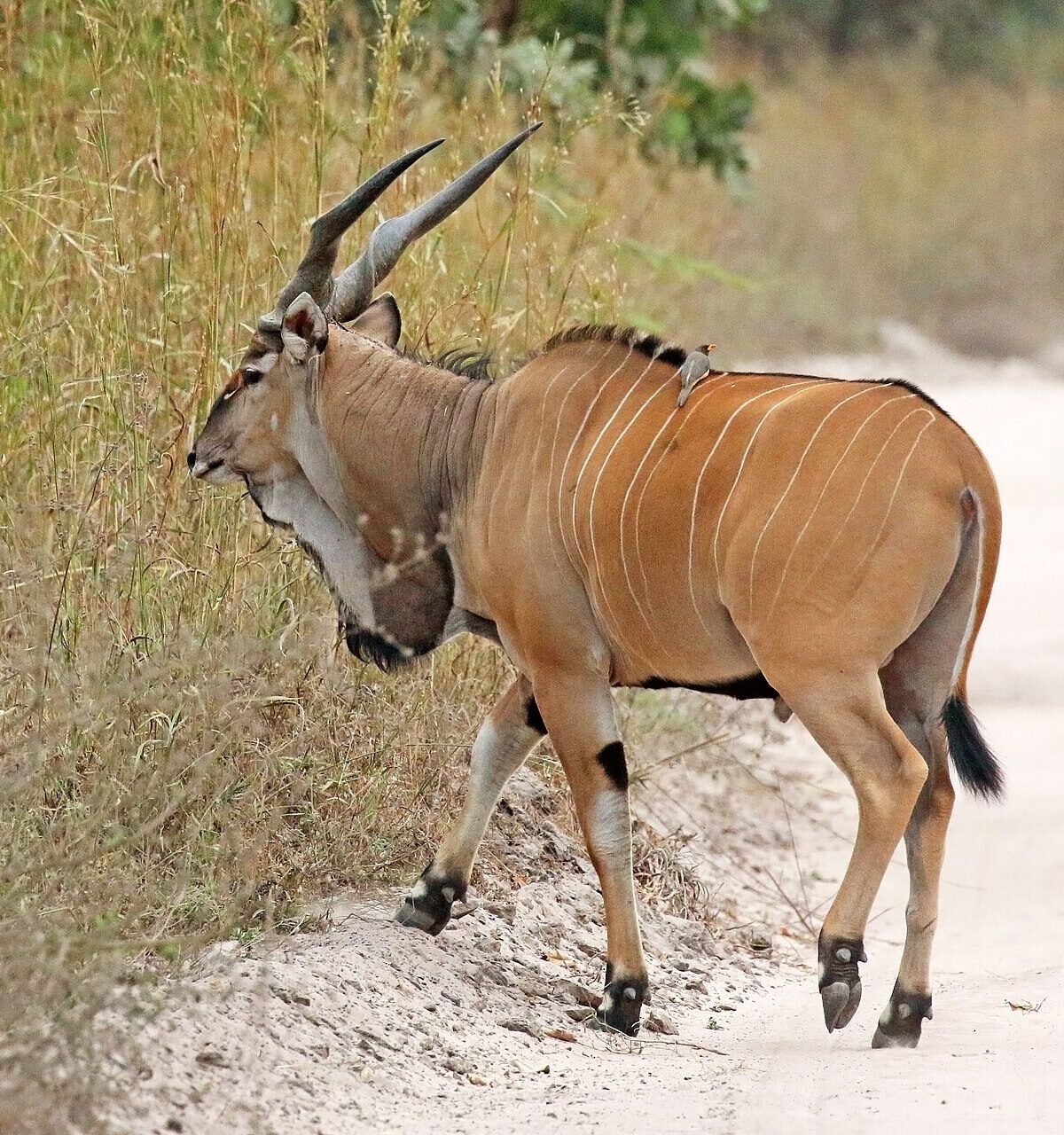
GIANT ELAND
Taurotragus derbianus
DESCRIPTION
Giant Eland (Taurotragus derbianus) is commonly known as Derbian's Eland. This large antelope is characterized by its impressive size, with males reaching up to 1.8 meters at the shoulder and weighing between 200 to 300 kg. They have a distinctive coloration, with a light brown coat and white stripes along their bodies, which helps them blend into their savanna habitat. Giant Elands are social animals, often found in small herds, and they exhibit a range of behaviors including grazing and browsing for food.
FUN FACTS
- Giant Elands are the largest of all antelope species, and their impressive size can be attributed to their adaptation to open habitats where they need to cover large distances for food
- | They are also known for their unique vocalizations, which include a range of grunts and bellows that they use to communicate with each other, especially during mating season
QUICK INFO
Lifespan15-20 years in wild, up to 25 in captivity
Average Weight200-300 kg
Average Length1.8-2.5 m
Diet TypeHerbivore
Social Structuregroup — typically found in small herds of females and young, with males being more solitary.
Activity PatternDiurnal
Breeding SeasonYear-round, with peaks depending on region
- Habitat
- Giant Elands inhabit open savannas and woodlands, where they can find ample food and cover. They prefer areas with a mix of grassland and scattered trees.
- Biomes
- Savanna, Grassland
- Native Range
- Giant Elands are native to the savannas and woodlands of Central and West Africa.
- Continent
- Africa
- Countries
- Cameroon, Central African Republic, Chad, Republic of the Congo, Democratic Republic of the Congo
- Diet
- Giant Elands are herbivores, primarily feeding on grasses, leaves, and shrubs. They are known to be selective feeders, often choosing the most nutritious parts of plants.
- Diet Type
- Herbivore
- Favorite Food
- grasses, leaves, shrubs
- Social Structure
- group — typically found in small herds of females and young, with males being more solitary.
- Activity Pattern
- Diurnal
- Group Size
- 5-20
- Territorial
- 0
 LC
LC
 VU
VU
200-300 kg
Weight
1.8-2.5 m
Length
1.8 m at shoulder
Height (Shoulder)
- Coloration
- light brown coat with white stripes
- Sexual Dimorphism
- males are larger and have spiral horns
- Lifespan
- 15-20 years in wild, up to 25 in captivity
- Gestation Period
- 240 days
- Offspring per Birth
- 1
- Sexual Maturity
- 2-3 years
- Breeding Season
- Year-round, with peaks depending on region
VU
Vulnerable
IUCN Red List Status
- Population Status
- The population of Giant Eland is currently declining due to habitat loss and hunting.
- Wild Population Estimate
- 10,000-15,000
- Population Trend
- Decreasing
- Endangered
- 1
- Threats
- Main threats include habitat destruction due to agriculture and hunting for bushmeat. These pressures have led to a significant decline in their populations across their range.
- Conservation Program
- Various conservation programs are in place, including habitat protection and anti-poaching efforts.
- Predators
- Lions, leopards, and hyenas are known predators of Giant Eland, particularly targeting young or weak individuals.
- Defense Mechanisms
- Giant Elands can run at high speeds to escape predators and are also known to use their large size and strength to defend themselves.
- Found in Zoos
- Uncommon