


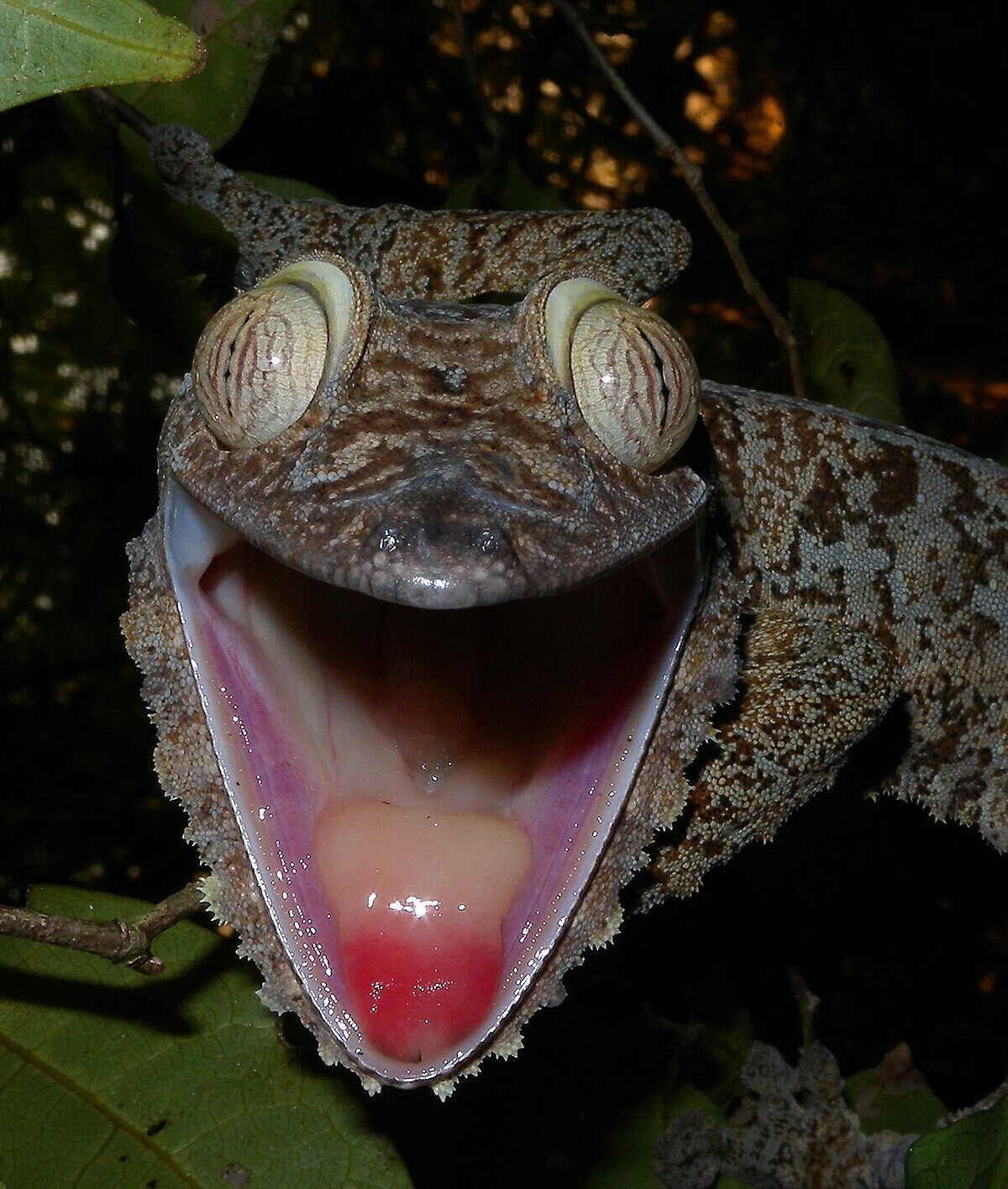
GIANT GECKO OF MADAGASCAR
Uroplatus fimbriatus
DESCRIPTION
Giant Gecko of Madagascar (Uroplatus fimbriatus) is also known as the Madagascar Leaf-Tailed Gecko, recognized for its remarkable ability to blend into its surroundings. This species exhibits a flattened body and a tail that resembles a dead leaf, providing excellent camouflage against the forest floor. Primarily nocturnal, these geckos are arboreal and are often found resting on tree trunks or branches, where they hunt for insects and other small prey.
FUN FACTS
- The Giant Gecko of Madagascar can change its color slightly to better blend into its surroundings, enhancing its camouflage
- Additionally, these geckos have a unique method of locomotion, often moving slowly and deliberately to avoid drawing attention from predators
QUICK INFO
Lifespan10-15 years in the wild, up to 20 years in captivi
Average Length20-30 cm
Diet TypeInsectivore
Social Structuresolitary, with individuals often defending their own territory
Activity PatternNocturnal
Breeding SeasonSpring (October-December)
- Habitat
- Giant Geckos inhabit humid tropical forests, where they thrive in the dense foliage and tree canopies. They prefer areas with plenty of cover to aid in their camouflage and hunting.
- Biomes
- Tropical Rainforest
- Native Range
- Endemic to Madagascar, found in various forested regions across the island.
- Continent
- Africa
- Countries
- Madagascar
- Diet
- They primarily consume insects and other small invertebrates.
- Diet Type
- Insectivore
- Favorite Food
- insects
- Social Structure
- solitary, with individuals often defending their own territory
- Activity Pattern
- Nocturnal
- Group Size
- 1
- Territorial
- 1
 VU
VU
 LC
LC
20-30 cm
Length
- Coloration
- Typically brown or gray with leaf-like patterns for camouflage.
- Sexual Dimorphism
- Males are generally larger and have more pronounced coloration than females.
- Lifespan
- 10-15 years in the wild, up to 20 years in captivi
- Offspring per Birth
- 1-2
- Sexual Maturity
- 2-3 years
- Breeding Season
- Spring (October-December)
LC
Least Concern
IUCN Red List Status
- Population Status
- The population is currently stable, but habitat loss poses a potential threat.
- Wild Population Estimate
- unknown
- Population Trend
- Stable
- Endangered
- 0
- Threats
- Main threats include habitat destruction due to deforestation and human encroachment. Additionally, the pet trade poses a risk to local populations.
- Predators
- Birds of prey, snakes, and larger reptiles are known to prey on this species.
- Defense Mechanisms
- Their primary defense mechanism is their exceptional camouflage, which allows them to blend into their environment and avoid detection.
- Found in Zoos
- Uncommon