


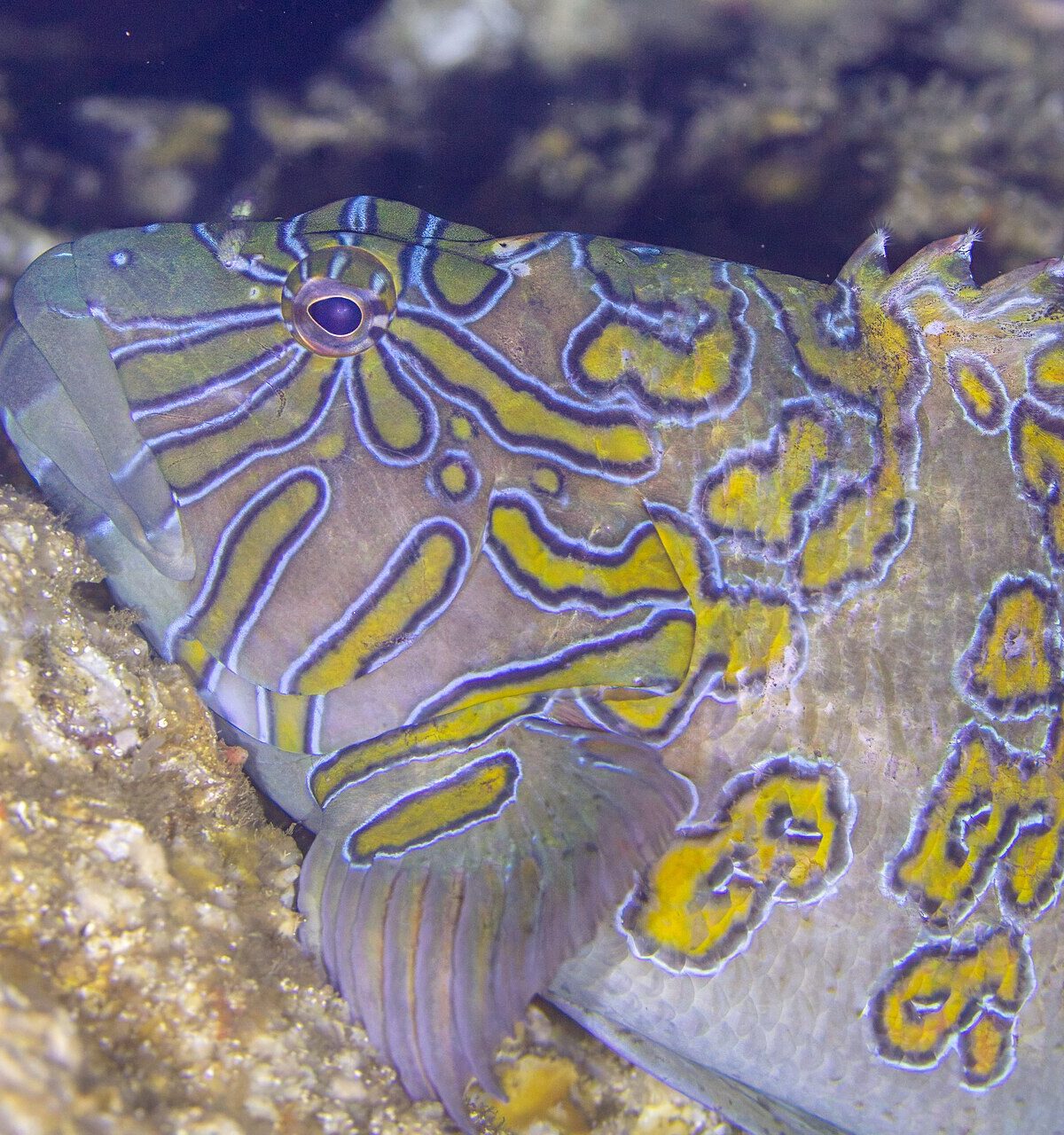
GIANT HAWKFISH
DESCRIPTION
Giant Hawkfish is a striking marine fish known for its vibrant coloration and unique body shape. It typically features a robust body with a large head and elongated fins, allowing it to perch on coral reefs and rocky substrates. This species is often seen in shallow waters, where it displays territorial behavior and a keen hunting ability, making it a fascinating subject for divers and marine enthusiasts.
FUN FACTS
- Giant Hawkfish are known for their unique hunting technique, where they remain motionless for long periods, waiting for the perfect moment to strike at their prey
- This ambush strategy is highly effective, allowing them to catch fast-moving fish with surprising speed
- | They have a fascinating social behavior, often establishing territories that they defend vigorously against other fish
- Their vibrant colors not only serve as camouflage but also play a role in communication with potential mates and rivals
QUICK INFO
Lifespan10-15 years in the wild
Average Weight1-2 kg
Average Length30-50 cm
Diet TypeCarnivore
Social Structuresolitary, often seen alone or in pairs during breeding.
Activity PatternDiurnal
Breeding SeasonYear-round in tropical regions
- Habitat
- This species inhabits coral reefs and rocky areas, often found at depths of 1 to 30 meters. They prefer environments with plenty of hiding spots and structures to perch on.
- Biomes
- Coral Reef
- Native Range
- Giant Hawkfish is native to the Indo-Pacific region, including areas around the Red Sea, the coasts of East Africa, and various islands in the Pacific Ocean.
- Continent
- Asia, Africa, Australia
- Countries
- Egypt, Kenya, Indonesia, Australia, Philippines
- Diet
- Giant Hawkfish primarily feeds on smaller fish and invertebrates, using its excellent eyesight to spot prey from a distance. It employs a sit-and-wait strategy, ambushing unsuspecting prey that comes too close.
- Diet Type
- Carnivore
- Favorite Food
- small fish, crustaceans
- Social Structure
- solitary, often seen alone or in pairs during breeding.
- Activity Pattern
- Diurnal
- Group Size
- 1-2
- Territorial
- 1
 LC
LC
1-2 kg
Weight
30-50 cm
Length
- Coloration
- Typically bright orange or red with distinctive markings, often featuring spots or stripes.
- Lifespan
- 10-15 years in the wild
- Sexual Maturity
- 2-3 years
- Breeding Season
- Year-round in tropical regions
LC
Least Concern
IUCN Red List Status
- Population Status
- Population status is currently stable, but local declines may occur due to habitat destruction.
- Wild Population Estimate
- unknown
- Population Trend
- Stable
- Endangered
- 0
- Threats
- Main threats include habitat loss due to coral reef degradation and overfishing. Pollution and climate change also pose significant risks to their habitats.
- Predators
- Larger fish species, sharks, and some marine mammals may prey on Giant Hawkfish.
- Defense Mechanisms
- They often rely on their camouflage and the structure of the reef to hide from predators.
- Compatible Animals
- other reef fish, invertebrates
- Found in Zoos
- Uncommon