


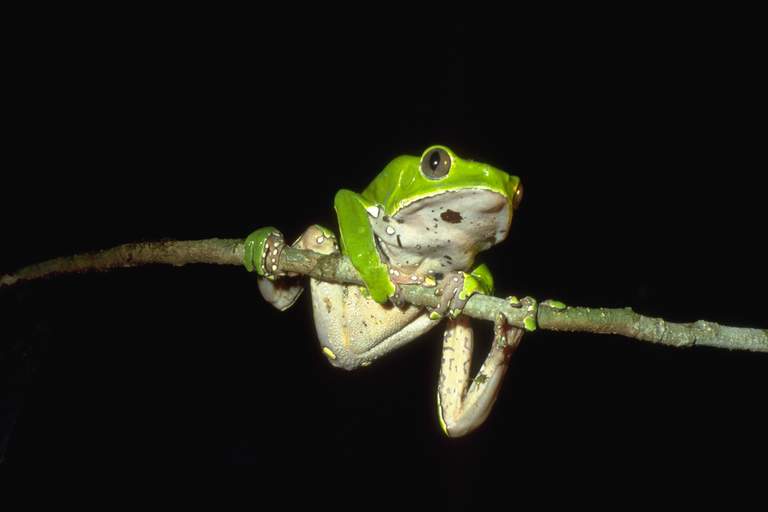
GIANT MONKEY FROG
Phyllomedusa bicolor
DESCRIPTION
The Giant Monkey Frog, or Phyllomedusa bicolor, is a large tree frog known for its striking coloration and unique adaptations. It has a vibrant green body with yellow and blue markings, which help it blend into the foliage of its rainforest habitat. This species is primarily arboreal, spending much of its time in trees and is known for its distinctive vocalizations during mating season.
FUN FACTS
- The Giant Monkey Frog is known for its unique ability to climb and navigate through the trees with ease, thanks to its long limbs and adhesive toe pads
- Additionally, its skin secretions have been studied for potential medicinal properties, particularly in pain relief and anti-inflammatory applications.| This species is also notable for its vocalizations, which can be quite loud and are used by males to establish territory and attract females during the breeding season
- Their calls can be heard echoing through the rainforest, adding to the rich soundscape of their habitat
QUICK INFO
Lifespan5-10 years in the wild, up to 15 in captivity
Average Weight50-100 g
Average Length7-10 cm
Diet TypeInsectivore
Social Structuresolitary, typically found alone except during mating
Activity PatternNocturnal
Breeding SeasonWet season (varies by region)
- Habitat
- This species inhabits tropical rainforests, often found in the canopy where it can easily access its prey. It prefers humid environments with plenty of vegetation for cover.
- Biomes
- Tropical Rainforest
- Native Range
- The Giant Monkey Frog is native to the Amazon Basin, particularly in countries like Brazil, Colombia, and Peru.
- Continent
- South America
- Countries
- Brazil, Colombia, Peru
- Diet
- The Giant Monkey Frog primarily feeds on insects and other small invertebrates. It uses its long, sticky tongue to catch prey, showcasing its adept hunting skills.
- Diet Type
- Insectivore
- Favorite Food
- insects, particularly crickets and moths
- Social Structure
- solitary, typically found alone except during mating
- Activity Pattern
- Nocturnal
- Group Size
- 1-2
- Territorial
- 0
 VU
VU
 LC
LC
50-100 g
Weight
7-10 cm
Length
- Coloration
- vibrant green with yellow and blue markings
- Sexual Dimorphism
- males are generally smaller than females
- Lifespan
- 5-10 years in the wild, up to 15 in captivity
- Offspring per Birth
- 10-30 eggs
- Sexual Maturity
- 1-2 years
- Breeding Season
- Wet season (varies by region)
LC
Least Concern
IUCN Red List Status
- Population Status
- The population status is currently stable, but habitat loss poses a potential threat.
- Wild Population Estimate
- unknown
- Population Trend
- Stable
- Endangered
- 0
- Threats
- Main threats include habitat destruction due to deforestation and pollution. Climate change also poses a risk to their rainforest habitat.
- Predators
- birds, snakes, and larger amphibians
- Defense Mechanisms
- The Giant Monkey Frog secretes toxins through its skin, which can deter predators.
- Found in Zoos
- Uncommon