


GIANT MOUSE LEMUR
Mirza coquereli
DESCRIPTION
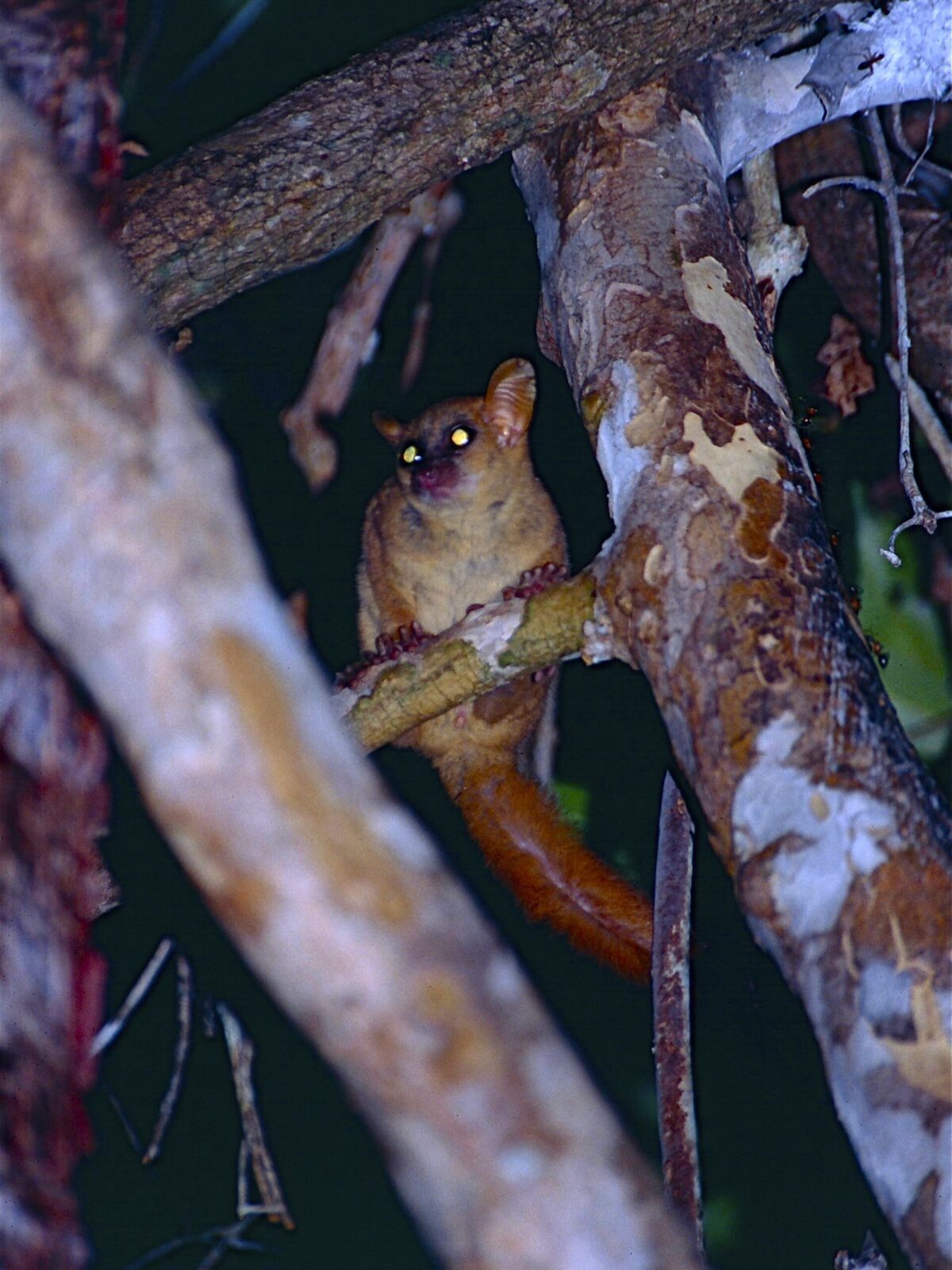
Giant Mouse Lemur (Mirza coquereli) is commonly known as Coquerel's Mouse Lemur. This small primate is characterized by its large eyes, which are adapted for nocturnal activity, and its soft, dense fur that is typically grayish-brown with lighter underparts. They are arboreal and primarily nocturnal, exhibiting a range of vocalizations and social behaviors that are essential for communication in their dense forest habitat.
FUN FACTS
- Giant Mouse Lemurs have a unique adaptation that allows them to enter a state of torpor, which helps them conserve energy during periods of food scarcity
- This ability to slow their metabolism is crucial for survival in their fluctuating environment
- | They are one of the largest species of mouse lemurs, which are generally small primates, and their size allows them to have a more varied diet compared to their smaller relatives
- Their large eyes not only enhance their night vision but also give them a distinctive and endearing appearance
QUICK INFO
Lifespan5-10 years in the wild, up to 15 years in captivit
Average Weight0.5-1 kg
Average Length25-30 cm
Diet TypeOmnivore
Social StructureThey typically exhibit a solitary or pair-based social structure, with some individuals forming loose groups.
Activity PatternNocturnal
Breeding SeasonSpring (September-November)
- Habitat
- They inhabit tropical dry forests and deciduous forests, often found in areas with dense vegetation. Their arboreal lifestyle means they spend most of their time in trees, where they find food and shelter.
- Biomes
- Tropical Dry Forest, Deciduous Forest
- Native Range
- Endemic to Madagascar, specifically in the western part of the island.
- Continent
- Africa
- Countries
- Madagascar
- Diet
- Giant Mouse Lemurs primarily consume fruits, leaves, and insects, making them omnivorous. They have a particular preference for ripe fruits and are known to forage at night.
- Diet Type
- Omnivore
- Favorite Food
- fruits, leaves, insects
- Social Structure
- They typically exhibit a solitary or pair-based social structure, with some individuals forming loose groups.
- Activity Pattern
- Nocturnal
- Group Size
- 1-4
- Territorial
- 0
 VU
VU
 LC
LC
0.5-1 kg
Weight
25-30 cm
Length
- Coloration
- Grayish-brown fur with lighter underparts.
- Lifespan
- 5-10 years in the wild, up to 15 years in captivit
- Gestation Period
- 60-70 days
- Offspring per Birth
- 1-2
- Sexual Maturity
- 1-2 years
- Breeding Season
- Spring (September-November)
EN
Endangered
IUCN Red List Status
- Population Status
- The population is currently considered to be decreasing due to habitat loss.
- Wild Population Estimate
- Unknown
- Population Trend
- Decreasing
- Endangered
- 1
- Threats
- The main threats to Giant Mouse Lemurs include habitat destruction due to deforestation and agricultural expansion. Additionally, hunting and the pet trade pose significant risks to their survival.
- Predators
- Birds of prey, snakes, and larger mammals such as fossa.
- Defense Mechanisms
- They rely on their agility and ability to hide in trees to evade predators.
- Found in Zoos
- Uncommon