


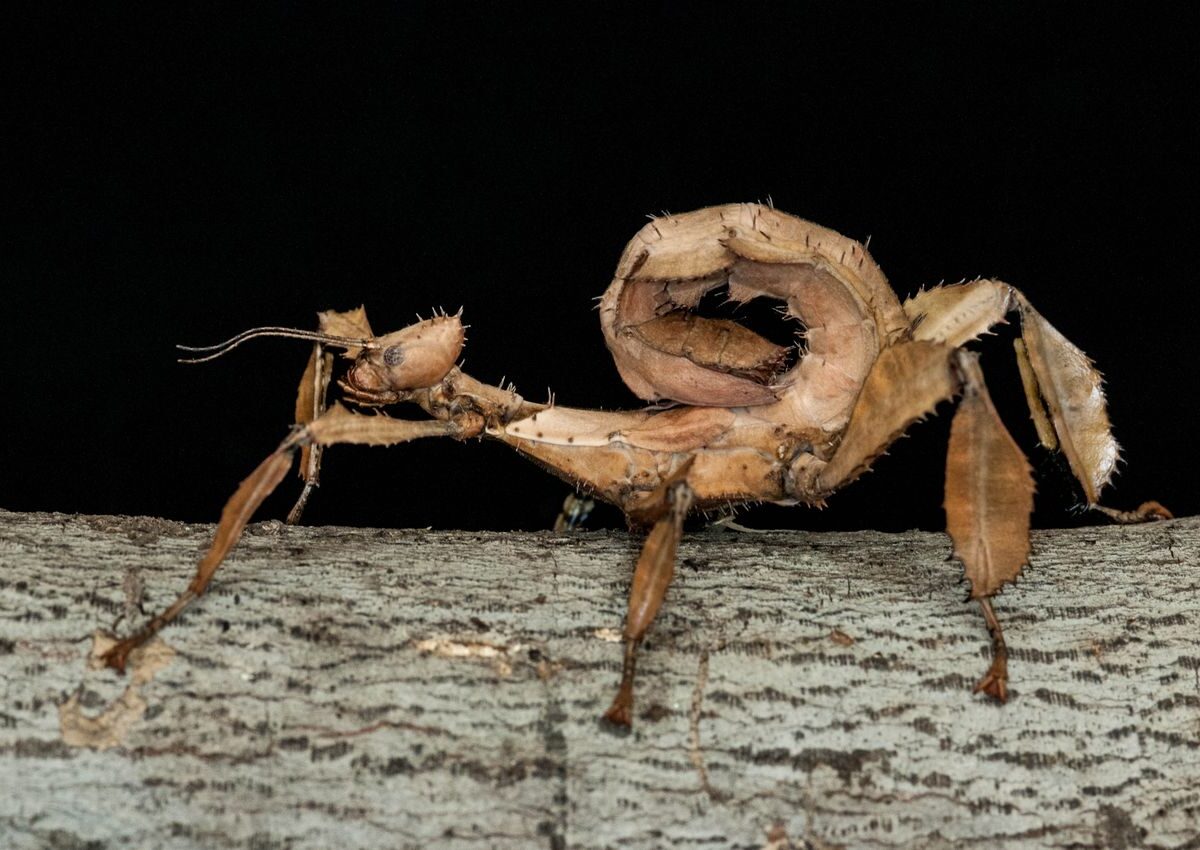
GIANT PRICKLY STICK INSECT
Extatosoma tiaratum
DESCRIPTION
Also called the Giant Stick Insect, this remarkable insect is known for its impressive size and camouflage abilities. It can grow up to 15 centimeters in length and has a body that resembles twigs or branches, allowing it to blend seamlessly into its surroundings. This species is primarily nocturnal, spending its days motionless to avoid detection by predators, and feeds on leaves, which it consumes at night.
FUN FACTS
- The Giant Prickly Stick Insect can remain motionless for hours, making it difficult for predators to spot them
- Their incredible camouflage is so effective that they can often be mistaken for actual twigs or branches in their natural habitat
- | These insects can reproduce parthenogenetically, meaning females can produce offspring without mating, which is a fascinating adaptation for survival in environments where males may be scarce
QUICK INFO
Lifespan1-2 years in the wild.
Average Length15 cm
Diet TypeHerbivore
Social Structuresolitary, they are generally found alone except during mating.
Activity PatternNocturnal
Breeding SeasonSpring to early summer
- Habitat
- This species is typically found in forests and woodlands where it can easily camouflage among the foliage. It prefers humid environments that provide ample food sources.
- Biomes
- Tropical Rainforest, Temperate Forest
- Native Range
- The Giant Prickly Stick Insect is native to Australia, particularly in the eastern regions.
- Continent
- Australia
- Countries
- Australia
- Diet
- The Giant Prickly Stick Insect primarily feeds on a variety of leaves, particularly those from eucalyptus and other native plants.
- Diet Type
- Herbivore
- Favorite Food
- Eucalyptus leaves
- Social Structure
- solitary, they are generally found alone except during mating.
- Activity Pattern
- Nocturnal
- Group Size
- 1-2
- Territorial
- 0
 VU
VU

15 cm
Length
- Coloration
- Brown or green, resembling twigs or branches.
- Sexual Dimorphism
- Females are generally larger and bulkier than males.
- Lifespan
- 1-2 years in the wild.
- Sexual Maturity
- 5-6 months
- Breeding Season
- Spring to early summer
LC
Least Concern
IUCN Red List Status
- Population Status
- The population is currently stable, but habitat loss poses a potential threat.
- Wild Population Estimate
- unknown
- Population Trend
- Stable
- Endangered
- 0
- Threats
- Main threats include habitat destruction due to deforestation and urbanization. These factors can lead to a decline in their natural habitat and food sources.
- Predators
- Birds, reptiles, and some mammals are known to prey on the Giant Prickly Stick Insect.
- Defense Mechanisms
- They rely on camouflage to avoid detection, blending in with their surroundings to escape predators.
- Found in Zoos
- Uncommon