


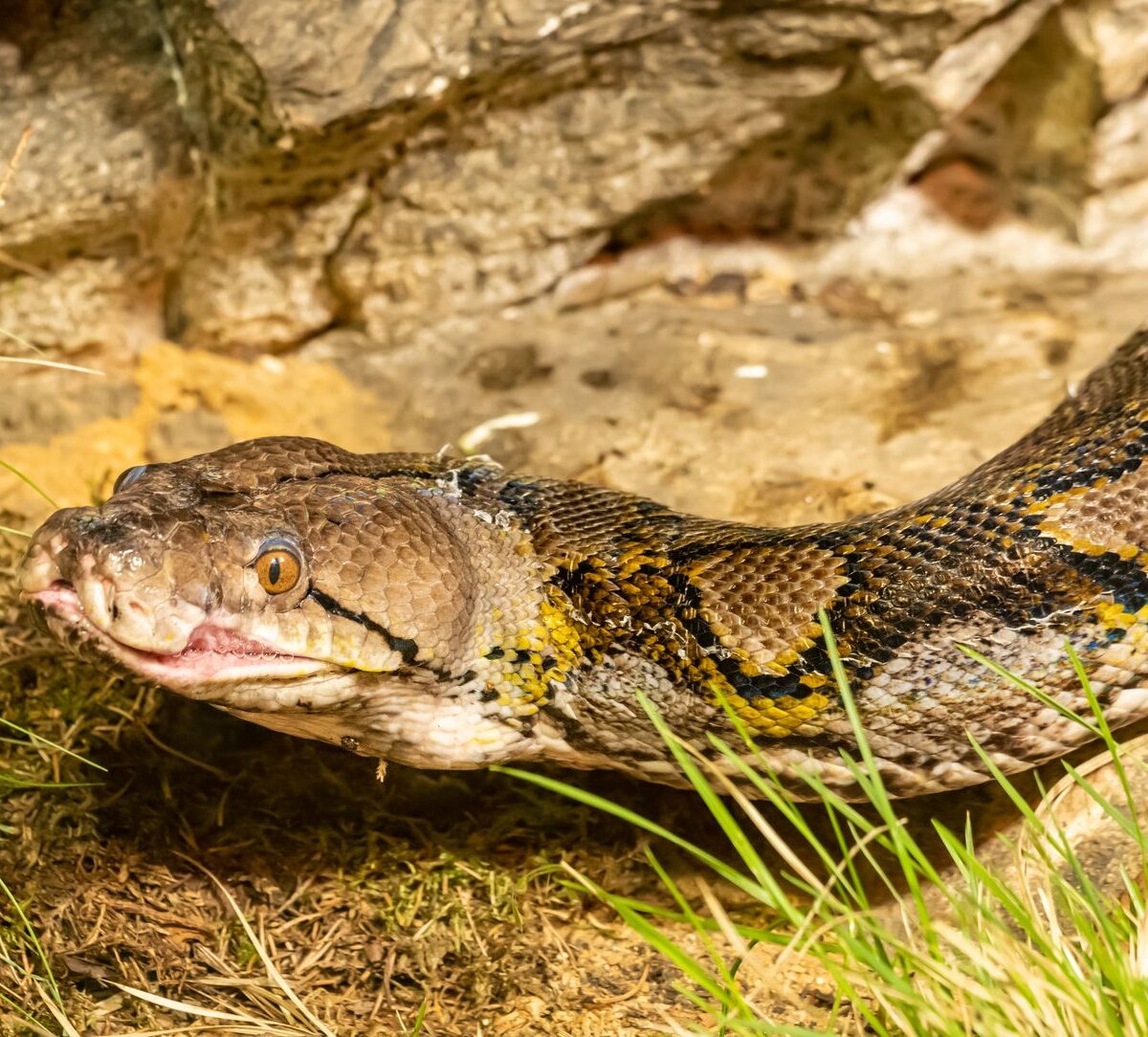
GIANT PYTHON
Python reticulatus
DESCRIPTION
Giant Python (Python reticulatus), also known as the Reticulated Python, is one of the longest snake species in the world, capable of reaching lengths over 6 meters. This species is characterized by its intricate pattern of dark brown, yellow, and black scales, which provide excellent camouflage in its natural habitat. Typically found in rainforests, grasslands, and swamps, the Giant Python is a non-venomous constrictor that exhibits both arboreal and terrestrial behaviors.
FUN FACTS
- Giant Pythons are known for their incredible strength and can constrict prey with a force strong enough to crush bones
- They are also capable of swimming long distances, which allows them to traverse between islands in their native range.| These snakes are famous for their size, with some individuals recorded at lengths exceeding 7 meters, making them one of the longest snake species in the world
- Despite their size, they are often elusive and can be difficult to spot in the wild
QUICK INFO
Lifespan20-30 years in captivity
Average Weight75-150 kg
Average Length3-6 m
Diet TypeCarnivore
Social Structuresolitary, typically only interact during mating season
Activity PatternNocturnal
Breeding SeasonSpring (March-May)
- Habitat
- Giant Pythons inhabit a variety of environments, including tropical rainforests, grasslands, and wetlands. They are often found near water sources, which they use for hunting and thermoregulation.
- Biomes
- Tropical Rainforest, Grassland, Wetland
- Native Range
- Southeast Asia, including countries like Indonesia, Malaysia, and the Philippines.
- Continent
- Asia
- Countries
- Indonesia, Malaysia, Philippines, Thailand, Myanmar
- Diet
- Giant Pythons primarily feed on mammals and birds, using their powerful bodies to constrict and suffocate their prey. They are known to consume animals as large as deer and pigs.
- Diet Type
- Carnivore
- Favorite Food
- Mammals, birds
- Social Structure
- solitary, typically only interact during mating season
- Activity Pattern
- Nocturnal
- Group Size
- 1
- Territorial
- 0
 VU
VU
 VU
VU
75-150 kg
Weight
3-6 m
Length
- Coloration
- Dark brown with yellow and black patterns
- Sexual Dimorphism
- Females are generally larger than males.
- Lifespan
- 20-30 years in captivity
- Gestation Period
- 60-70 days
- Offspring per Birth
- 15-30
- Sexual Maturity
- 2-3 years
- Breeding Season
- Spring (March-May)
LC
Least Concern
IUCN Red List Status
- Population Status
- The population of Giant Pythons is currently stable, but they face threats from habitat loss and hunting.
- Wild Population Estimate
- Unknown
- Population Trend
- Stable
- Endangered
- 0
- Threats
- Main threats include habitat destruction due to deforestation and hunting for their skin and meat. Additionally, they are sometimes captured for the exotic pet trade.
- Predators
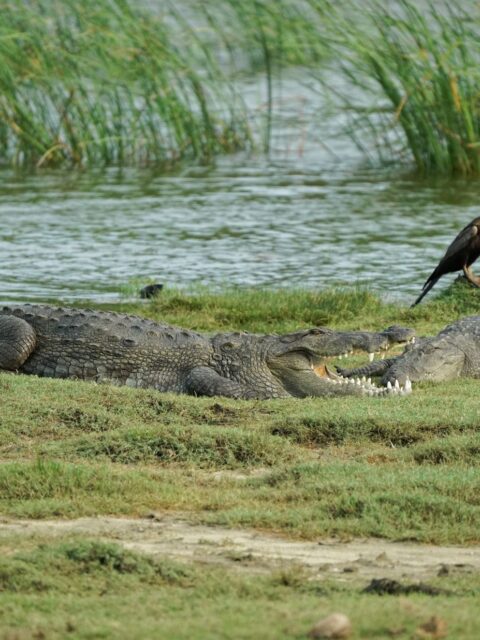
- Large birds of prey, crocodiles, and occasionally larger snakes.
- Defense Mechanisms
- Giant Pythons rely on their camouflage to avoid detection and may also use their size to intimidate potential threats.
- Found in Zoos
- Common