


GIANT RIVER OTTER
Pteronura brasiliensis
DESCRIPTION
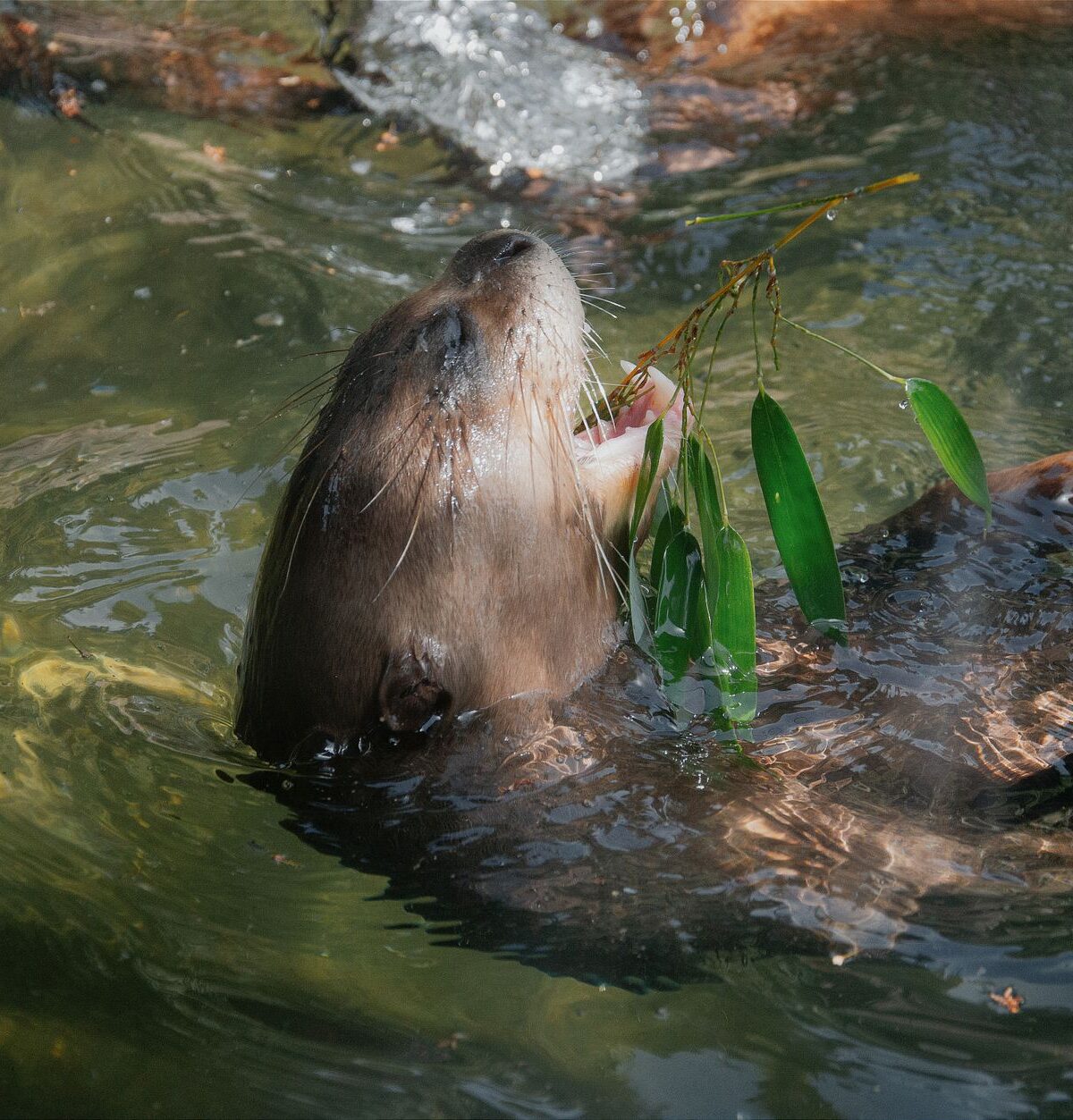
Giant River Otter (Pteronura brasiliensis), also known as the Giant Otter, is a large, social member of the weasel family, characterized by its elongated body, webbed feet, and thick fur that is typically dark brown with a lighter underside. These otters are highly vocal and live in family groups, often engaging in playful behavior both in and out of the water. They are primarily found in freshwater habitats, where they play a crucial role in the ecosystem as both predators and prey.
FUN FACTS
- Giant River Otters are known for their complex social structures and strong family bonds, often seen grooming each other and playing together in the water
- They are also one of the largest otter species, with some individuals reaching lengths of nearly 2 meters, making them a fascinating sight in their natural habitat
QUICK INFO
Lifespan10-12 years in the wild, up to 20 years in captivi
Average Weight22-32 kg
Average Length1.5-1.8 m
Diet TypePiscivore
Social StructureThey live in family groups, typically consisting of 3-10 individuals, which are often composed of a breeding pair and their offspring.
Activity PatternDiurnal
Breeding SeasonYear-round, with peaks depending on local conditions
- Habitat
- Giant River Otters inhabit rivers, lakes, and wetlands, preferring areas with abundant vegetation and clear water. They require large territories to support their hunting needs and are often found in areas with a rich biodiversity.
- Biomes
- Freshwater, Tropical Rainforest
- Native Range
- They are native to the Amazon Basin and parts of the Pantanal in South America.
- Continent
- South America
- Countries
- Brazil, Peru, Colombia, Venezuela, Bolivia
- Diet
- Giant River Otters primarily feed on fish, but they also consume crustaceans and small mammals. Their hunting techniques are highly coordinated, often involving teamwork within their social groups.
- Diet Type
- Piscivore
- Favorite Food
- fish
- Social Structure
- They live in family groups, typically consisting of 3-10 individuals, which are often composed of a breeding pair and their offspring.
- Activity Pattern
- Diurnal
- Group Size
- 3-10
- Territorial
- 1
22-32 kg
Weight
1.5-1.8 m
Length
- Coloration
- Dark brown fur with a lighter cream-colored underside.
- Sexual Dimorphism
- Males are generally larger than females.
- Lifespan
- 10-12 years in the wild, up to 20 years in captivi
- Gestation Period
- 65-70 days
- Offspring per Birth
- 1-5
- Sexual Maturity
- 2-3 years
- Breeding Season
- Year-round, with peaks depending on local conditions
EN
Endangered
IUCN Red List Status
- Population Status
- The population is currently declining due to habitat loss and hunting.
- Wild Population Estimate
- Less than 5,000
- Population Trend
- Decreasing
- Endangered
- 1
- Threats
- Main threats include habitat destruction due to deforestation, pollution, and hunting for their fur. These factors have significantly impacted their populations across their native range.
- Conservation Program
- Various conservation programs are in place, including habitat protection and anti-poaching initiatives.
- Predators
- Large cats such as jaguars and caimans may prey on young otters, while humans pose the greatest threat through hunting and habitat destruction.
- Defense Mechanisms
- They use vocalizations to communicate and warn each other of danger, and they can be aggressive when defending their territory.
- Found in Zoos
- Uncommon