


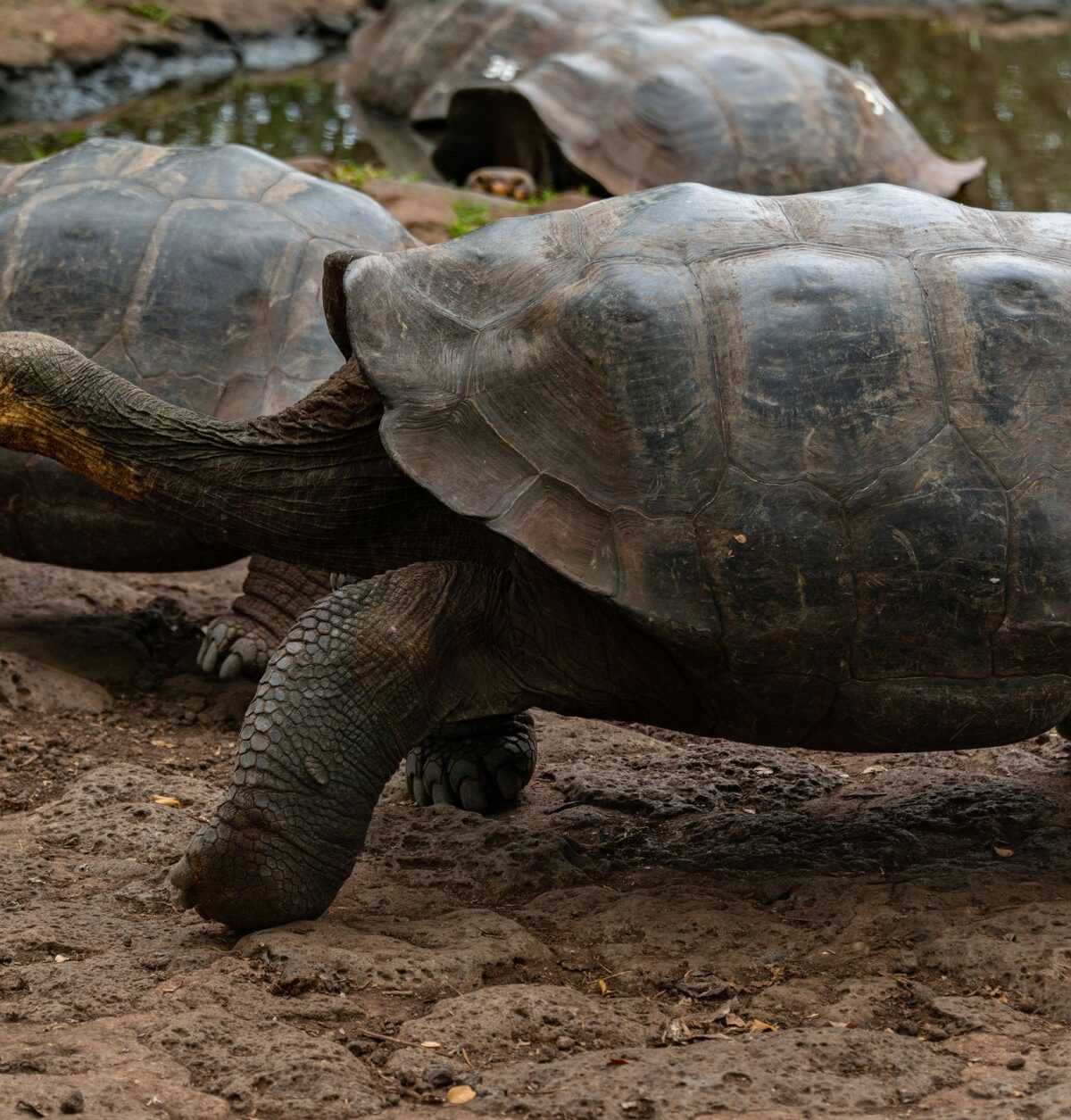
GIANT TORTOISE
DESCRIPTION
Giant Tortoise, also known as the Galápagos Tortoise and Aldabra Tortoise, is one of the largest tortoise species in the world, characterized by its massive, dome-shaped shell and sturdy limbs. These tortoises exhibit a slow and deliberate movement, often spending their days grazing on vegetation and basking in the sun. They play a crucial role in their ecosystems by helping to maintain the health of their habitats through their grazing habits, which can promote plant diversity.
FUN FACTS
- Giant Tortoises are known for their impressive longevity, with some individuals living over 100 years
- They have been observed to have unique personalities, with some being more social and curious than others
- | The Galápagos Tortoise played a significant role in Charles Darwin's theory of evolution, as he studied their variations across the islands, which contributed to his understanding of natural selection
QUICK INFO
Lifespanup to 100 years in the wild, potentially longer in
Average Weight200-400 kg
Average Length1.2-1.5 m
Diet TypeHerbivore
Social Structuresolitary, occasionally seen in groups during feeding or breeding
Activity PatternDiurnal
Breeding SeasonSpring (March-May)
- Habitat
- Giant Tortoises inhabit a range of environments, including dry grasslands, scrublands, and forests. They are often found in areas with abundant vegetation to support their herbivorous diet.
- Biomes
- Savanna, Tropical Rainforest, Grassland
- Native Range
- Giant Tortoises are native to the Galápagos Islands and the Aldabra Atoll in the Indian Ocean.
- Continent
- South America, Africa
- Countries
- Ecuador, Seychelles
- Diet
- Giant Tortoises are primarily herbivores, feeding on a variety of grasses, leaves, and fruits. They have a preference for fibrous plant material, which is essential for their digestion.
- Diet Type
- Herbivore
- Favorite Food
- grasses, leaves, fruits
- Social Structure
- solitary, occasionally seen in groups during feeding or breeding
- Activity Pattern
- Diurnal
- Group Size
- 1-10
- Territorial
- 0
 LC
LC
200-400 kg
Weight
1.2-1.5 m
Length
- Coloration
- dark brown to grayish with a smooth, hard shell
- Sexual Dimorphism
- males are generally larger than females
- Lifespan
- up to 100 years in the wild, potentially longer in
- Gestation Period
- 60-90 days
- Offspring per Birth
- 2-15
- Sexual Maturity
- 20-25 years
- Breeding Season
- Spring (March-May)
EN
Endangered
IUCN Red List Status
- Population Status
- The population of Giant Tortoises varies by species, with some populations being stable while others are critically endangered.
- Wild Population Estimate
- approximately 25,000
- Population Trend
- Decreasing
- Endangered
- 1
- Threats
- Main threats to Giant Tortoises include habitat loss, invasive species, and poaching. These factors have significantly impacted their populations, particularly on the Galápagos Islands.
- Conservation Program
- Galápagos National Park conservation efforts, captive breeding programs
- Predators
- feral dogs, rats, and humans
- Defense Mechanisms
- Giant Tortoises can retreat into their shells for protection against predators.
- Found in Zoos
- Common