


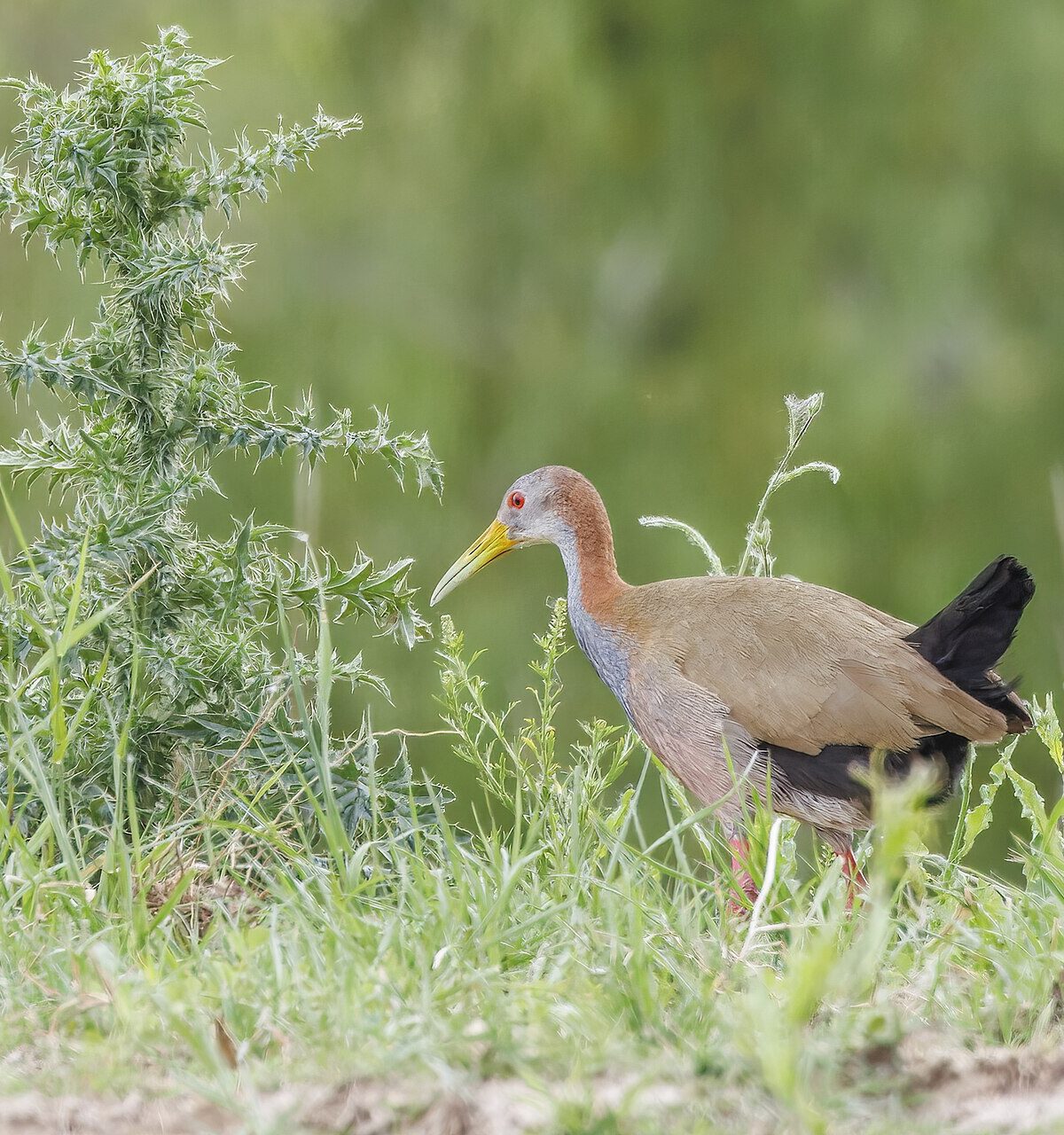
GIANT WOOD RAIL
Aramides ypecaha
DESCRIPTION
The Giant Wood Rail (Aramides ypecaha) is a large, striking bird characterized by its long legs and distinctive coloration, which includes a grayish-brown body with a white belly and a striking red bill. This species is known for its secretive behavior, often found in dense vegetation near water bodies, where it forages for food. It is a strong swimmer and can often be seen wading through shallow waters, using its long toes to navigate through muddy substrates.
FUN FACTS
- The Giant Wood Rail is an excellent swimmer, often using its swimming ability to escape from predators or to forage for food in deeper waters
- | This species has a unique vocalization that can be heard during the breeding season, which consists of a series of low, resonant calls that echo through their wetland habitats
QUICK INFO
Lifespan10-15 years in the wild
Average Weight500-700 g
Average Length30-40 cm
Diet TypeOmnivore
Social StructureThey are typically solitary or found in pairs, especially during the breeding season.
Activity PatternDiurnal
Breeding SeasonSpring to early summer
- Habitat
- This species inhabits wetlands, marshes, and the edges of rivers and lakes, often favoring areas with dense vegetation for cover. It prefers habitats with abundant water and food sources, which are crucial for its survival.
- Biomes
- Wetlands, Tropical Rainforest
- Native Range
- The Giant Wood Rail is native to parts of South America, particularly in the Amazon Basin and surrounding areas.
- Continent
- South America
- Countries
- Brazil, Bolivia, Paraguay, Argentina
- Diet
- The Giant Wood Rail primarily feeds on a variety of invertebrates, seeds, and plant matter. It forages on the ground and in shallow water, using its bill to probe for food.
- Diet Type
- Omnivore
- Favorite Food
- insects, seeds, and aquatic plants
- Social Structure
- They are typically solitary or found in pairs, especially during the breeding season.
- Activity Pattern
- Diurnal
- Group Size
- 1-2
- Territorial
- 1
 VU
VU
 LC
LC
500-700 g
Weight
30-40 cm
Length
- Coloration
- Grayish-brown body with a white belly and a red bill.
- Lifespan
- 10-15 years in the wild
- Offspring per Birth
- 3-5 eggs
- Sexual Maturity
- 1-2 years
- Breeding Season
- Spring to early summer
LC
Least Concern
IUCN Red List Status
- Population Status
- The population is currently stable, but habitat loss poses a potential threat.
- Wild Population Estimate
- Unknown
- Population Trend
- Stable
- Endangered
- 0
- Threats
- Main threats include habitat destruction due to agriculture and urban development. Wetland drainage and pollution also pose significant risks to their populations.
- Predators
- Large birds of prey, snakes, and mammals such as foxes may prey on Giant Wood Rails.
- Defense Mechanisms
- They rely on their cryptic coloration and secretive behavior to avoid detection by predators.
- Found in Zoos
- Uncommon