


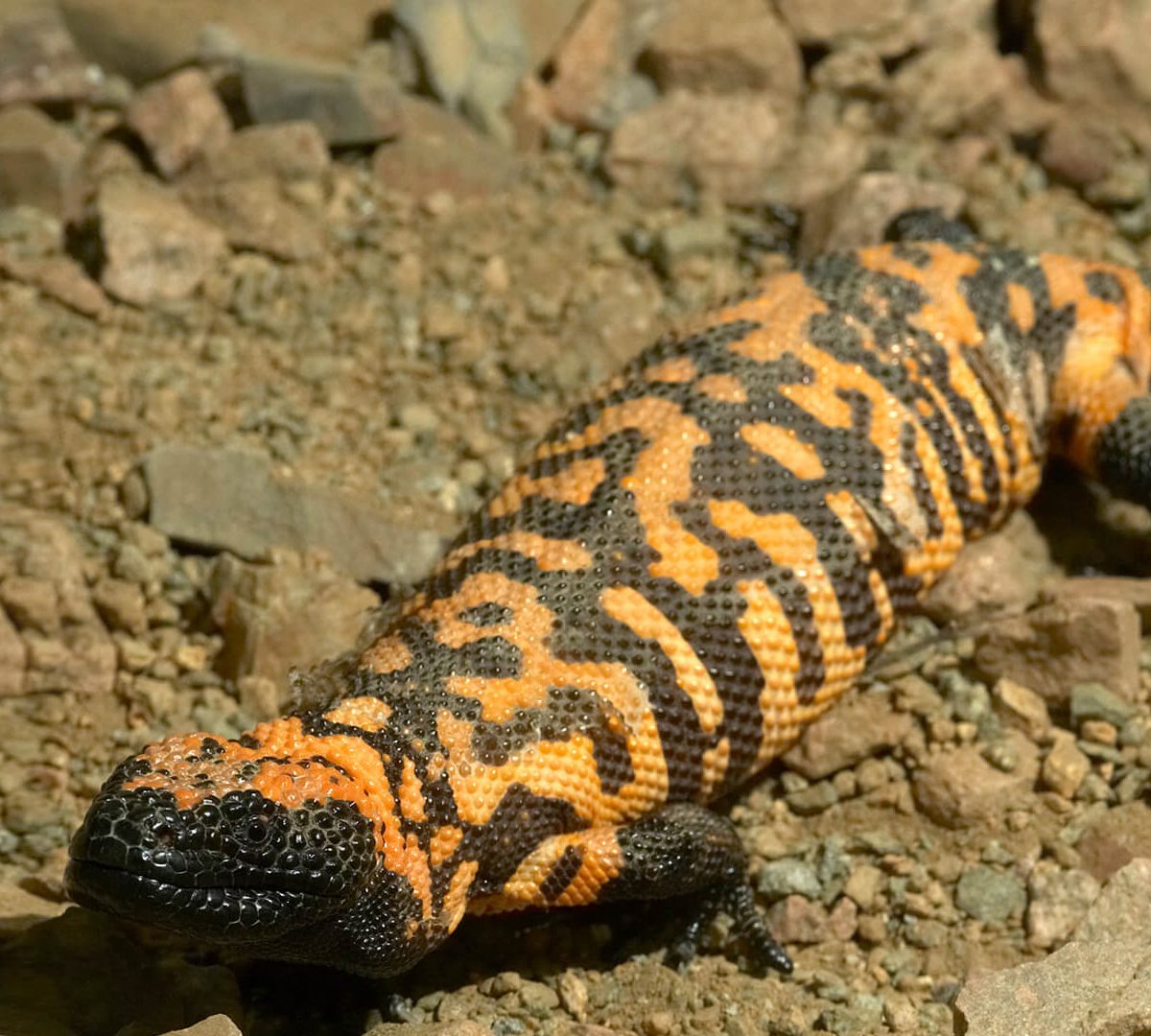
GILA MONSTER
Heloderma suspectum
DESCRIPTION
The Gila monster is one of the few venomous lizards in the world, known for its distinctive black and orange or yellow coloration. It is a slow-moving reptile that primarily inhabits the deserts of the southwestern United States and northwestern Mexico.
FUN FACTS
- Gila monsters can store fat in their tails, allowing them to survive long periods without food | They are one of only two venomous lizard species in the world | Their venom is used in medical research for diabetes treatment
QUICK INFO
Lifespan20-30 years in the wild
Average Weight1.5-2 kg
Average Length45-60 cm
Diet TypeCarnivore
Social Structuresolitary
Activity PatternDiurnal
Breeding SeasonSpring (April-June)
- Habitat
- Gila monsters are typically found in arid and semi-arid environments, including deserts and scrublands. They prefer rocky areas and can often be found under rocks or in burrows.
- Biomes
- Desert, Scrubland
- Native Range
- The Gila monster is native to the southwestern United States and northwestern Mexico.
- Continent
- North America
- Countries
- United States, Mexico
- Diet
- Gila monsters are carnivorous and primarily feed on small mammals, birds, and their eggs. They are known to consume large quantities of food at once, storing fat in their bodies for energy.
- Diet Type
- Carnivore
- Favorite Food
- small mammals, birds, eggs
- Social Structure
- solitary
- Activity Pattern
- Diurnal
- Group Size
- 1
- Territorial
- 1
 LC
LC
 CR
CR
1.5-2 kg
Weight
45-60 cm
Length
- Coloration
- black with orange or yellow patterns
- Lifespan
- 20-30 years in the wild
- Offspring per Birth
- 2-5
- Sexual Maturity
- 3-4 years
- Breeding Season
- Spring (April-June)
LC
Least Concern
IUCN Red List Status
- Population Status
- The population is currently stable, but habitat loss poses a threat.
- Wild Population Estimate
- unknown
- Population Trend
- Stable
- Endangered
- 0
- Threats
- Main threats include habitat destruction and illegal collection for the pet trade. Climate change may also impact their habitat.
- Predators
- eagles, hawks, larger mammals
- Defense Mechanisms
- Gila monsters have a venomous bite that they use for defense and to subdue prey.
- Found in Zoos
- Common