


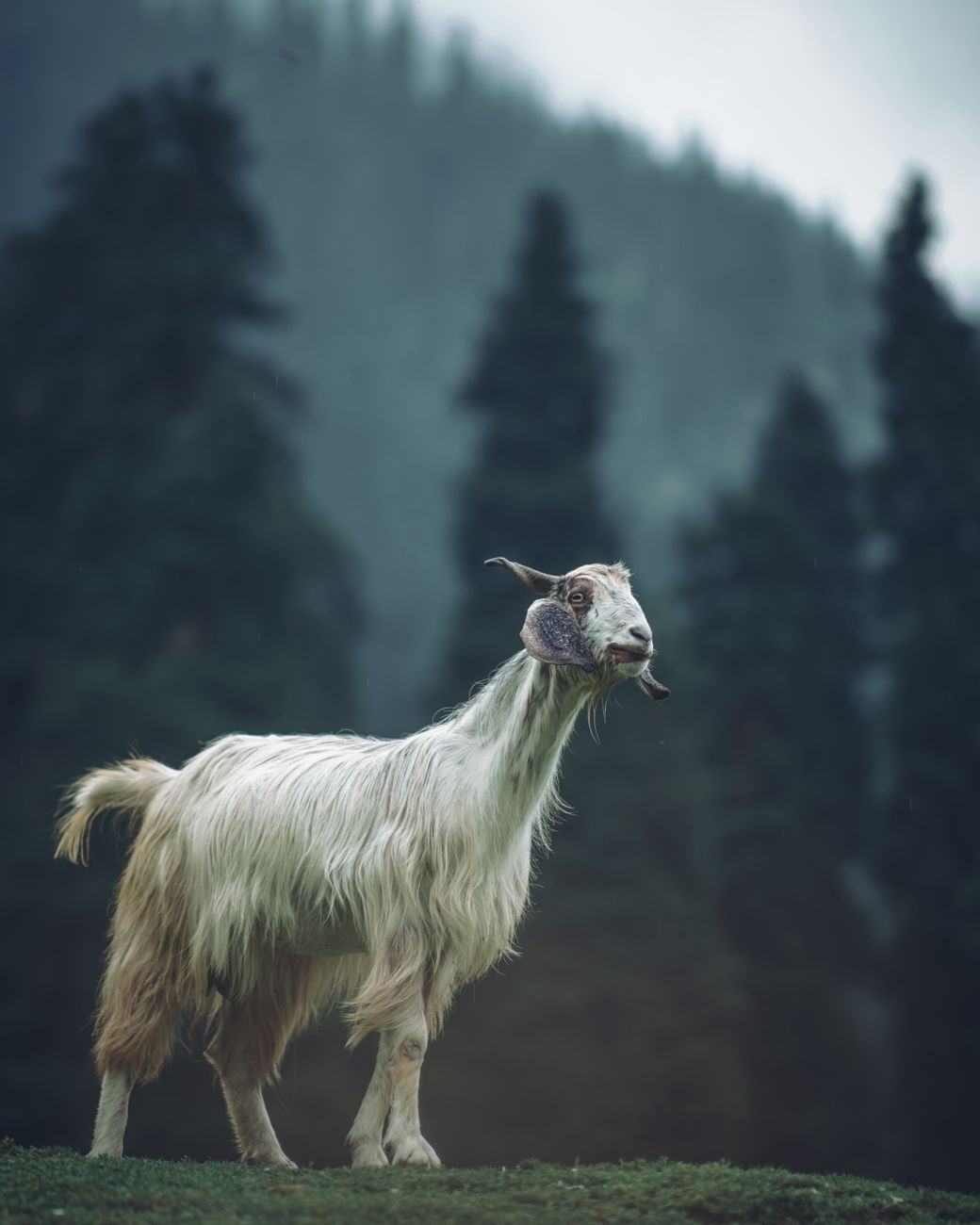
GIRGENTANA GOAT
Capra hircus
DESCRIPTION
Girgentana Goat (Capra hircus) is a unique breed known for its distinctive spiral horns and long, flowing coat. This breed is primarily found in the hilly regions of Sicily, where it has adapted to the rugged terrain. They are known for their gentle temperament and are often kept for their milk, which is used to produce traditional cheeses.
FUN FACTS
- Girgentana Goats are known for their unique spiral horns, which can grow quite large and are a distinctive feature of the breed
- They are also valued for their milk, which is rich and creamy, making it ideal for cheese production, particularly in traditional Sicilian recipes
QUICK INFO
Lifespan12-15 years in the wild, up to 20 years in captivi
Average Weight50-70 kg
Average Length1.2-1.5 m
Diet TypeHerbivore
Social Structuregroup — they typically live in small herds consisting of females and their young, with males often being solitary or forming bachelor groups.
Activity PatternDiurnal
Breeding SeasonAutumn (September-November)
- Habitat
- They thrive in mountainous and hilly areas, often in semi-arid environments. Their habitat is characterized by rocky terrain and sparse vegetation.
- Biomes
- Temperate Forest, Mediterranean
- Native Range
- Native to the island of Sicily, Italy.
- Continent
- Europe
- Countries
- Italy
- Diet
- Girgentana Goats are herbivores, primarily grazing on grasses, shrubs, and other vegetation. They are well adapted to foraging in their natural habitat.
- Diet Type
- Herbivore
- Favorite Food
- grasses, shrubs
- Social Structure
- group — they typically live in small herds consisting of females and their young, with males often being solitary or forming bachelor groups.
- Activity Pattern
- Diurnal
- Group Size
- 5-15
- Territorial
- 0
 LC
LC
50-70 kg
Weight
1.2-1.5 m
Length
0.8-1.0 m at shoulder
Height (Shoulder)
- Coloration
- Typically white with brown or black markings.
- Sexual Dimorphism
- Males are generally larger and have more pronounced horns than females.
- Lifespan
- 12-15 years in the wild, up to 20 years in captivi
- Gestation Period
- 150 days
- Offspring per Birth
- 1-2
- Sexual Maturity
- 6-12 months
- Breeding Season
- Autumn (September-November)
EN
Endangered
IUCN Red List Status
- Population Status
- The population of Girgentana Goats is currently limited, with efforts underway to preserve the breed.
- Wild Population Estimate
- unknown
- Population Trend
- Decreasing
- Endangered
- 1
- Threats
- Main threats include habitat loss and competition with other livestock. Additionally, the breed is at risk due to a decline in traditional farming practices.
- Conservation Program
- There are ongoing conservation efforts to preserve the Girgentana Goat through breeding programs and awareness initiatives.
- Predators
- Wolves, dogs, and large birds of prey can pose threats to young goats.
- Defense Mechanisms
- They rely on their agility and ability to navigate rocky terrain to escape predators.
- Compatible Animals
- none
- Found in Zoos
- Rare