


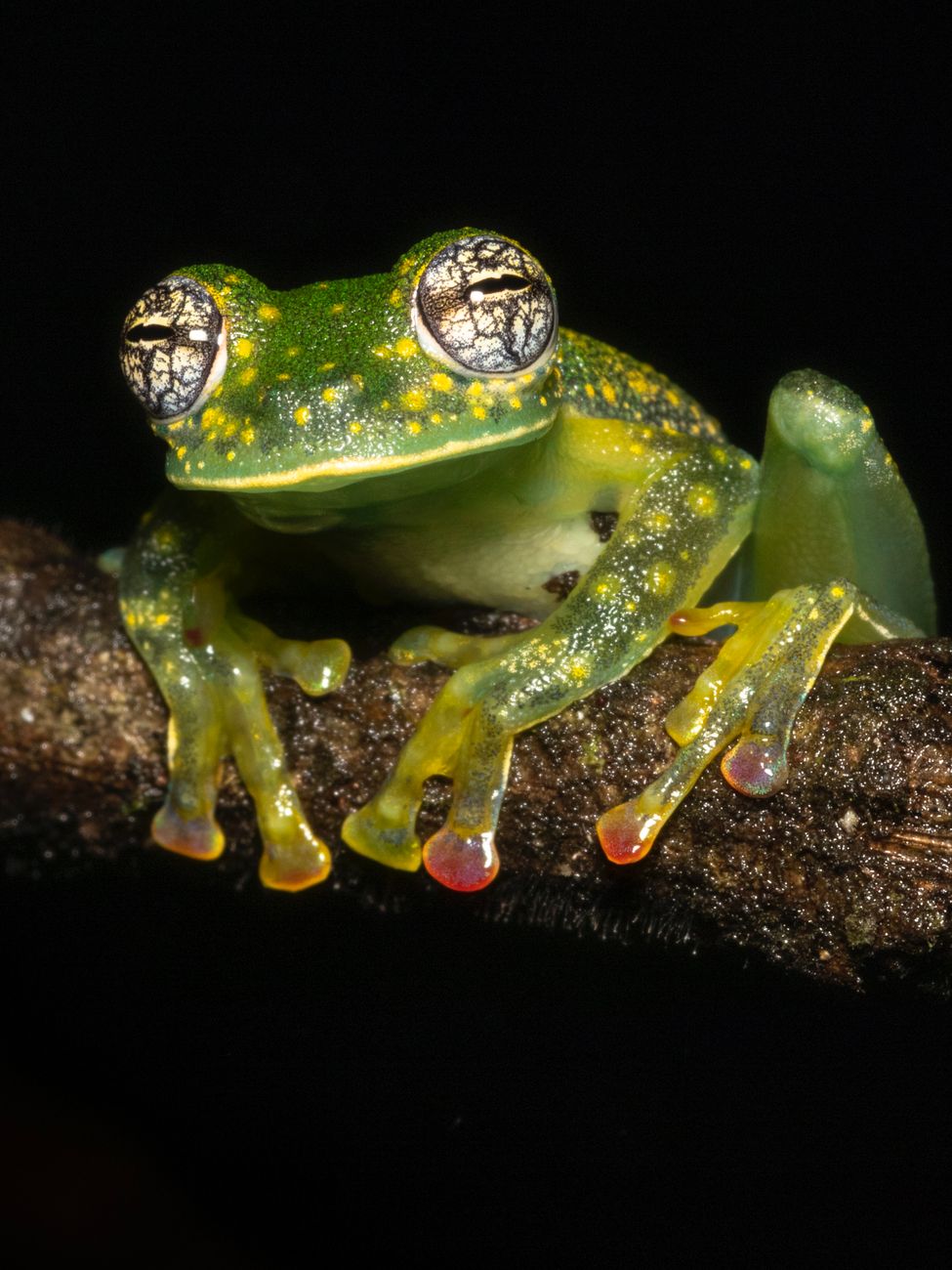
GLASS FROG
Centrolenidae
DESCRIPTION
Glass Frog (Centrolenidae) is a unique family of frogs known for their translucent skin, which allows one to see their internal organs. They are typically small, with bright green coloration on their dorsal side and a clear, glass-like appearance on their ventral side. These frogs are primarily found in tropical rainforests, where they inhabit the foliage and are often seen perched on leaves near streams.
FUN FACTS
- Glass Frogs are often used in scientific research due to their unique skin properties, which can provide insights into transparency and coloration in other species
- | The translucent skin of Glass Frogs is not just for show; it serves a practical purpose by helping them avoid predators in their natural habitat
QUICK INFO
Lifespan5-10 years in the wild
Average Length2-5 cm
Diet TypeInsectivore
Social StructureThey are typically solitary, with males and females coming together only during the breeding season.
Activity PatternNocturnal
Breeding SeasonSpring to early summer
- Habitat
- Glass Frogs thrive in humid, tropical environments, often found in the understory of rainforests. They prefer areas near streams or ponds where they can easily access water for breeding.
- Biomes
- Tropical Rainforest
- Native Range
- They are native to Central and South America, particularly in countries like Costa Rica, Ecuador, and Colombia.
- Continent
- North America, South America
- Countries
- Costa Rica, Ecuador, Colombia, Panama
- Diet
- Glass Frogs primarily feed on small insects and other invertebrates. Their diet consists mainly of flies, ants, and small beetles.
- Diet Type
- Insectivore
- Favorite Food
- small insects
- Social Structure
- They are typically solitary, with males and females coming together only during the breeding season.
- Activity Pattern
- Nocturnal
- Group Size
- 1-2
- Territorial
- 0
 VU
VU
 LC
LC
2-5 cm
Length
- Coloration
- Bright green dorsal side with a translucent ventral side.
- Sexual Dimorphism
- Males are generally smaller than females and have distinct vocal sacs.
- Lifespan
- 5-10 years in the wild
- Offspring per Birth
- 10-30 eggs
- Sexual Maturity
- 1-2 years
- Breeding Season
- Spring to early summer
VU
Vulnerable
IUCN Red List Status
- Population Status
- Some species of Glass Frogs are experiencing population declines due to habitat loss and climate change.
- Wild Population Estimate
- unknown
- Population Trend
- Decreasing
- Endangered
- 1
- Threats
- Main threats include habitat destruction due to deforestation and pollution of water sources. Climate change also poses a significant risk to their survival.
- Conservation Program
- Some conservation efforts are in place to protect their habitats, but specific programs vary by region.
- Predators
- Birds, snakes, and larger amphibians are known predators of Glass Frogs.
- Defense Mechanisms
- Their translucent skin provides camouflage against predators, allowing them to blend in with their surroundings.
- Found in Zoos
- Uncommon