


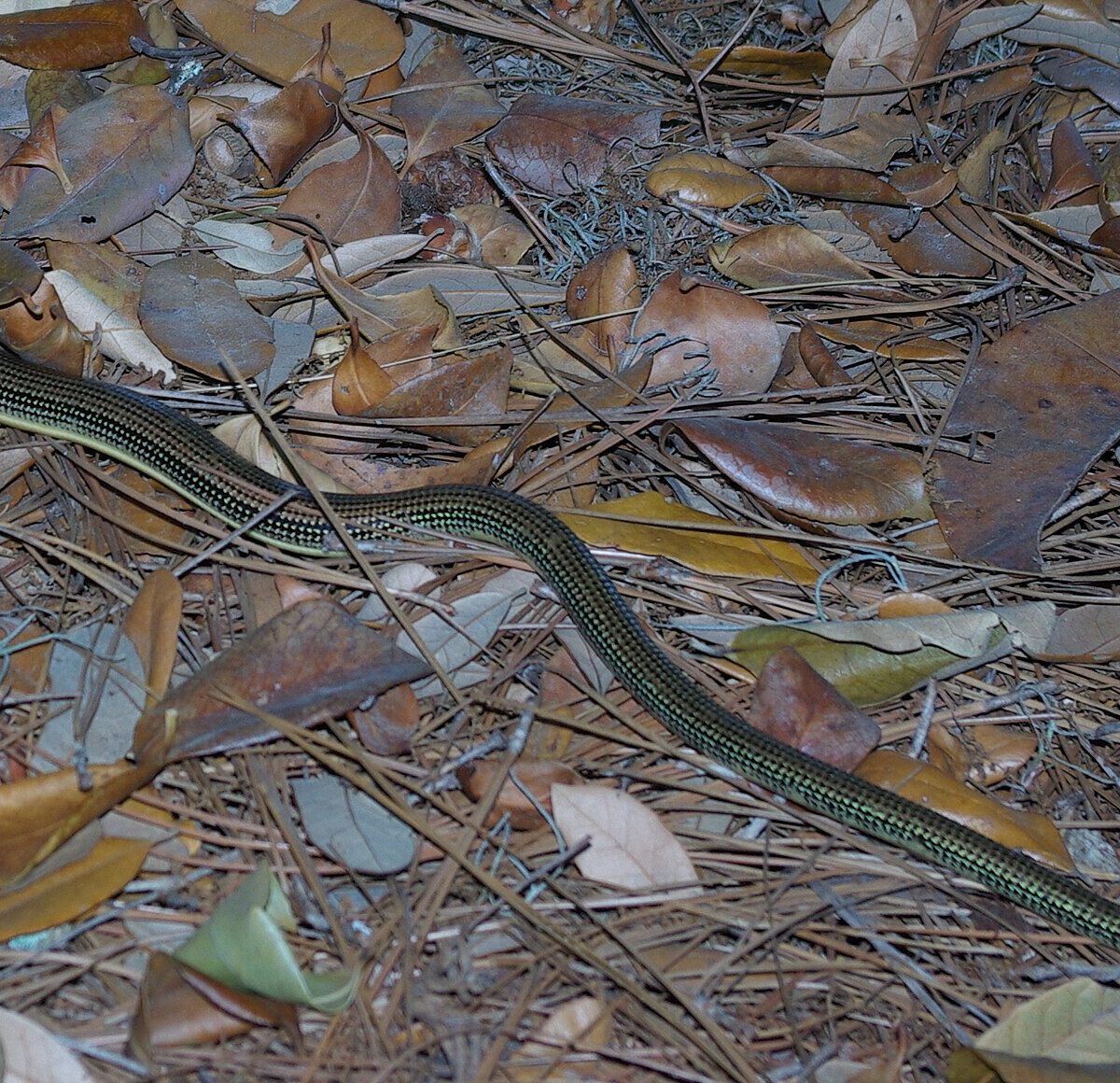
GLASS LIZARD
DESCRIPTION
Glass Lizard, also known as Ophisaurus, is a legless lizard that resembles a snake, with a long, slender body and a smooth, shiny appearance. They can be distinguished from snakes by their eyelids and external ear openings. These lizards are primarily ground-dwelling and are known for their ability to shed their tails as a defense mechanism, which can later regenerate.
FUN FACTS
- Glass Lizards are often mistaken for snakes due to their elongated, legless bodies, but they are actually lizards and possess unique features like eyelids and external ears
- | Unlike many other lizards, Glass Lizards do not have limbs, which allows them to move through their environment with a snake-like slither, making them highly adapted to their habitats
QUICK INFO
Lifespan10-15 years in the wild, up to 20 years in captivi
Average Weight100-200 g
Average Length60-100 cm
Diet TypeInsectivore
Social Structuresolitary, typically found alone except during mating season
Activity PatternDiurnal
Breeding SeasonSpring (April-June)
- Habitat
- Glass Lizards inhabit a variety of environments, including grasslands, forests, and scrublands. They prefer areas with loose soil or leaf litter where they can easily burrow and hide.
- Biomes
- Grassland, Forest, Scrubland
- Native Range
- Glass Lizards are found in North America, particularly in the southeastern United States.
- Continent
- North America
- Countries
- United States
- Diet
- Glass Lizards primarily feed on insects and other small invertebrates, but they may also consume small vertebrates. Their diet is largely dependent on the availability of prey in their habitat.
- Diet Type
- Insectivore
- Favorite Food
- insects, small invertebrates
- Social Structure
- solitary, typically found alone except during mating season
- Activity Pattern
- Diurnal
- Group Size
- 1
- Territorial
- 0
 VU
VU
 LC
LC
100-200 g
Weight
60-100 cm
Length
- Coloration
- typically brown or greenish with a smooth, shiny appearance
- Lifespan
- 10-15 years in the wild, up to 20 years in captivi
- Offspring per Birth
- 5-15
- Sexual Maturity
- 2-3 years
- Breeding Season
- Spring (April-June)
LC
Least Concern
IUCN Red List Status
- Population Status
- The population of Glass Lizards is currently stable, but habitat loss poses a potential threat.
- Wild Population Estimate
- unknown
- Population Trend
- Stable
- Endangered
- 0
- Threats
- Main threats include habitat destruction due to urban development and agriculture. Additionally, they are sometimes collected for the pet trade.
- Predators
- birds of prey, snakes, and larger mammals
- Defense Mechanisms
- Glass Lizards can shed their tails when threatened, allowing them to escape while the predator is distracted.
- Found in Zoos
- Uncommon