


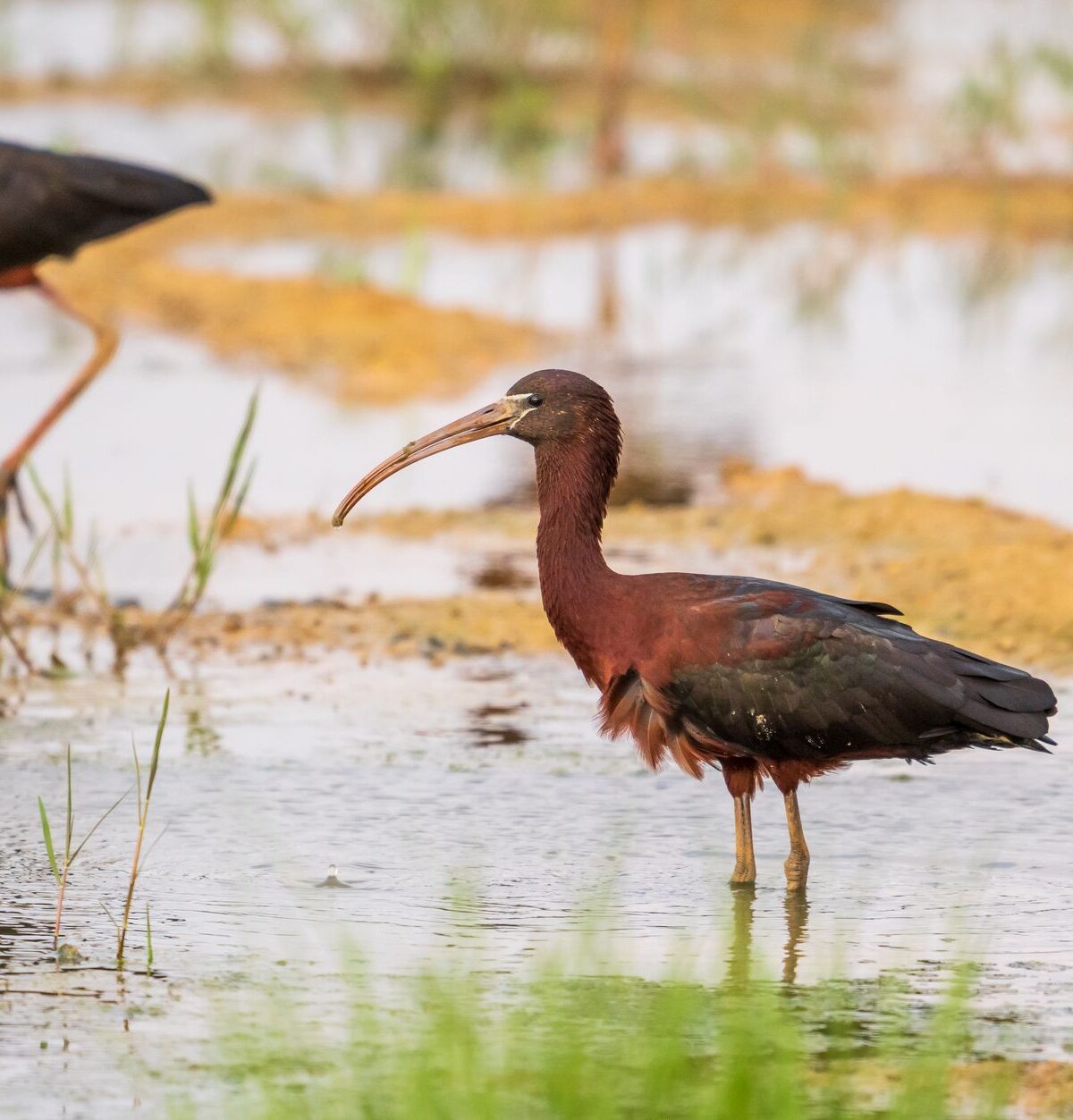
GLOSSY IBIS
Plegadis falcinellus
DESCRIPTION
Glossy Ibis, also known as the Black Ibis, is a medium-sized wading bird characterized by its long, curved bill and iridescent plumage that displays shades of green, purple, and bronze. These birds are often found in wetlands, marshes, and along the edges of lakes, where they forage for food. They are social creatures, often seen in flocks, and exhibit a variety of vocalizations that contribute to their communication.
FUN FACTS
- Glossy Ibises are known for their unique feeding behavior, where they use their long, curved bills to probe into mud and shallow water for food
- This foraging technique allows them to access a variety of prey that other birds may not reach
- | The iridescent plumage of the Glossy Ibis is not only beautiful but also serves a purpose; the colors can help them blend into their wetland habitats, providing camouflage from predators
- Their striking appearance has made them a favorite among birdwatchers and photographers
QUICK INFO
Lifespan10-15 years in the wild
Average Weight0.7-1.5 kg
Average Length65-75 cm
Diet TypeOmnivore
Social Structuregroup — they often forage and nest in colonies, which provides safety in numbers.
Activity PatternDiurnal
Breeding SeasonSpring to early summer
- Habitat
- Glossy Ibises inhabit wetlands, marshes, and coastal areas, often favoring shallow waters where they can easily forage. They are adaptable and can also be found in agricultural fields and flooded pastures.
- Biomes
- Wetlands, Marshes, Coastal
- Native Range
- Glossy Ibises are native to a wide range of regions, including parts of North America, South America, Europe, Africa, and Asia.
- Continent
- North America, South America, Europe, Africa, Asia
- Countries
- United States, Canada, Mexico, Brazil, Argentina, Spain, Italy, Egypt, India
- Diet
- Glossy Ibises primarily feed on invertebrates, small fish, and amphibians, which they find by probing in mud and shallow water. Their diet can vary based on the availability of food sources in their habitat.
- Diet Type
- Omnivore
- Favorite Food
- invertebrates, small fish
- Social Structure
- group — they often forage and nest in colonies, which provides safety in numbers.
- Activity Pattern
- Diurnal
- Group Size
- 10-100
- Territorial
- 0
 DD
CR
DD
CR
0.7-1.5 kg
Weight
65-75 cm
Length
- Coloration
- iridescent dark plumage with a greenish and purplish sheen
- Lifespan
- 10-15 years in the wild
- Offspring per Birth
- 3-5
- Sexual Maturity
- 1-2 years
- Breeding Season
- Spring to early summer
LC
Least Concern
IUCN Red List Status
- Population Status
- The population of Glossy Ibises is currently stable, although local declines have been observed in some areas due to habitat loss.
- Wild Population Estimate
- 100,000-200,000
- Population Trend
- Stable
- Endangered
- 0
- Threats
- Main threats to Glossy Ibises include habitat destruction due to urbanization and agriculture, as well as pollution in their wetland habitats. Climate change also poses a risk by altering their breeding and feeding grounds.
- Predators
- Raptors, such as eagles and hawks, as well as larger mammals like foxes and raccoons may prey on Glossy Ibises, especially their eggs and young.
- Defense Mechanisms
- Glossy Ibises rely on their ability to fly away quickly to escape predators, and they often nest in colonies to reduce the risk of predation.
- Compatible Animals
- other wading birds, ducks
- Found in Zoos
- Uncommon