


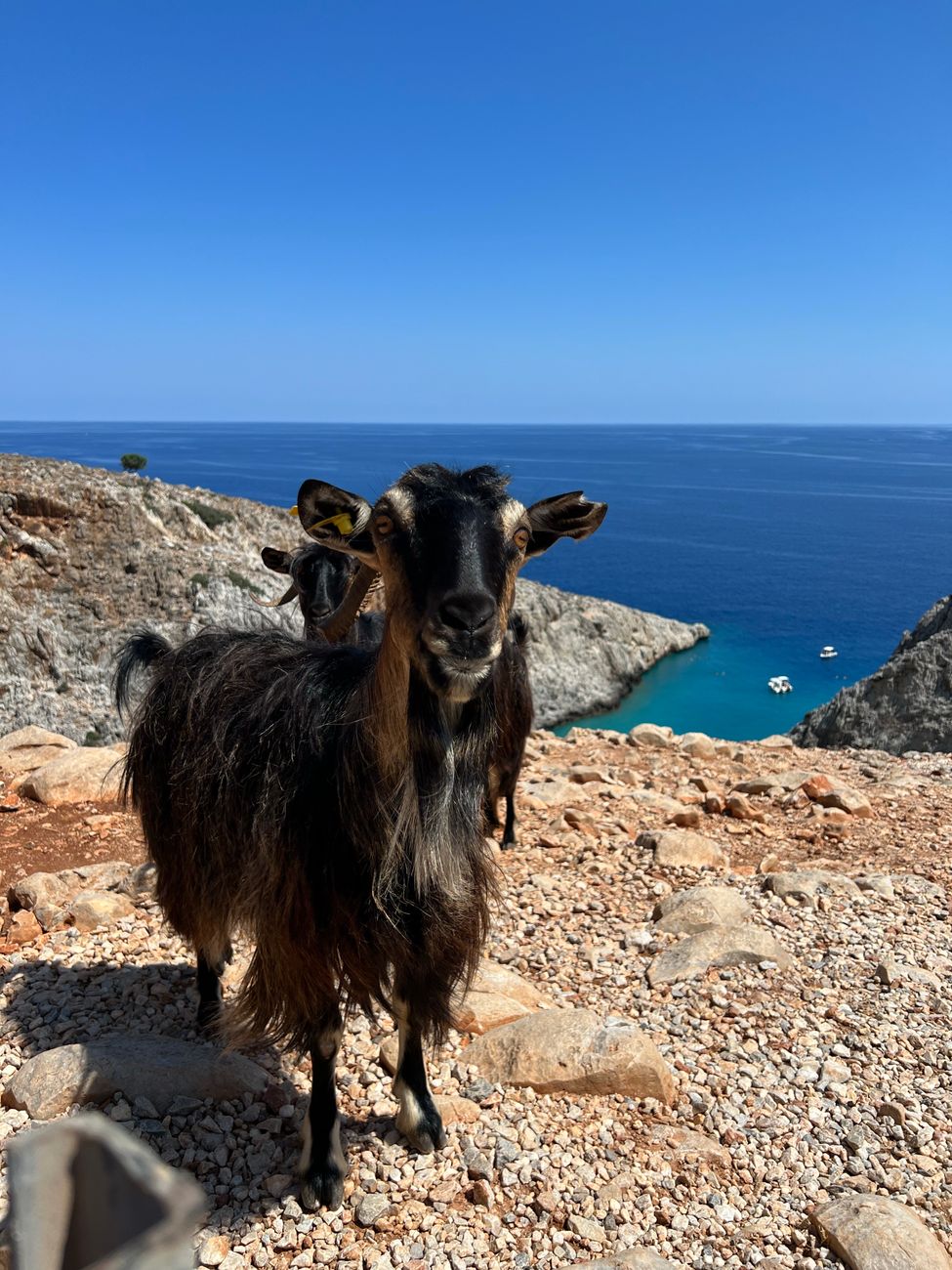
GOAT
Capra hircus
DESCRIPTION
Goat is commonly known as the Domestic Goat, which is a domesticated subspecies of the wild goat. They are characterized by their cloven hooves, bearded chins, and a variety of coat colors and patterns, ranging from solid black to white, brown, or spotted. Goats are highly social animals, often found in herds, and are known for their curious and intelligent behavior, as well as their ability to adapt to various environments.
FUN FACTS
- Goats have a unique way of communicating with each other, using a variety of bleats and vocalizations to express different emotions and needs
- They are also known for their incredible climbing abilities, often scaling steep and rocky terrains that would be challenging for other animals to navigate.|Goats have rectangular pupils, which give them a wide field of vision, allowing them to spot predators from afar
- This adaptation is particularly useful in their natural habitats, where they often face threats from various predators
QUICK INFO
Lifespan15-18 years in the wild, up to 20 years in captivi
Average Weight45-150 kg
Average Length1.2-2.0 m
Diet TypeHerbivore
Social Structuregroup — typically live in herds that can range from a few individuals to several dozen.
Activity PatternDiurnal
Breeding SeasonFall (September-November)
- Habitat
- Goats are adaptable animals that can thrive in diverse habitats, including mountains, grasslands, and forests. They are often found in rocky terrains where they can climb and graze.
- Biomes
- Temperate Forest, Grassland, Mountain
- Native Range
- Originally native to the mountainous regions of Central Asia, goats have been domesticated and are now found worldwide.
- Continent
- Asia, Africa, Europe, North America
- Countries
- Afghanistan, China, India, United States, Greece
- Diet
- Goats are primarily herbivores, feeding on a variety of vegetation including grasses, shrubs, and leaves. They are known for their browsing behavior, which allows them to consume a wide range of plant materials.
- Diet Type
- Herbivore
- Favorite Food
- grasses, shrubs, leaves
- Social Structure
- group — typically live in herds that can range from a few individuals to several dozen.
- Activity Pattern
- Diurnal
- Group Size
- 5-30
- Territorial
- 0
 LC
LC
LC
LC
 LC
LC
45-150 kg
Weight
1.2-2.0 m
Length
0.76-1.2 m at shoulder
Height (Shoulder)
- Coloration
- varies widely; can be solid, spotted, or striped in various colors
- Sexual Dimorphism
- males are generally larger and have beards, while females are smaller and lack beards
- Lifespan
- 15-18 years in the wild, up to 20 years in captivi
- Gestation Period
- 150 days
- Offspring per Birth
- 1-3
- Sexual Maturity
- 6-12 months
- Breeding Season
- Fall (September-November)
LC
Least Concern
IUCN Red List Status
- Population Status
- Goats are one of the most populous domesticated animals worldwide, with millions kept for milk, meat, and fiber.
- Wild Population Estimate
- unknown
- Population Trend
- Stable
- Endangered
- 0
- Threats
- Main threats include habitat loss and competition with wild species for resources. Domestic goats can also contribute to overgrazing in some areas.
- Predators
- wolves, coyotes, mountain lions, eagles
- Defense Mechanisms
- Goats can defend themselves by using their agility to escape predators and can also use their horns if threatened.
- Compatible Animals
- sheep, cattle, llamas
- Found in Zoos
- Common