


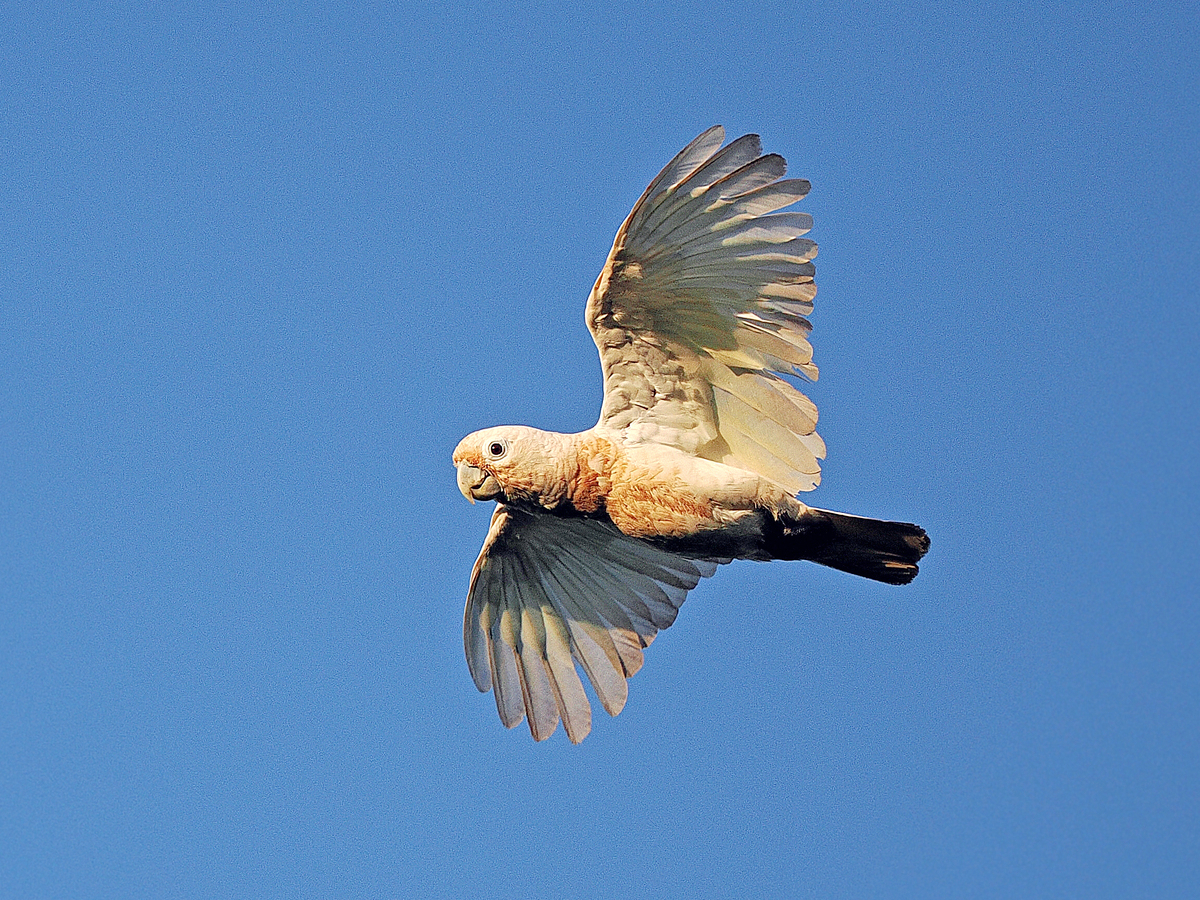
GOFFIN'S COCKATOO
Cacatua goffiniana
DESCRIPTION
Goffin's Cockatoo (Cacatua goffiniana) is a small, intelligent parrot native to the Tanimbar Islands of Indonesia. It has a predominantly white plumage with a distinctive yellow-orange patch on the underside of its wings and a slight crest on its head. Known for its playful and curious nature, this species exhibits complex social behaviors and is capable of using tools, showcasing its high cognitive abilities.
FUN FACTS
- Goffin's Cockatoos are known for their exceptional problem-solving skills, often using tools to access food
- They have been observed using sticks to extract seeds from hard-to-reach places, demonstrating their intelligence and adaptability.|These birds are also highly social and can develop strong bonds with their human caretakers, often displaying affectionate behaviors such as cuddling and preening
- Their playful nature makes them popular pets, but they require a lot of mental stimulation and social interaction
QUICK INFO
Lifespan15-20 years in the wild, up to 30 years in captivi
Average Weight250-300 g
Average Length30-33 cm
Diet TypeHerbivore
Social StructureThey are typically found in pairs or small groups, often forming strong bonds with their mates.
Activity PatternDiurnal
Breeding SeasonSpring (March-May)
- Habitat
- This species inhabits tropical forests, woodlands, and areas with dense vegetation. They are often found in both primary and secondary forests.
- Biomes
- Tropical Rainforest, Woodland
- Native Range
- Goffin's Cockatoo is native to the Tanimbar Islands in Indonesia.
- Continent
- Asia
- Countries
- Indonesia
- Diet
- Goffin's Cockatoo primarily feeds on seeds, nuts, fruits, and berries. They are known to forage in trees and on the ground for their food.
- Diet Type
- Herbivore
- Favorite Food
- seeds, nuts, fruits
- Social Structure
- They are typically found in pairs or small groups, often forming strong bonds with their mates.
- Activity Pattern
- Diurnal
- Group Size
- 2-10
- Territorial
- 0
 LC
LC
250-300 g
Weight
30-33 cm
Length
- Coloration
- Predominantly white with a yellow-orange patch under the wings.
- Sexual Dimorphism
- Males and females are similar in appearance, making it difficult to distinguish between the sexes visually.
- Lifespan
- 15-20 years in the wild, up to 30 years in captivi
- Offspring per Birth
- 1-3
- Sexual Maturity
- 2-3 years
- Breeding Season
- Spring (March-May)
LC
Least Concern
IUCN Red List Status
- Population Status
- The population is currently stable, but habitat loss poses a potential threat.
- Wild Population Estimate
- Unknown
- Population Trend
- Stable
- Endangered
- 0
- Threats
- Main threats include habitat destruction due to logging and agriculture. Additionally, they are sometimes captured for the pet trade.
- Predators
- Natural predators include birds of prey and snakes.
- Defense Mechanisms
- They may use loud vocalizations to warn off potential threats and can also fly away quickly to escape danger.
- Compatible Animals
- Other small parrots, finches
- Found in Zoos
- Common