


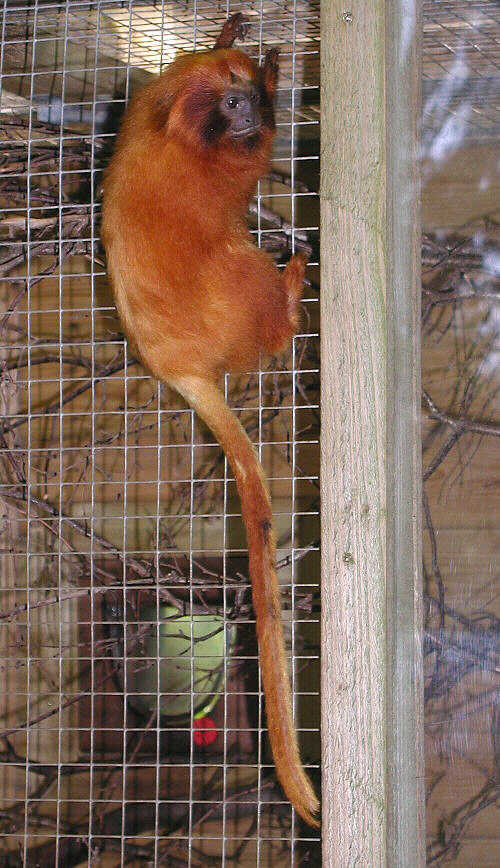
GOLD-HEADED LION TAMARIN
DESCRIPTION
Gold-Headed Lion Tamarin is a small primate native to Brazil, known for its striking golden mane and black body. This species exhibits a high level of social behavior, often found in family groups that communicate through a variety of vocalizations. They play a crucial role in their ecosystem by aiding in seed dispersal, which helps maintain the health of their forest habitat.
FUN FACTS
- Gold-Headed Lion Tamarins are named for their striking golden fur that resembles a lion's mane, which is particularly prominent in males
- They are also known for their cooperative breeding behavior, where older siblings often help care for the younger ones, showcasing a strong family bond.| These tamarins are highly agile and can leap between branches with ease, making them well-adapted to their arboreal lifestyle
- Their social structure is fascinating, as they often engage in grooming behaviors that strengthen social ties within the group
QUICK INFO
Lifespan10-15 years in the wild, up to 20 years in captivi
Average Weight500-700 g
Average Length24-26 cm
Diet TypeOmnivore
Social StructureThey live in family groups, typically consisting of a breeding pair and their offspring.
Activity PatternDiurnal
Breeding SeasonYear-round, with peaks during the rainy season
- Habitat
- They inhabit the Atlantic Forest, characterized by dense, tropical vegetation. This environment provides ample food sources and shelter for the tamarins.
- Biomes
- Tropical Rainforest
- Native Range
- Endemic to the Atlantic Forest of Brazil, specifically in the states of Bahia and Minas Gerais.
- Continent
- South America
- Countries
- Brazil
- Diet
- Gold-Headed Lion Tamarins primarily consume fruits, insects, and small vertebrates. Their diet is diverse, allowing them to adapt to the availability of food in their environment.
- Diet Type
- Omnivore
- Favorite Food
- fruits, insects
- Social Structure
- They live in family groups, typically consisting of a breeding pair and their offspring.
- Activity Pattern
- Diurnal
- Group Size
- 3-8
- Territorial
- 1
 LC
LC
500-700 g
Weight
24-26 cm
Length
- Coloration
- They have a distinctive golden-yellow head and mane, with a black body and limbs.
- Sexual Dimorphism
- Males and females are similar in size and appearance.
- Lifespan
- 10-15 years in the wild, up to 20 years in captivi
- Gestation Period
- 120 days
- Offspring per Birth
- 1-3
- Sexual Maturity
- 1-2 years
- Breeding Season
- Year-round, with peaks during the rainy season
EN
Endangered
IUCN Red List Status
- Population Status
- The population is currently declining due to habitat loss and fragmentation.
- Wild Population Estimate
- 2,000-3,000
- Population Trend
- Decreasing
- Endangered
- 1
- Threats
- Main threats include habitat destruction due to logging and agriculture, as well as the illegal pet trade. These factors have significantly reduced their population and fragmented their habitat.
- Conservation Program
- Conservation efforts include habitat restoration and protection, as well as breeding programs in captivity.
- Predators
- Main predators include birds of prey and snakes.
- Defense Mechanisms
- They use vocalizations to warn each other of potential threats and may flee to the safety of dense foliage.
- Found in Zoos
- Uncommon