


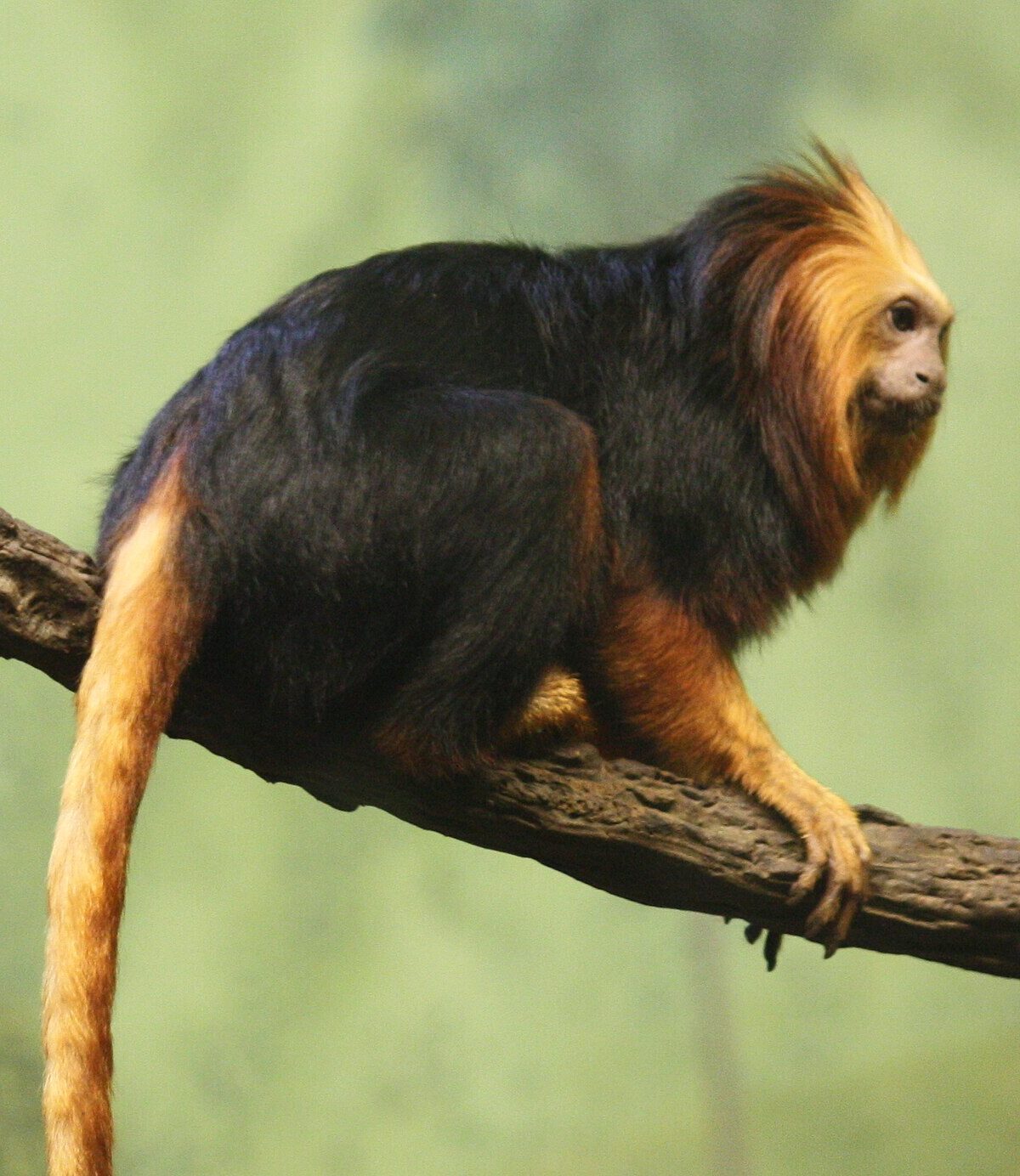
GOLDEN-HEADED LION TAMARIN
Leontopithecus chrysomelas
DESCRIPTION
The Golden-Headed Lion Tamarin is a small primate known for its striking golden-orange fur on the head and shoulders, contrasting with its black body. These tamarins are highly social animals, often found in family groups, and are known for their vocalizations and playful behavior. They inhabit the dense forests of Brazil, where they play a crucial role in seed dispersal, contributing to the health of their ecosystem.
FUN FACTS
- Golden-Headed Lion Tamarins are named for their striking golden fur, which resembles a lion's mane, making them one of the most visually distinctive primates
- They are also known for their cooperative breeding behavior, where older siblings often help care for the younger ones, showcasing a strong family bond and social structure
QUICK INFO
Lifespan10-15 years in the wild, up to 20 years in captivi
Average Weight0.5-1 kg
Average Length24-28 cm
Diet TypeOmnivore
Social StructureThey live in small family groups, typically consisting of a breeding pair and their offspring.
Activity PatternDiurnal
Breeding SeasonYear-round, with peaks in the rainy season
- Habitat
- Golden-Headed Lion Tamarins thrive in tropical rainforests, particularly in areas with abundant fruiting trees. They are arboreal, spending most of their time in the canopy.
- Biomes
- Tropical Rainforest
- Native Range
- They are native to the Atlantic coastal forests of Brazil, specifically in the state of Bahia.
- Continent
- South America
- Countries
- Brazil
- Diet
- They primarily feed on fruits, insects, and small vertebrates. Their diet is diverse, allowing them to adapt to seasonal changes in food availability.
- Diet Type
- Omnivore
- Favorite Food
- Fruits and insects
- Social Structure
- They live in small family groups, typically consisting of a breeding pair and their offspring.
- Activity Pattern
- Diurnal
- Group Size
- 2-8
- Territorial
- 1
 LC
LC
0.5-1 kg
Weight
24-28 cm
Length
- Coloration
- Golden-orange fur on the head and shoulders with a black body.
- Sexual Dimorphism
- Males and females are similar in size and appearance.
- Lifespan
- 10-15 years in the wild, up to 20 years in captivi
- Gestation Period
- 120 days
- Offspring per Birth
- 1-3
- Sexual Maturity
- 1-2 years
- Breeding Season
- Year-round, with peaks in the rainy season
EN
Endangered
IUCN Red List Status
- Population Status
- The population is currently declining due to habitat loss and fragmentation.
- Wild Population Estimate
- 3,000-5,000
- Population Trend
- Decreasing
- Endangered
- 1
- Threats
- Main threats include habitat destruction due to logging and agriculture, as well as the illegal pet trade. These factors have significantly reduced their population and fragmented their habitats.
- Conservation Program
- Conservation efforts include habitat restoration and protection, as well as breeding programs in captivity.
- Predators
- Main predators include birds of prey, snakes, and larger mammals such as felids.
- Defense Mechanisms
- They rely on their agility and ability to escape into the trees to avoid predators.
- Compatible Animals
- Other small primates, such as marmosets, in controlled environments.
- Found in Zoos
- Uncommon