


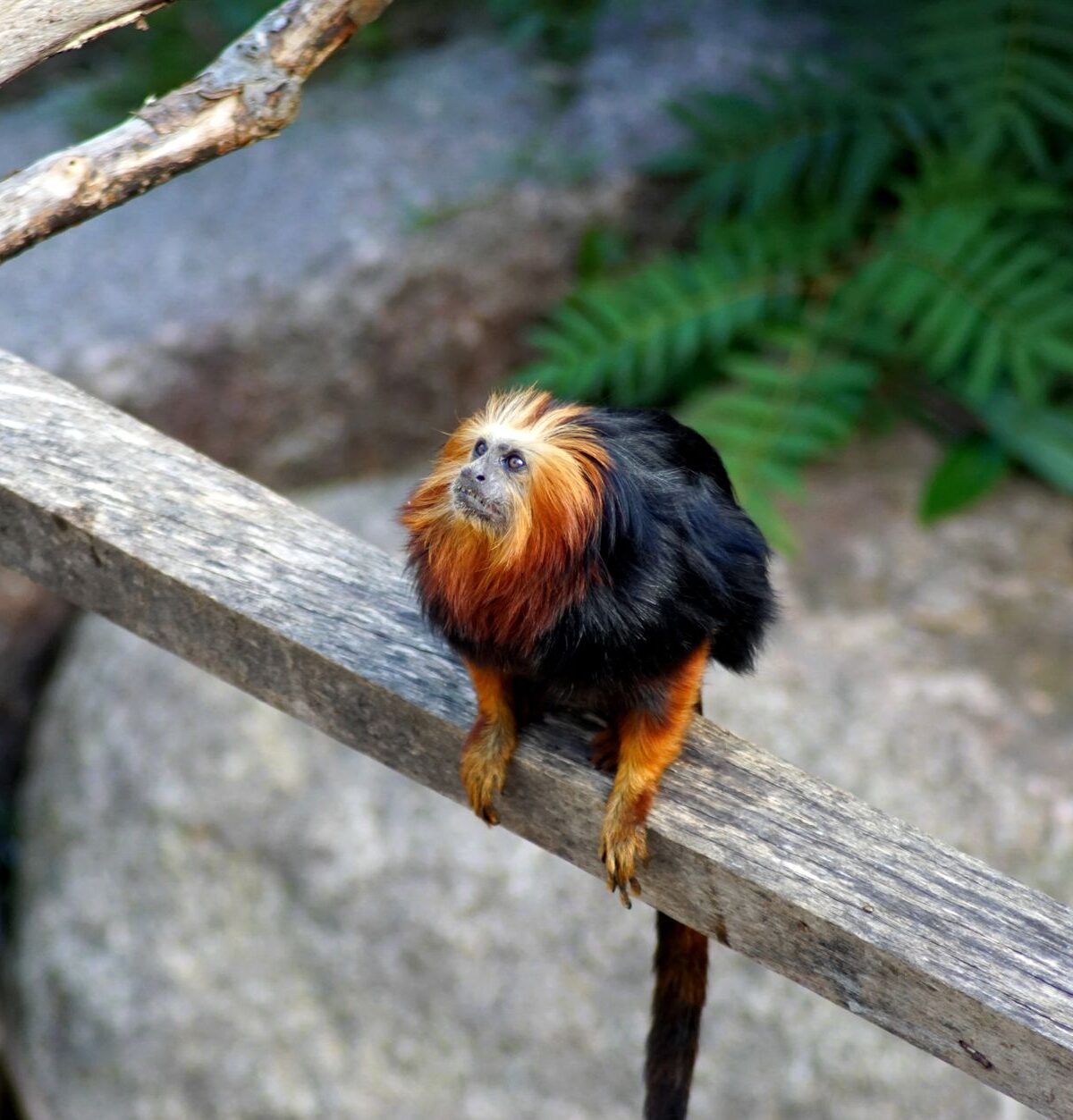
GOLDEN-HEADED TAMARIN
Leontopithecus chrysomelas
DESCRIPTION
Golden-headed tamarin (Leontopithecus chrysomelas) is commonly known as the Golden tamarin and the Golden-headed lion tamarin. This small primate is characterized by its striking golden-yellow fur on the head and shoulders, contrasting with its darker body. They are highly social animals, often found in family groups, and are known for their vocalizations and playful behavior.
FUN FACTS
- Golden-headed tamarins are known for their unique social behaviors, including cooperative breeding, where older siblings help care for the younger ones
- They also have a complex vocal communication system, using different calls to convey various messages to their group.|These tamarins are highly agile and can leap between branches with great precision, which helps them evade predators and navigate their forest habitat effectively
QUICK INFO
Lifespan10-15 years in the wild, up to 20 years in captivi
Average Weight0.5-1 kg
Average Length25-30 cm
Diet TypeOmnivore
Social StructureThey live in family groups, typically consisting of a breeding pair and their offspring.
Activity PatternDiurnal
Breeding SeasonYear-round
- Habitat
- They inhabit tropical rainforests, particularly in areas with dense vegetation. These tamarins are arboreal, spending most of their time in the trees.
- Biomes
- Tropical Rainforest
- Native Range
- They are native to the Atlantic coastal forests of Brazil.
- Continent
- South America
- Countries
- Brazil
- Diet
- Golden-headed tamarins primarily eat fruits, insects, and small vertebrates. They are known to forage in trees, using their dexterous hands to extract food from crevices.
- Diet Type
- Omnivore
- Favorite Food
- fruits, insects
- Social Structure
- They live in family groups, typically consisting of a breeding pair and their offspring.
- Activity Pattern
- Diurnal
- Group Size
- 2-8
- Territorial
- 1
 LC
LC
0.5-1 kg
Weight
25-30 cm
Length
- Coloration
- They have a distinctive golden-yellow head and limbs, with a darker body and tail.
- Sexual Dimorphism
- Males and females are similar in size and appearance.
- Lifespan
- 10-15 years in the wild, up to 20 years in captivi
- Gestation Period
- 140 days
- Offspring per Birth
- 1-3
- Sexual Maturity
- 1-2 years
- Breeding Season
- Year-round
EN
Endangered
IUCN Red List Status
- Population Status
- The population is currently declining due to habitat loss and fragmentation.
- Wild Population Estimate
- Less than 10,000
- Population Trend
- Decreasing
- Endangered
- 1
- Threats
- The main threats to Golden-headed tamarins include habitat destruction due to logging and agriculture, as well as the illegal pet trade. These factors have significantly reduced their natural habitat and population numbers.
- Conservation Program
- Conservation efforts include habitat protection and restoration, as well as breeding programs in captivity.
- Predators
- Main predators include birds of prey and snakes.
- Defense Mechanisms
- They rely on their agility and ability to escape into the trees to avoid predators.
- Found in Zoos
- Uncommon