


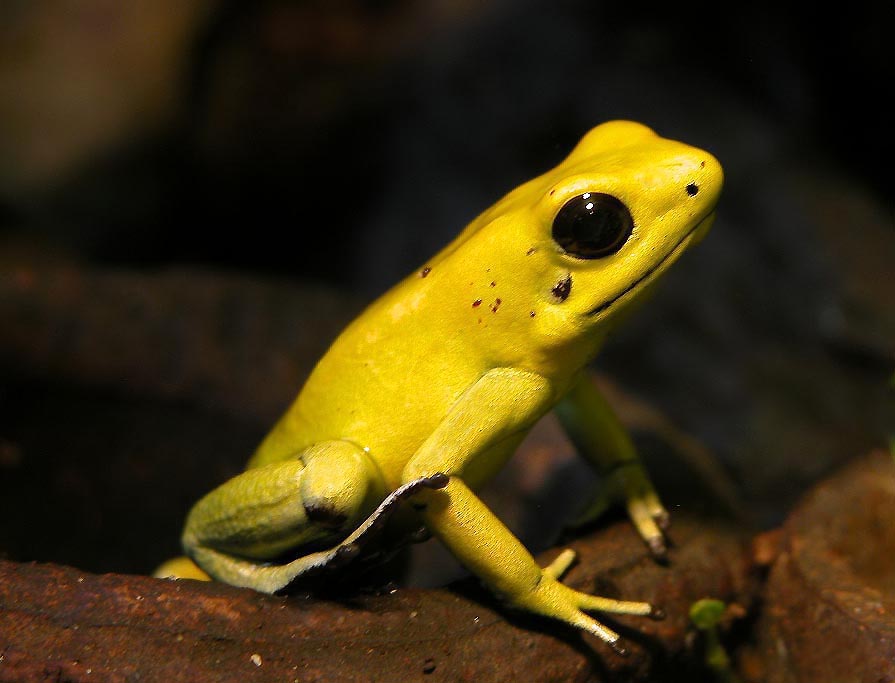
GOLDEN POISON FROG
Phyllobates terribilis
DESCRIPTION
The Golden Poison Frog, or Phyllobates terribilis, is one of the most toxic animals on Earth, known for its vibrant yellow coloration. This small frog typically measures about 1.5 to 2 inches in length and has a smooth, shiny skin that serves as a warning to potential predators. In the wild, these frogs are often found in humid tropical rainforests, where they thrive in the leaf litter and among the vegetation.
FUN FACTS
- The Golden Poison Frog is so toxic that just a few micrograms of its skin secretion can kill a human
- Indigenous people have historically used the frog's poison to coat the tips of their blow darts for hunting.| Despite their toxicity, Golden Poison Frogs are often kept in captivity, where they can be safely observed without the risk of poisoning, provided they are fed a diet that does not include the toxic ants they consume in the wild
QUICK INFO
Lifespan5-10 years in the wild, up to 15 years in captivit
Average Length1.5-2 inches
Diet TypeInsectivore
Social Structuresolitary, with males establishing territories
Activity PatternDiurnal
- Habitat
- These frogs inhabit lowland tropical rainforests, often near water sources such as streams and ponds. They prefer areas with dense vegetation that provides cover and humidity.
- Biomes
- Tropical Rainforest
- Native Range
- The Golden Poison Frog is native to the rainforests of Colombia, particularly in the Chocó region.
- Continent
- South America
- Countries
- Colombia
- Diet
- Golden Poison Frogs primarily feed on small invertebrates, particularly ants and termites. Their diet is crucial for their toxicity, as the alkaloids they accumulate from these insects contribute to their potent poison.
- Diet Type
- Insectivore
- Favorite Food
- ants, termites
- Social Structure
- solitary, with males establishing territories
- Activity Pattern
- Diurnal
- Group Size
- 1-2
- Territorial
- 1
 LC
LC
 VU
VU
1.5-2 inches
Length
- Coloration
- bright yellow with black markings
- Sexual Dimorphism
- males are typically smaller than females
- Lifespan
- 5-10 years in the wild, up to 15 years in captivit
- Sexual Maturity
- 1-2 years
CR
Critically Endangered
IUCN Red List Status
- Population Status
- The population of Golden Poison Frogs is currently declining due to habitat loss and environmental changes.
- Wild Population Estimate
- unknown
- Population Trend
- Decreasing
- Endangered
- 1
- Threats
- Main threats include habitat destruction due to deforestation and pollution. Climate change also poses a significant risk to their survival.
- Predators
- snakes, birds, and some mammals, although their toxicity deters many potential predators.
- Defense Mechanisms
- The Golden Poison Frog's skin contains potent alkaloids that can cause serious harm or death to predators.
- Found in Zoos
- Uncommon