


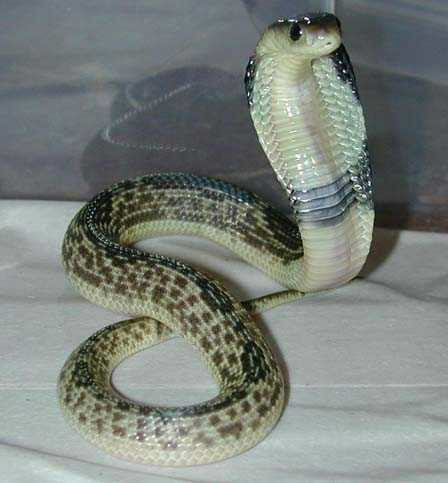
GOLDEN SPITTING COBRA
Naja sputatrix
DESCRIPTION
Golden Spitting Cobra (Naja sputatrix) is commonly known as the Indonesian Cobra and is recognized for its striking golden-yellow coloration, which can vary among individuals. This species exhibits a distinctive hood that it can expand when threatened, displaying its warning coloration to potential predators. Inhabiting a range of environments, the Golden Spitting Cobra is known for its ability to spit venom accurately at threats, a behavior that serves as both a defense mechanism and a means of subduing prey.
FUN FACTS
- The Golden Spitting Cobra is capable of accurately spitting venom up to 3 meters away, which is a remarkable adaptation for defense
- This species can also control the amount of venom it expels, allowing it to deliver a dry bite when necessary, which is useful for hunting or self-defense without wasting venom.| Unlike many other snakes, the Golden Spitting Cobra has a unique ability to adjust its venom composition based on the type of prey it is targeting, making it a highly effective predator in its environment
QUICK INFO
Lifespan10-15 years in the wild, up to 20 years in captivi
Average Weight1-2 kg
Average Length1.5-2.0 m
Diet TypeCarnivore
Social Structuresolitary, typically found alone except during mating season
Activity PatternDiurnal
Breeding SeasonSpring (March-May)
- Habitat
- This species is typically found in forests, grasslands, and agricultural areas, often near water sources. It prefers habitats that provide ample cover and hunting opportunities.
- Biomes
- Tropical Rainforest, Savanna
- Native Range
- The Golden Spitting Cobra is native to Southeast Asia, particularly found in Indonesia, Malaysia, and parts of the Philippines.
- Continent
- Asia
- Countries
- Indonesia, Malaysia, Philippines
- Diet
- The Golden Spitting Cobra primarily feeds on small mammals, birds, and other reptiles. It uses its potent venom to immobilize its prey before consumption.
- Diet Type
- Carnivore
- Favorite Food
- small mammals, birds, reptiles
- Social Structure
- solitary, typically found alone except during mating season
- Activity Pattern
- Diurnal
- Group Size
- 1
- Territorial
- 0
 VU
VU
1-2 kg
Weight
1.5-2.0 m
Length
- Coloration
- golden-yellow with darker bands or spots
- Sexual Dimorphism
- males are generally larger than females
- Lifespan
- 10-15 years in the wild, up to 20 years in captivi
- Offspring per Birth
- 10-20
- Sexual Maturity
- 2-3 years
- Breeding Season
- Spring (March-May)
LC
Least Concern
IUCN Red List Status
- Population Status
- The population status is currently stable, but habitat destruction poses a potential threat.
- Wild Population Estimate
- unknown
- Population Trend
- Stable
- Endangered
- 0
- Threats
- Main threats include habitat loss due to deforestation and human encroachment. Additionally, they are sometimes hunted for their skin and venom.
- Predators
- birds of prey, larger snakes, and mammals such as mongooses
- Defense Mechanisms
- The Golden Spitting Cobra can spit venom with remarkable accuracy, targeting the eyes of threats to deter them.
- Found in Zoos
- Uncommon