


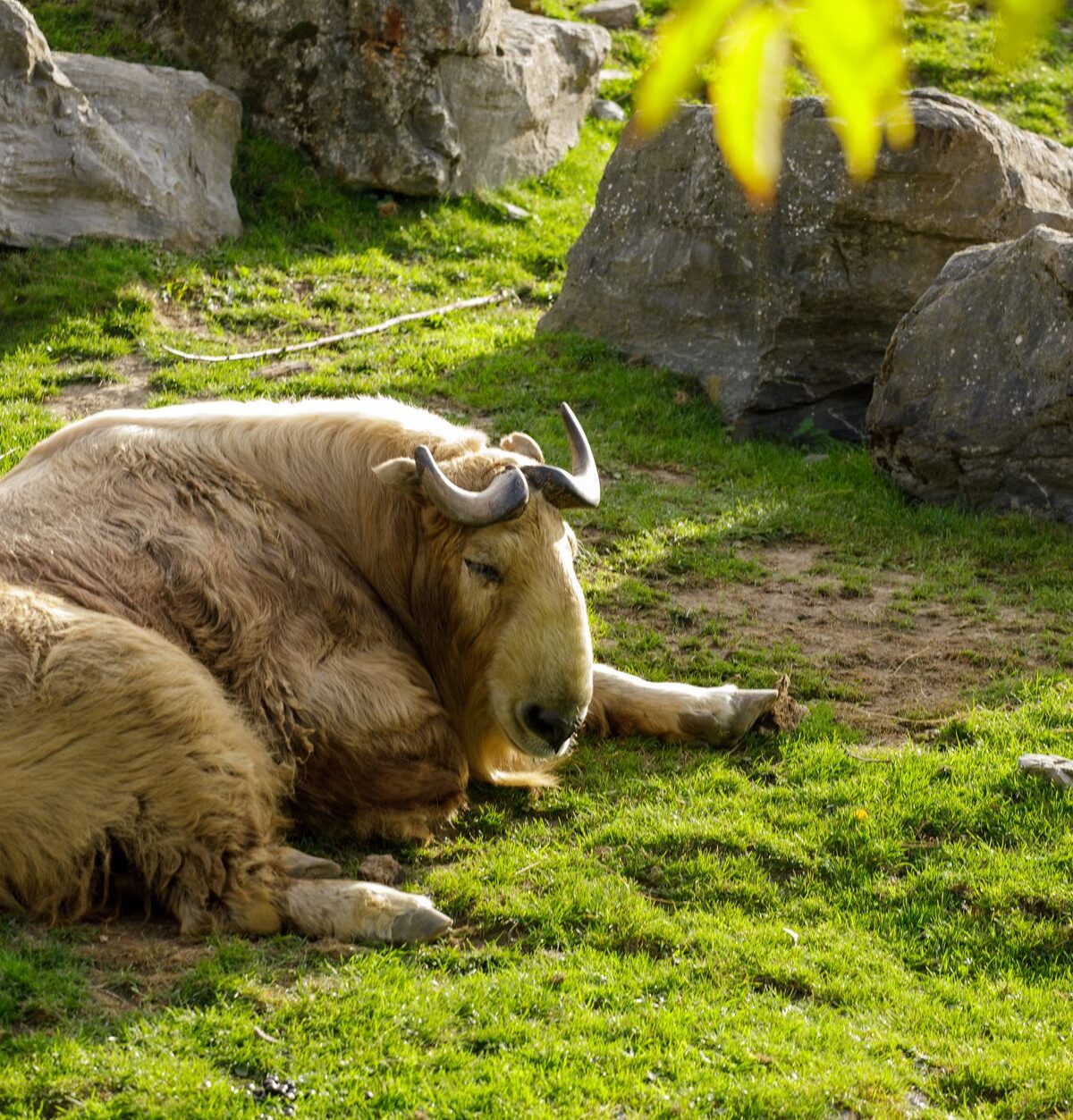
GOLDEN TAKIN
Budorcas taxicolor bedfordi
DESCRIPTION
Golden Takin is a large, herbivorous mammal native to the mountainous regions of Southeast Asia. It has a distinctive golden-brown coat, which helps it blend into its natural habitat of dense forests and steep slopes. Known for its stocky build and short legs, the Golden Takin is a social animal that often forms small herds, displaying a range of behaviors from grazing to climbing steep terrains in search of food.
FUN FACTS
- Golden Takins are known for their unique adaptations to high-altitude living, including a specialized respiratory system that allows them to thrive in low-oxygen environments
- They are also remarkable climbers, often seen navigating steep rocky slopes with ease, which is unusual for such large animals.|The Golden Takin is a cultural symbol in Bhutan, where it is considered a national animal
- It is often depicted in local art and folklore, highlighting its significance in the region's heritage
QUICK INFO
Lifespan15-20 years in wild, up to 30 in captivity
Average Weight150-250 kg
Average Length1.8-2.5 m
Diet TypeHerbivore
Social Structuregroup — they often form small herds for social interaction and protection.
Activity PatternDiurnal
Breeding SeasonSpring (March-May)
- Habitat
- Golden Takins inhabit mountainous and hilly regions, often found in temperate forests and alpine meadows. They prefer areas with dense vegetation that provide both food and cover from predators.
- Biomes
- Temperate Forest, Alpine
- Native Range
- The native range of the Golden Takin includes the mountainous regions of China, Bhutan, and northern India.
- Continent
- Asia
- Countries
- China, Bhutan, India
- Diet
- Golden Takins primarily feed on grasses, leaves, and shrubs, utilizing their strong jaws to browse on tough vegetation. They are known to consume a variety of plant materials depending on seasonal availability.
- Diet Type
- Herbivore
- Favorite Food
- grasses, leaves, shrubs
- Social Structure
- group — they often form small herds for social interaction and protection.
- Activity Pattern
- Diurnal
- Group Size
- 5-20
- Territorial
- 0
 EN
EN
 VU
VU
150-250 kg
Weight
1.8-2.5 m
Length
1.2 m at shoulder
Height (Shoulder)
- Coloration
- golden-brown coat with lighter underparts
- Sexual Dimorphism
- males are generally larger than females
- Lifespan
- 15-20 years in wild, up to 30 in captivity
- Gestation Period
- 110 days
- Offspring per Birth
- 1
- Sexual Maturity
- 3-4 years
- Breeding Season
- Spring (March-May)
LC
Least Concern
IUCN Red List Status
- Population Status
- The population of Golden Takins is currently stable, but they face threats from habitat loss and hunting.
- Wild Population Estimate
- 20,000-25,000
- Population Trend
- Stable
- Endangered
- 0
- Threats
- Main threats to Golden Takins include habitat destruction due to logging and agricultural expansion, as well as hunting for their meat and horns. Conservation efforts are needed to ensure their continued survival in the wild.
- Predators
- Tigers, leopards, and wolves are known predators of the Golden Takin.
- Defense Mechanisms
- Golden Takins rely on their agility and ability to navigate difficult terrain to escape predators, often fleeing to steep cliffs where they can evade capture.
- Found in Zoos
- Uncommon