


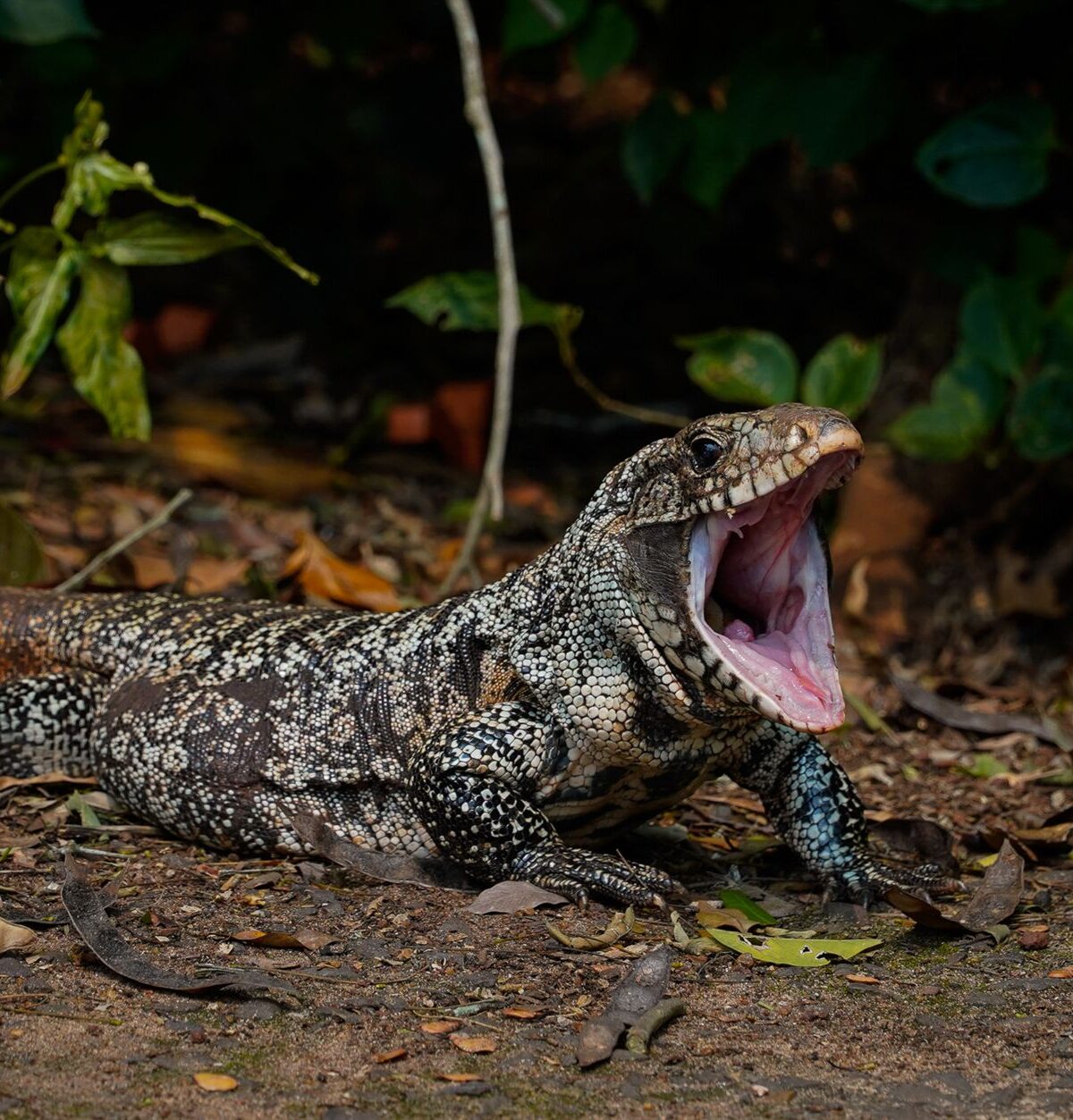
GOLDEN TEGU
Tupinambis teguixin
DESCRIPTION
Golden Tegu (Tupinambis teguixin) is a large lizard known for its striking golden coloration, which can vary from bright yellow to a more muted gold depending on the individual and environmental factors. This species exhibits a robust body and a long tail, which it uses for balance and communication. Golden Tegus are diurnal and are often seen basking in the sun, displaying a curious and intelligent behavior that makes them popular in the exotic pet trade.
FUN FACTS
- Golden Tegus are known for their intelligence and can be trained to perform simple tasks, making them popular among reptile enthusiasts
- They also have a unique ability to change their behavior based on their environment, showcasing a level of adaptability that is quite remarkable in reptiles.|In the wild, Golden Tegus can often be seen basking in the sun, which is essential for their thermoregulation
- They are also known to dig burrows, which provide shelter from predators and extreme weather conditions
QUICK INFO
Lifespan10-15 years in the wild, up to 20 years in captivi
Average Weight4-10 kg
Average Length1-1.5 m
Diet TypeOmnivore
Social Structuresolitary, though they may be seen in pairs during the breeding season
Activity PatternDiurnal
Breeding SeasonSpring (September-November)
- Habitat
- Golden Tegus inhabit a range of environments, including tropical rainforests, savannas, and grasslands. They prefer areas with ample cover and access to water sources.
- Biomes
- Tropical Rainforest, Savanna
- Native Range
- The native range of the Golden Tegu includes parts of South America, particularly in countries like Brazil, Paraguay, and Argentina.
- Continent
- South America
- Countries
- Brazil, Paraguay, Argentina
- Diet
- Golden Tegus are omnivorous, consuming a varied diet that includes fruits, insects, small mammals, and eggs. They are known to forage actively and can adapt their diet based on seasonal availability.
- Diet Type
- Omnivore
- Favorite Food
- fruits, insects, small mammals
- Social Structure
- solitary, though they may be seen in pairs during the breeding season
- Activity Pattern
- Diurnal
- Group Size
- 1-2
- Territorial
- 0
 VU
VU
 LC
LC
4-10 kg
Weight
1-1.5 m
Length
- Coloration
- golden-yellow with dark bands or spots
- Sexual Dimorphism
- males are generally larger and more robust than females
- Lifespan
- 10-15 years in the wild, up to 20 years in captivi
- Offspring per Birth
- 10-20
- Sexual Maturity
- 2-3 years
- Breeding Season
- Spring (September-November)
LC
Least Concern
IUCN Red List Status
- Population Status
- The population of Golden Tegus is currently stable, but habitat loss poses a potential threat.
- Wild Population Estimate
- unknown
- Population Trend
- Stable
- Endangered
- 0
- Threats
- Main threats include habitat destruction due to agriculture and urbanization, as well as illegal pet trade. These factors can lead to localized declines in their populations.
- Predators
- Birds of prey, large snakes, and mammals such as jaguars may prey on Golden Tegus.
- Defense Mechanisms
- Golden Tegus can use their strong tails to defend themselves and may also exhibit aggressive posturing when threatened.
- Found in Zoos
- Common