


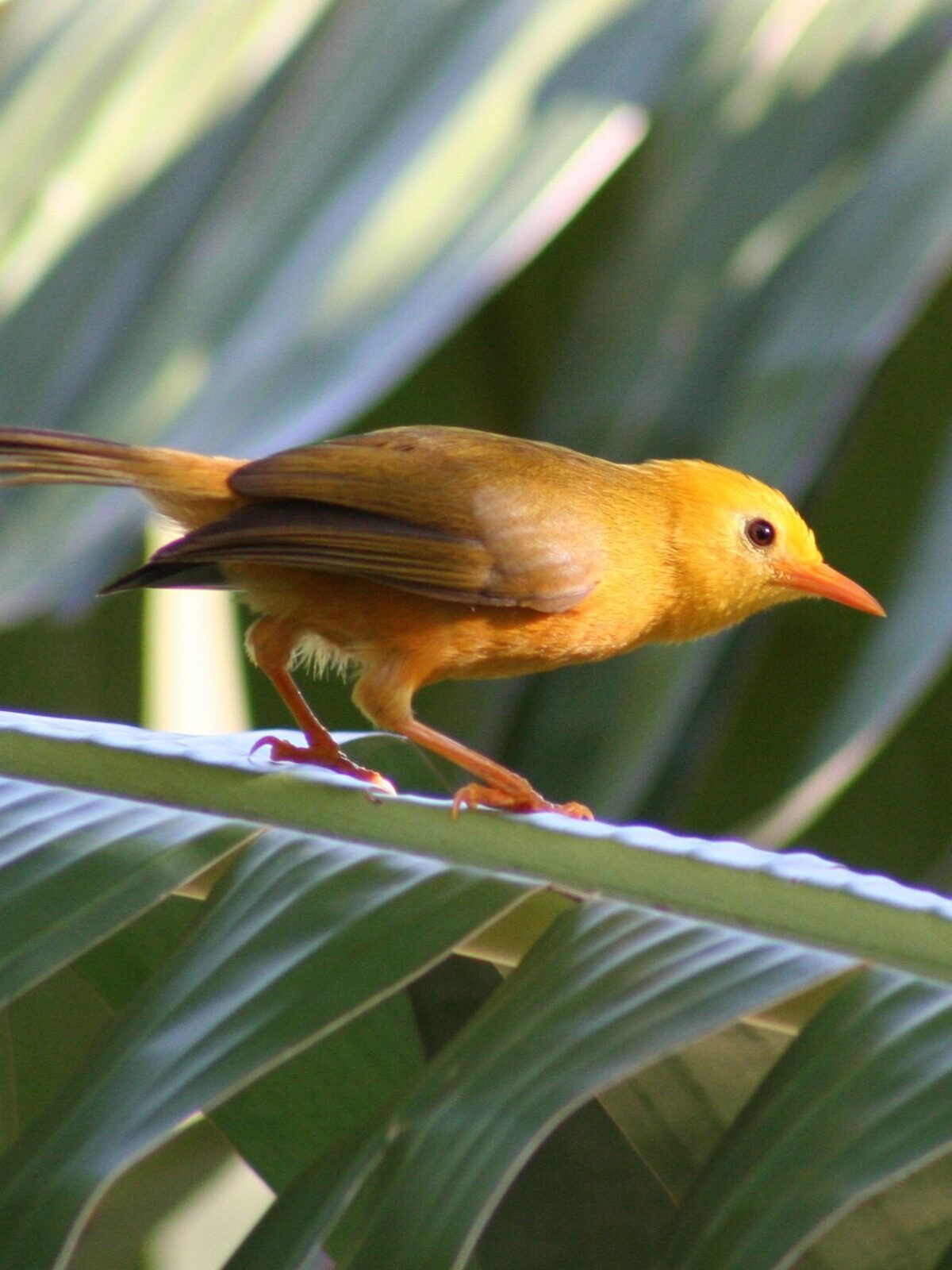
GOLDEN WHITE-EYE
Zosterops aureus
DESCRIPTION
Golden White-Eye (Zosterops aureus) is a small passerine bird known for its striking appearance, characterized by a bright yellow body and distinctive white eye-ring. This species is primarily found in forested areas, where it flits through the foliage in search of food. Its behavior is often social, as it can be seen foraging in small groups, contributing to its lively presence in its natural habitat.
FUN FACTS
- Golden White-Eyes are known for their remarkable agility, allowing them to navigate through dense vegetation with ease
- They have a unique vocalization that consists of a series of high-pitched notes, which they use to communicate with each other in their flocks.| These birds play an important ecological role as pollinators and seed dispersers, helping to maintain the health of their forest habitats
QUICK INFO
Lifespanup to 5 years in the wild
Average Weight10-15 g
Average Length10-12 cm
Diet TypeOmnivore
Social Structuregroup — they are often seen foraging in small flocks.
Activity PatternDiurnal
Breeding SeasonSpring (September-November)
- Habitat
- This species inhabits subtropical or tropical moist lowland forests and moist montane forests. They prefer dense vegetation where they can easily find food and shelter.
- Biomes
- Tropical Rainforest, Montane
- Native Range
- The Golden White-Eye is native to the islands of the Solomon Islands.
- Continent
- Oceania
- Countries
- Solomon Islands
- Diet
- Golden White-Eyes primarily feed on fruits, nectar, and insects, showcasing their omnivorous diet. They play a crucial role in their ecosystem by aiding in pollination and seed dispersal.
- Diet Type
- Omnivore
- Favorite Food
- fruits, nectar, insects
- Social Structure
- group — they are often seen foraging in small flocks.
- Activity Pattern
- Diurnal
- Group Size
- 5-15
- Territorial
- 0

10-15 g
Weight
10-12 cm
Length
- Coloration
- bright yellow body with a white eye-ring
- Lifespan
- up to 5 years in the wild
- Offspring per Birth
- 2-4
- Sexual Maturity
- 1 year
- Breeding Season
- Spring (September-November)
LC
Least Concern
IUCN Red List Status
- Population Status
- The population of Golden White-Eyes is currently stable, but habitat loss poses a potential threat.
- Wild Population Estimate
- unknown
- Population Trend
- Stable
- Endangered
- 0
- Threats
- The main threats to Golden White-Eyes include habitat destruction due to logging and agricultural expansion. These activities reduce their natural habitat and food sources.
- Predators
- Common predators include larger birds of prey and introduced species such as rats and cats.
- Defense Mechanisms
- They rely on their agility and ability to quickly maneuver through dense foliage to evade predators.
- Found in Zoos
- Rare