


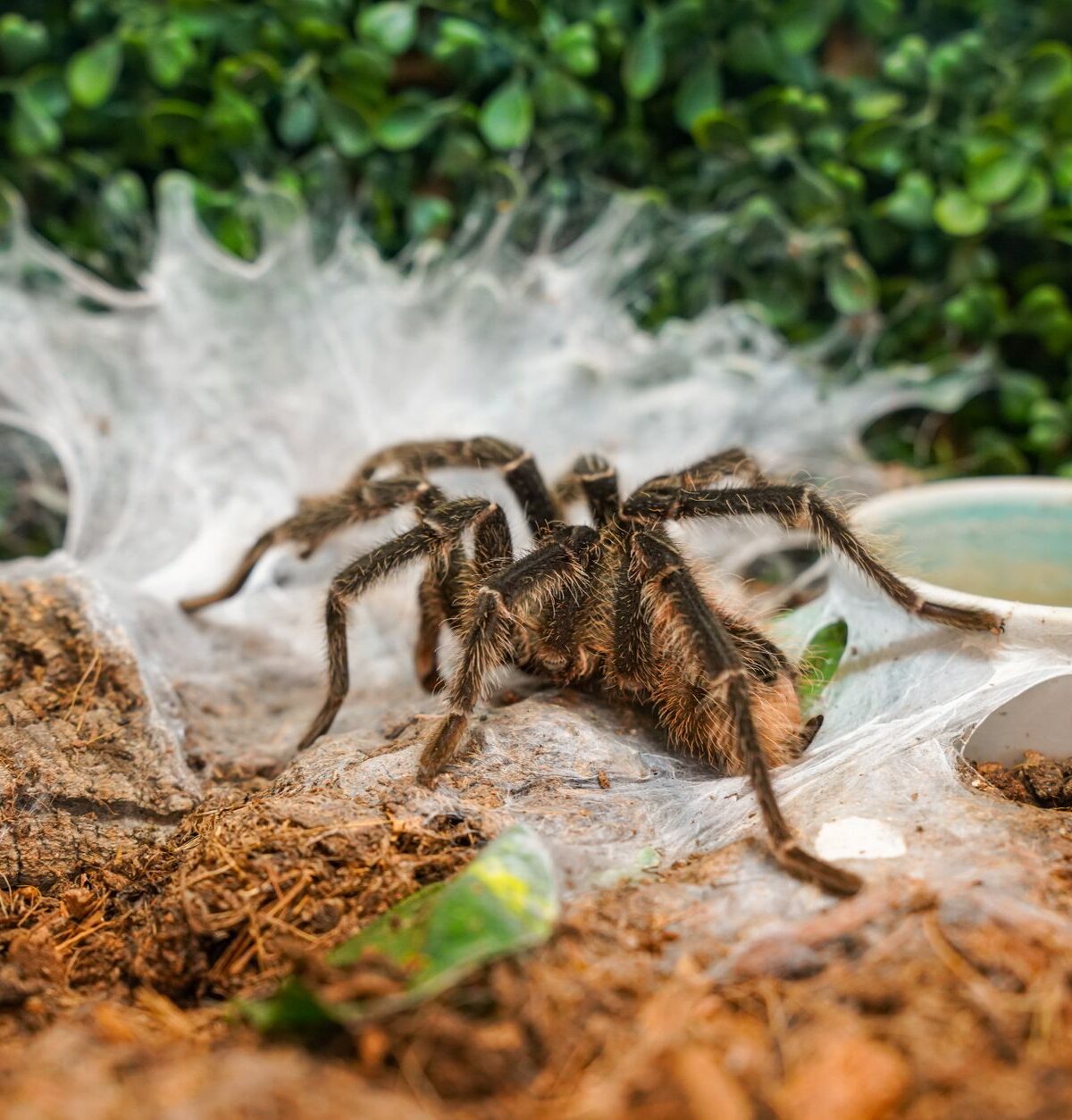
GOLIATH BIRDEATER
Theraphosa blondi
DESCRIPTION
Goliath Birdeater (Theraphosa blondi) is one of the largest spider species in the world, known for its impressive size and formidable appearance. It can have a leg span of up to 30 cm (about 12 inches) and weigh over 170 grams (6 ounces). This species is primarily found in the rainforests of South America, where it exhibits a nocturnal lifestyle, often residing in burrows or under leaf litter.
FUN FACTS
- Goliath Birdeaters can live for several decades, making them one of the longest-lived spider species
- They are also capable of producing a loud hissing sound by rubbing their legs together, which serves as a warning to potential threats.|Despite their name, Goliath Birdeaters rarely eat birds; their diet mainly consists of insects and small mammals
- Their size and appearance can be intimidating, but they are generally not aggressive towards humans unless provoked
QUICK INFO
Lifespan15-25 years in the wild, up to 30 years in captivi
Average Weight150-200 grams
Average Length25-30 cm
Diet TypeCarnivore
Social Structuresolitary, typically live alone except during mating
Activity PatternNocturnal
Breeding SeasonSpring (March-May)
- Habitat
- Goliath Birdeaters inhabit tropical rainforests, often preferring humid environments with plenty of cover. They create burrows in the ground where they can hide from predators and ambush prey.
- Biomes
- Tropical Rainforest
- Native Range
- Goliath Birdeaters are native to the rainforests of northern South America, particularly in countries like Brazil, Suriname, and Guyana.
- Continent
- South America
- Countries
- Brazil, Suriname, Guyana
- Diet
- Goliath Birdeaters primarily feed on insects, but they are also known to consume small vertebrates such as frogs, lizards, and even small birds. Their hunting strategy involves ambushing prey and using their powerful fangs to subdue them.
- Diet Type
- Carnivore
- Favorite Food
- insects, small vertebrates
- Social Structure
- solitary, typically live alone except during mating
- Activity Pattern
- Nocturnal
- Group Size
- 1
- Territorial
- 1
 VU
VU
150-200 grams
Weight
25-30 cm
Length
- Coloration
- dark brown to black with some lighter hairs
- Sexual Dimorphism
- females are generally larger than males
- Lifespan
- 15-25 years in the wild, up to 30 years in captivi
- Gestation Period
- about 60 days
- Offspring per Birth
- 100-200
- Sexual Maturity
- 3-4 years
- Breeding Season
- Spring (March-May)
LC
Least Concern
IUCN Red List Status
- Population Status
- The population status of Goliath Birdeaters is not well-documented, but they are not currently considered endangered.
- Wild Population Estimate
- unknown
- Population Trend
- Stable
- Endangered
- 0
- Threats
- Main threats include habitat destruction due to deforestation and the pet trade. While they are not currently endangered, their populations could be affected by ongoing environmental changes.
- Predators
- Birds, larger mammals, and other predatory animals may prey on Goliath Birdeaters, particularly when they are young or molting.
- Defense Mechanisms
- They can shed urticating hairs from their abdomen to irritate potential threats, and they also have a potent bite.
- Found in Zoos
- Uncommon