


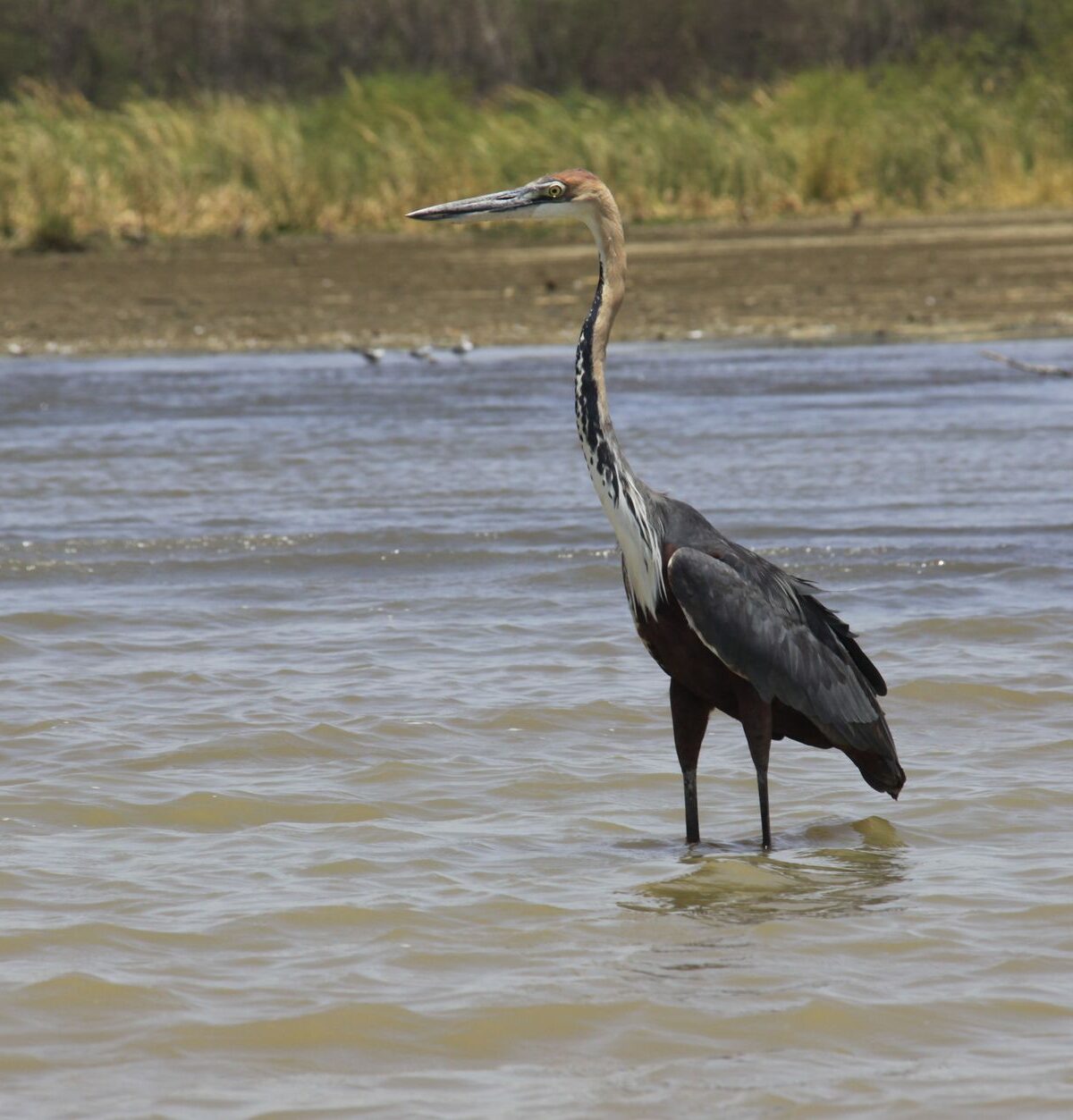
GOLIATH HERON
Ardea goliath
DESCRIPTION
Goliath Heron (Ardea goliath) is commonly known as the Goliath Stork, recognized as the largest heron species in the world. This impressive bird can reach heights of up to 1.5 meters and has a wingspan of approximately 2.3 meters, showcasing a striking combination of blue-gray plumage with a distinctive chestnut-colored neck. Goliath Herons are typically found near large bodies of water, where they exhibit solitary or pair behavior, often standing still for long periods while hunting for fish.
FUN FACTS
- Goliath Herons are known for their impressive hunting skills, often using a technique called 'stalking' where they slowly approach their prey before striking with incredible speed
- They are also remarkable for their vocalizations, which include deep, resonant calls that can be heard over long distances, especially during the breeding season
QUICK INFO
Lifespan15-20 years in the wild
Average Weight4-5 kg
Average Length1.5-1.8 m
Diet TypePiscivore
Social Structuresolitary or in pairs, typically seen alone or with a mate during breeding season
Activity PatternDiurnal
Breeding SeasonVaries by region, typically during the rainy season
- Habitat
- Goliath Herons inhabit wetlands, swamps, and riverine environments, often near large lakes and slow-moving rivers. They prefer areas with abundant vegetation that provide cover and nesting sites.
- Biomes
- Wetlands, Freshwater
- Native Range
- The native range of the Goliath Heron includes sub-Saharan Africa, particularly in countries with extensive wetlands.
- Continent
- Africa
- Countries
- Angola, Botswana, Cameroon, Democratic Republic of the Congo, Gabon, Kenya, Namibia, Nigeria, South Africa, Tanzania, Uganda, Zambia, Zimbabwe
- Diet
- Goliath Herons primarily feed on fish, but they may also consume amphibians and small reptiles. Their hunting technique involves standing motionless in shallow water and striking quickly to catch their prey.
- Diet Type
- Piscivore
- Favorite Food
- fish
- Social Structure
- solitary or in pairs, typically seen alone or with a mate during breeding season
- Activity Pattern
- Diurnal
- Group Size
- 1-2
- Territorial
- 1

4-5 kg
Weight
1.5-1.8 m
Length
- Coloration
- blue-gray body with a chestnut neck and a long, pointed bill
- Sexual Dimorphism
- males and females are similar in appearance, but males are generally larger
- Lifespan
- 15-20 years in the wild
- Offspring per Birth
- 2-4
- Sexual Maturity
- 2-3 years
- Breeding Season
- Varies by region, typically during the rainy season
LC
Least Concern
IUCN Red List Status
- Population Status
- The population of Goliath Herons is currently stable, but they are sensitive to habitat destruction.
- Wild Population Estimate
- 10,000-20,000
- Population Trend
- Stable
- Endangered
- 0
- Threats
- Main threats include habitat loss due to wetland drainage and pollution. Additionally, human disturbance can impact their breeding success.
- Predators
- Nests may be vulnerable to predation by larger birds of prey and mammals, but adult Goliath Herons have few natural predators due to their size.
- Defense Mechanisms
- Goliath Herons rely on their size and camouflage to avoid predators, often remaining still and blending into their surroundings.
- Found in Zoos
- Uncommon