


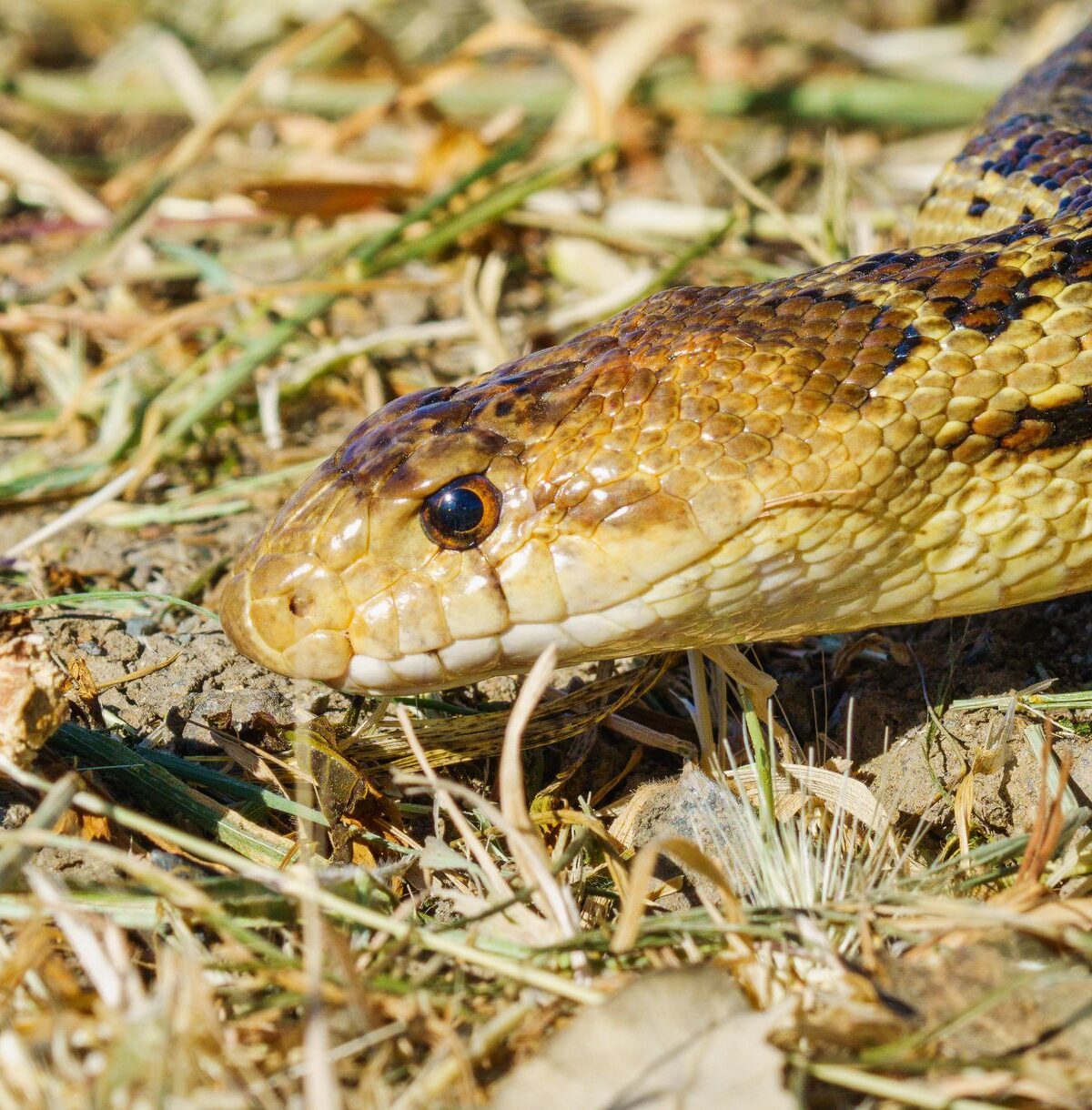
GOPHER/PINE SNAKE
DESCRIPTION
Gopher/Pine Snake, also known as the Gopher Snake and Pine Snake, is a non-venomous constrictor found primarily in North America. This species exhibits a robust body with a distinctive pattern of dark brown or black blotches on a lighter background, which provides excellent camouflage in its natural habitat. Gopher/Pine Snakes are known for their burrowing behavior, often inhabiting sandy or loose soils where they can create extensive burrows and tunnels.
FUN FACTS
- Gopher/Pine Snakes are known for their impressive ability to mimic the behavior of rattlesnakes, which helps deter potential predators
- They can also consume prey larger than their own head by dislocating their jaws, a fascinating adaptation that allows them to take advantage of various food sources.|These snakes play a crucial role in their ecosystem by controlling populations of small mammals and birds, which can help maintain a balanced environment
- Their burrowing habits also contribute to soil aeration and nutrient cycling in their habitats
QUICK INFO
Lifespan10-15 years in the wild, up to 20 years in captivi
Average Weight1.5-3 kg
Average Length1.2-2.4 m
Diet TypeCarnivore
Social Structuresolitary, typically found alone except during mating season
Activity PatternDiurnal
Breeding SeasonSpring (April-June)
- Habitat
- These snakes prefer open habitats such as grasslands, scrublands, and pine forests. They are often found in areas with loose, sandy soils that facilitate burrowing.
- Biomes
- Grassland, Forest
- Native Range
- Gopher/Pine Snakes are native to the United States and parts of Mexico, particularly in the southeastern and southwestern regions.
- Continent
- North America
- Countries
- United States, Mexico
- Diet
- Gopher/Pine Snakes primarily feed on small mammals, birds, and occasionally reptiles. They are known to hunt by ambushing their prey or actively searching for it.
- Diet Type
- Carnivore
- Favorite Food
- small mammals, birds
- Social Structure
- solitary, typically found alone except during mating season
- Activity Pattern
- Diurnal
- Group Size
- 1
- Territorial
- 0
 CR
CR
1.5-3 kg
Weight
1.2-2.4 m
Length
- Coloration
- light tan or yellow background with dark brown or black blotches
- Sexual Dimorphism
- males are generally smaller than females
- Lifespan
- 10-15 years in the wild, up to 20 years in captivi
- Gestation Period
- 60-90 days
- Offspring per Birth
- 5-20
- Sexual Maturity
- 2-3 years
- Breeding Season
- Spring (April-June)
LC
Least Concern
IUCN Red List Status
- Population Status
- The population is currently stable, but habitat loss poses a potential threat.
- Wild Population Estimate
- unknown
- Population Trend
- Stable
- Endangered
- 0
- Threats
- Main threats include habitat destruction due to urban development and agriculture. Additionally, they are sometimes killed out of fear or misunderstanding.
- Predators
- hawks, owls, foxes, coyotes, and larger snakes
- Defense Mechanisms
- When threatened, Gopher/Pine Snakes may hiss loudly, flatten their bodies, and mimic the rattling sound of a rattlesnake.
- Found in Zoos
- Common