


GRASS SNAKE
Natrix natrix
DESCRIPTION
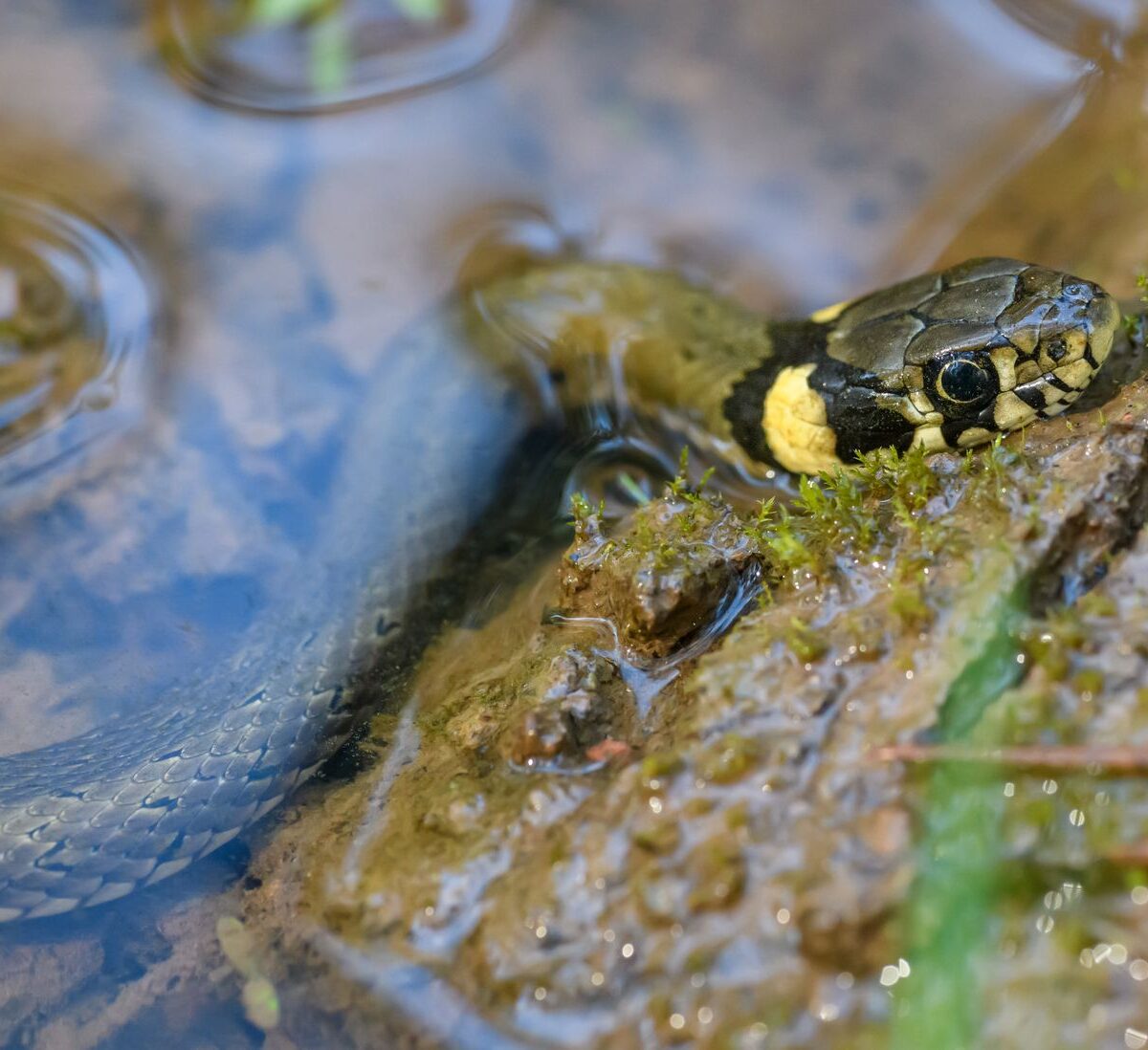
Grass Snake (Natrix natrix) is commonly known as the European Grass Snake and is characterized by its elongated body and distinctive coloration, which can range from green to brown with a yellow or white collar behind the head. This non-venomous snake is often found near water bodies, as it is an excellent swimmer and feeds primarily on amphibians. Grass Snakes are known for their secretive behavior, often hiding in dense vegetation or burrows, and they can be quite agile when threatened, sometimes playing dead as a defense mechanism.
FUN FACTS
- Grass Snakes are excellent swimmers and can often be seen gliding through water in search of prey
- They are also known for their unique ability to hold their breath underwater for extended periods, allowing them to evade predators and hunt effectively.| In some cultures, Grass Snakes are considered symbols of fertility and are associated with water deities, reflecting their close relationship with aquatic environments
QUICK INFO
Lifespan10-15 years in the wild, up to 20 years in captivi
Average Weight0.5-1.5 kg
Average Length0.6-1.2 m
Diet TypeCarnivore
Social Structuresolitary, occasionally seen in small groups during basking
Activity PatternDiurnal
Breeding SeasonSpring (April-June)
- Habitat
- Grass Snakes inhabit a variety of environments, including wetlands, grasslands, and woodlands, often near water sources. They prefer areas with abundant cover for hunting and basking.
- Biomes
- Temperate Forest, Wetland, Grassland
- Native Range
- Grass Snakes are native to Europe and parts of Asia, ranging from the British Isles to the western regions of Russia.
- Continent
- Europe, Asia
- Countries
- United Kingdom, France, Germany, Italy, Poland, Russia
- Diet
- Grass Snakes primarily feed on amphibians, particularly frogs and toads, but they may also consume small fish and occasionally small mammals.
- Diet Type
- Carnivore
- Favorite Food
- frogs, toads
- Social Structure
- solitary, occasionally seen in small groups during basking
- Activity Pattern
- Diurnal
- Group Size
- 1-5
- Territorial
- 0
 VU
VU

 LC
LC
0.5-1.5 kg
Weight
0.6-1.2 m
Length
- Coloration
- typically green or brown with a lighter belly and a distinctive yellow or white collar
- Sexual Dimorphism
- males are generally smaller and have a more vibrant coloration than females
- Lifespan
- 10-15 years in the wild, up to 20 years in captivi
- Offspring per Birth
- 10-30
- Sexual Maturity
- 2-3 years
- Breeding Season
- Spring (April-June)
LC
Least Concern
IUCN Red List Status
- Population Status
- Grass Snake populations are generally stable, but local declines have been noted in some areas due to habitat loss.
- Wild Population Estimate
- unknown
- Population Trend
- Stable
- Endangered
- 0
- Threats
- Main threats to Grass Snakes include habitat destruction, pollution, and road mortality. They are also sometimes persecuted due to misconceptions about their danger to humans.
- Predators
- birds of prey, foxes, larger snakes, domestic cats
- Defense Mechanisms
- Grass Snakes can play dead when threatened, and they may also release a foul-smelling substance to deter predators.
- Found in Zoos
- Common