


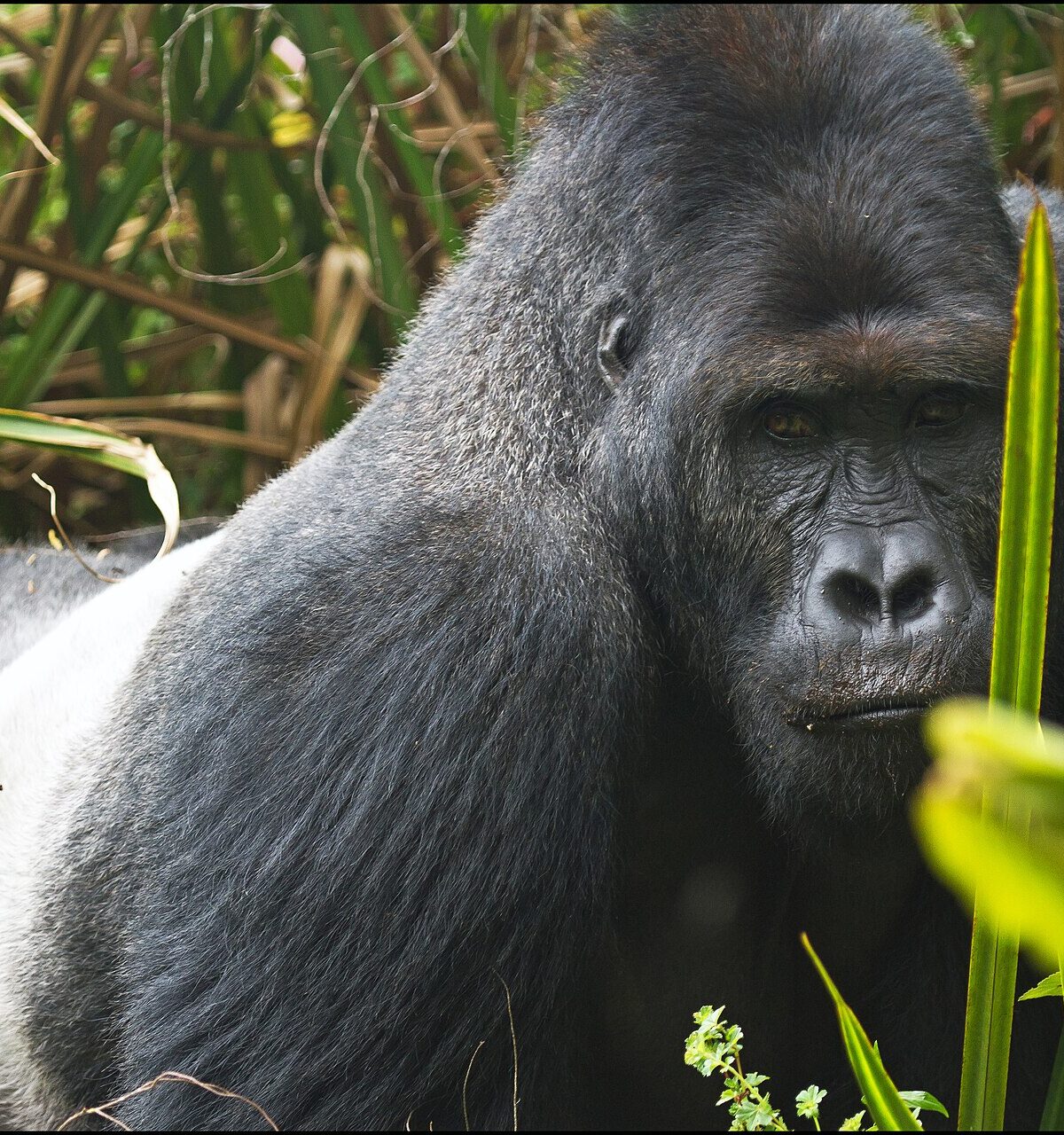
GRAUER'S GORILLA
Gorilla beringei graueri
DESCRIPTION
Grauer's Gorilla (Gorilla beringei graueri) is a subspecies of the Eastern Gorilla and is the largest living primate. They have a robust build with a broad chest, long arms, and a distinctive silverback in mature males. These gorillas are primarily terrestrial and are known for their gentle nature, often forming strong social bonds within their groups.
FUN FACTS
- Grauer's Gorillas are known for their intelligence and ability to use tools, such as using sticks to extract termites from mounds
- | They have complex social structures and can form strong emotional bonds, often seen comforting each other in times of stress
QUICK INFO
Lifespan35-40 years in the wild, up to 50 in captivity
Average Weight140-220 kg
Average Length1.5-1.8 m
Diet TypeHerbivore
Social Structuregroup — they typically live in family groups led by a dominant silverback male.
Activity PatternDiurnal
Breeding Seasonyear-round
- Habitat
- Grauer's Gorillas inhabit the dense tropical rainforests and mountainous regions of the eastern Democratic Republic of the Congo. They prefer areas with abundant vegetation that provide both food and shelter.
- Biomes
- Tropical Rainforest, Montane Forest
- Native Range
- They are native to the eastern Democratic Republic of the Congo, particularly in the mountainous regions.
- Continent
- Africa
- Countries
- Democratic Republic of the Congo
- Diet
- Grauer's Gorillas are primarily herbivorous, feeding on a variety of plant materials including leaves, stems, and fruits. They play a crucial role in their ecosystem by aiding in seed dispersal.
- Diet Type
- Herbivore
- Favorite Food
- leaves, fruits, stems
- Social Structure
- group — they typically live in family groups led by a dominant silverback male.
- Activity Pattern
- Diurnal
- Group Size
- 5-30
- Territorial
- 1
140-220 kg
Weight
1.5-1.8 m
Length
1.5 m at shoulder
Height (Shoulder)
- Coloration
- dark brown to black fur with a lighter silver back in mature males
- Sexual Dimorphism
- males are significantly larger than females
- Lifespan
- 35-40 years in the wild, up to 50 in captivity
- Gestation Period
- about 8.5 months
- Offspring per Birth
- 1
- Sexual Maturity
- around 10-12 years
- Breeding Season
- year-round
CR
Critically Endangered
IUCN Red List Status
- Population Status
- Grauer's Gorilla populations are declining due to habitat loss and poaching.
- Wild Population Estimate
- 3,800-5,000
- Population Trend
- Decreasing
- Endangered
- 1
- Threats
- The main threats to Grauer's Gorillas include habitat destruction due to logging and agriculture, as well as poaching for bushmeat. The ongoing civil unrest in the region further exacerbates these threats.
- Conservation Program
- Various conservation programs are in place, including habitat protection and anti-poaching initiatives.
- Predators
- Humans are the primary threat, but young gorillas may also be vulnerable to large carnivores such as leopards.
- Defense Mechanisms
- They rely on their size and strength for defense, and mature males will display aggressive behaviors to protect their group.
- Found in Zoos
- Uncommon