


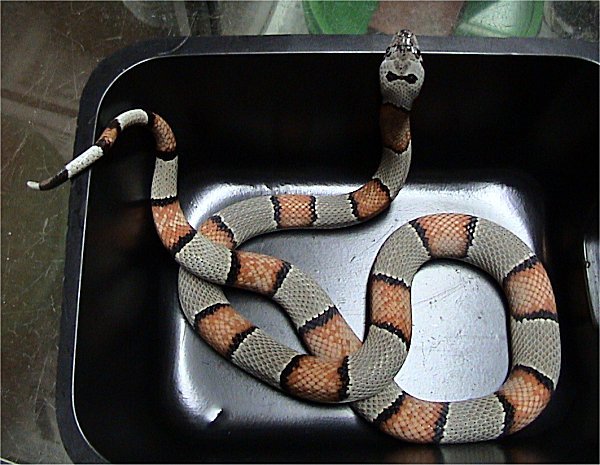
GRAY-BANDED KING SNAKE
Lampropeltis alterna
DESCRIPTION
Gray-Banded King Snake (Lampropeltis alterna) is a strikingly beautiful species known for its distinctive gray and black banding, often with orange or yellow accents. This non-venomous snake is primarily found in the rocky, mountainous regions of the southwestern United States and northern Mexico. It is a secretive and primarily nocturnal snake, often hiding under rocks and in crevices, making it a challenge to observe in the wild.
FUN FACTS
- Gray-Banded King Snakes are known for their impressive ability to consume other snakes, including venomous species like rattlesnakes, without suffering harm
- This adaptability makes them unique among many snake species
- | They are popular in the pet trade due to their striking appearance and relatively docile nature, making them a favorite among reptile enthusiasts
- Their varied color morphs also attract collectors
QUICK INFO
Lifespan10-15 years in the wild, up to 20 years in captivi
Average Weight0.5-1.5 kg
Average Length1.2-1.5 m
Diet TypeCarnivore
Social Structuresolitary, typically found alone except during mating season
Activity PatternNocturnal
Breeding SeasonSpring (April-June)
- Habitat
- This species inhabits rocky hillsides, canyons, and grasslands, often favoring areas with abundant cover. They are typically found at elevations ranging from 1,200 to 2,400 meters.
- Biomes
- Temperate Forest, Grassland, Desert
- Native Range
- Gray-Banded King Snakes are native to the southwestern United States, particularly in Texas, New Mexico, and Arizona, extending into northern Mexico.
- Continent
- North America
- Countries
- United States, Mexico
- Diet
- Gray-Banded King Snakes primarily feed on small mammals, birds, and other reptiles, including other snakes. They are known for their ability to consume venomous snakes, showcasing their adaptability and predatory skills.
- Diet Type
- Carnivore
- Favorite Food
- small mammals, birds, other reptiles
- Social Structure
- solitary, typically found alone except during mating season
- Activity Pattern
- Nocturnal
- Group Size
- 1
- Territorial
- 0
 VU
VU

0.5-1.5 kg
Weight
1.2-1.5 m
Length
- Coloration
- Gray with black bands and occasional orange or yellow highlights
- Sexual Dimorphism
- Males are generally smaller and have longer tails than females.
- Lifespan
- 10-15 years in the wild, up to 20 years in captivi
- Offspring per Birth
- 3-12
- Sexual Maturity
- 2-3 years
- Breeding Season
- Spring (April-June)
LC
Least Concern
IUCN Red List Status
- Population Status
- The population is currently stable, but habitat loss poses a potential threat.
- Wild Population Estimate
- Unknown
- Population Trend
- Stable
- Endangered
- 0
- Threats
- Main threats include habitat destruction due to urban development and agriculture. Additionally, they face risks from road mortality and illegal collection for the pet trade.
- Predators
- Birds of prey, larger snakes, and mammals such as raccoons and foxes.
- Defense Mechanisms
- When threatened, Gray-Banded King Snakes may mimic the behavior of venomous snakes, such as rattlesnakes, by coiling and vibrating their tails.
- Found in Zoos
- Uncommon