


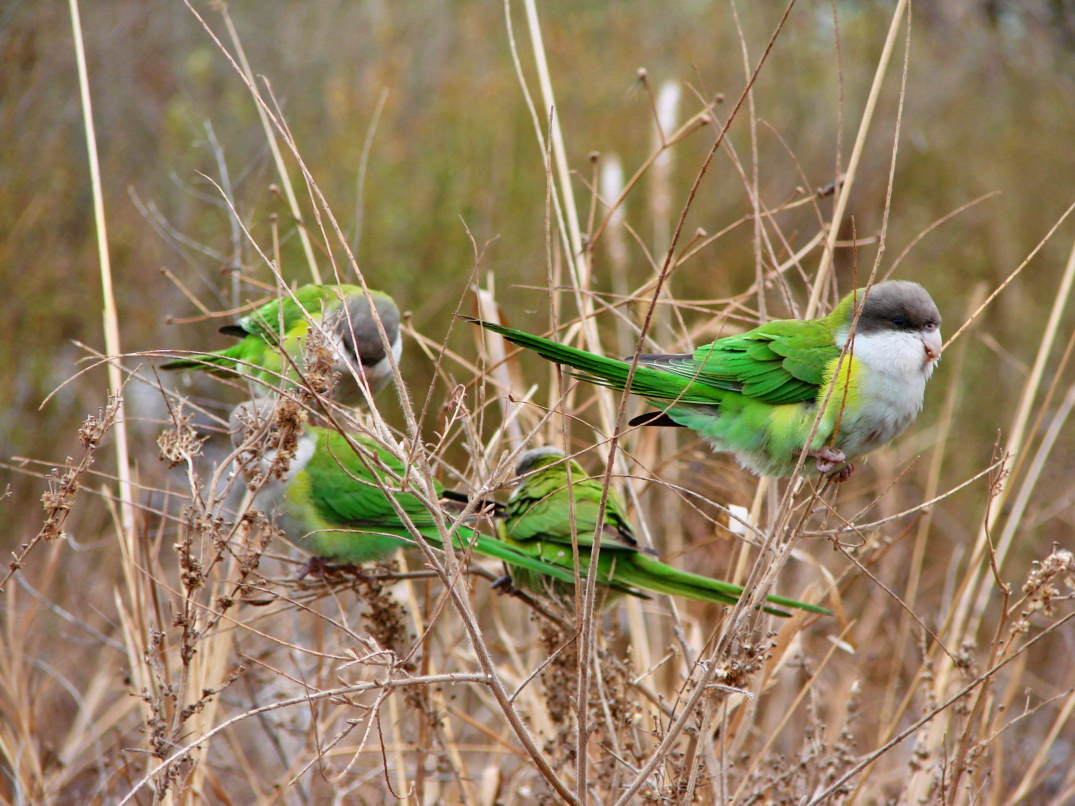
GRAY-HOODED PARAKEET
Psittacara caniceps
DESCRIPTION
Gray-hooded Parakeet (Psittacara caniceps) is a medium-sized parakeet known for its distinctive gray head and vibrant green body. This species exhibits a playful and social behavior, often seen in flocks, engaging in acrobatic displays and vocalizations. They inhabit a variety of environments, including forests and urban areas, showcasing their adaptability to different ecological niches.
FUN FACTS
- Gray-hooded Parakeets are known for their intelligence and ability to mimic sounds, including human speech, which makes them popular pets
- They also exhibit strong social bonds and can often be seen grooming each other in their natural habitat, reinforcing their social structure
QUICK INFO
Lifespan15-20 years in the wild, up to 30 years in captivi
Average Weight100-150 g
Average Length25-30 cm
Diet TypeHerbivore
Social StructureThey are typically found in groups, which enhances their social interactions and foraging efficiency.
Activity PatternDiurnal
Breeding SeasonSpring to early summer
- Habitat
- Gray-hooded Parakeets thrive in subtropical and tropical forests, as well as in urban areas where they can find food and nesting sites. They prefer areas with abundant vegetation for foraging and nesting.
- Biomes
- Tropical Rainforest, Subtropical Forest
- Native Range
- This species is native to the eastern slopes of the Andes in South America.
- Continent
- South America
- Countries
- Colombia, Ecuador, Peru
- Diet
- They primarily feed on seeds, fruits, and nuts, foraging in trees and shrubs. Their diet can vary based on seasonal availability of food sources.
- Diet Type
- Herbivore
- Favorite Food
- seeds, fruits, nuts
- Social Structure
- They are typically found in groups, which enhances their social interactions and foraging efficiency.
- Activity Pattern
- Diurnal
- Group Size
- 5-30
- Territorial
- 0
 LC
LC
100-150 g
Weight
25-30 cm
Length
- Coloration
- They have a green body with a gray head and a yellowish-orange patch on the wing.
- Sexual Dimorphism
- Males and females are similar in appearance, making it difficult to distinguish between the sexes.
- Lifespan
- 15-20 years in the wild, up to 30 years in captivi
- Offspring per Birth
- 3-5
- Sexual Maturity
- 2-3 years
- Breeding Season
- Spring to early summer
LC
Least Concern
IUCN Red List Status
- Population Status
- The population is currently stable, but habitat loss poses a potential threat.
- Wild Population Estimate
- 50,000-100,000
- Population Trend
- Stable
- Endangered
- 0
- Threats
- Main threats include habitat destruction due to deforestation and the pet trade. These factors can lead to localized declines in their populations.
- Predators
- Natural predators include birds of prey and snakes, which can pose a threat to their nests and young.
- Defense Mechanisms
- They use vocalizations to alert others of danger and can also engage in evasive flight maneuvers.
- Compatible Animals
- Other parakeets, small parrots
- Found in Zoos
- Uncommon