


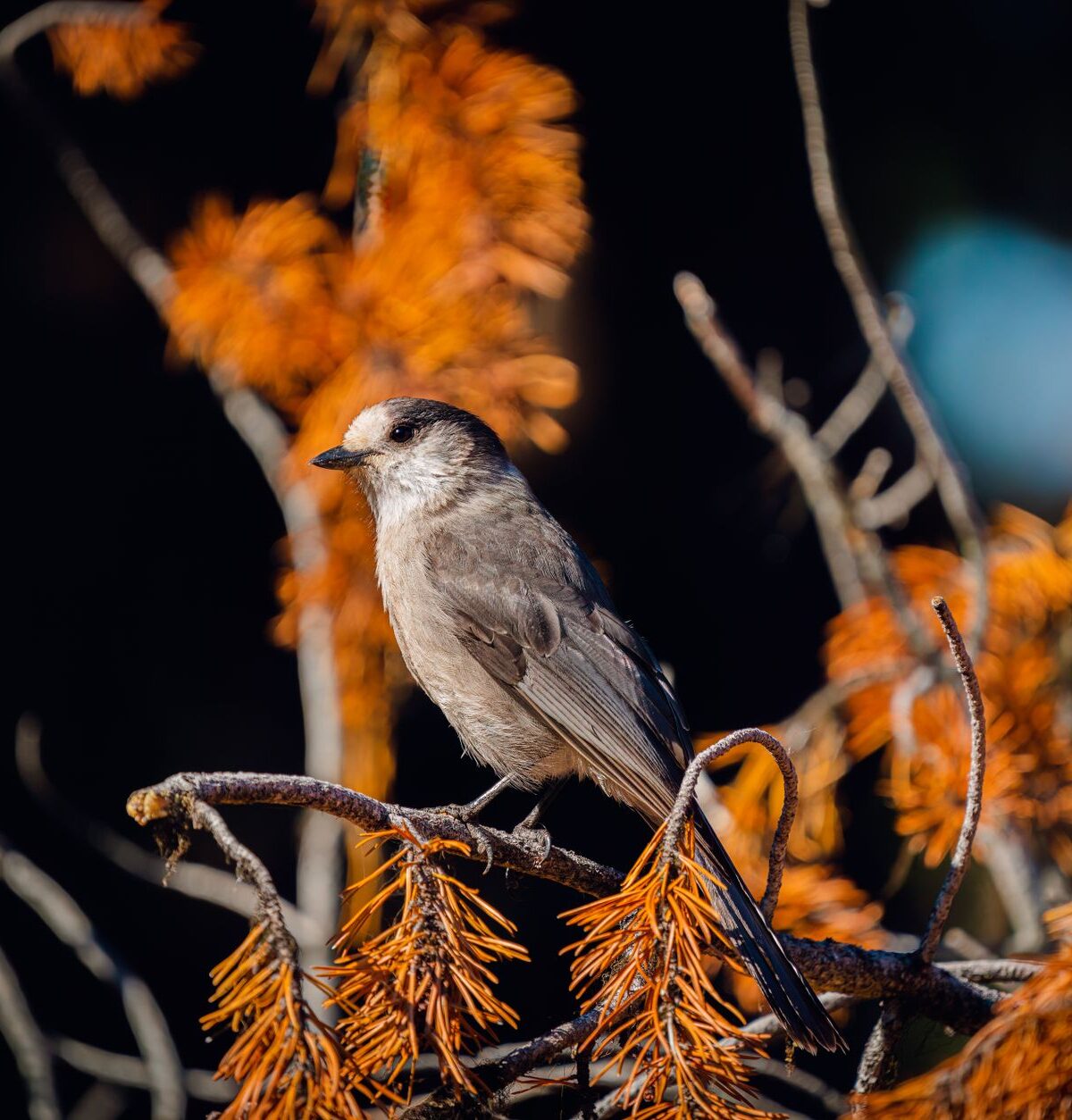
GRAY JAY
Perisoreus canadensis
DESCRIPTION
Gray Jay (Perisoreus canadensis) is commonly known as the Canada Jay or Whiskey Jack. This medium-sized bird features a soft gray plumage with a white face and dark crown, making it easily recognizable in its forested habitat. Known for its curious and friendly behavior, the Gray Jay often approaches humans and is known to cache food for later consumption, showcasing its intelligence and adaptability in various ecological settings.
FUN FACTS
- Gray Jays are known for their remarkable memory, which allows them to locate food caches months after hiding them
- They can store thousands of food items in a single season, showcasing their impressive foraging skills
- | These birds have a unique adaptation that allows them to survive in cold temperatures; they can lower their body temperature at night to conserve energy, which is crucial for their survival in harsh winter conditions
QUICK INFO
Lifespan5-10 years in the wild
Average Weight70-100 g
Average Length24-30 cm
Diet TypeOmnivore
Social Structurepair, family groups — they often form small family units that work together to raise young and forage.
Activity PatternDiurnal
Breeding SeasonSpring (April-June)
- Habitat
- Gray Jays inhabit coniferous forests, particularly in mountainous regions and boreal forests. They prefer areas with abundant trees for nesting and foraging.
- Biomes
- Boreal Forest, Temperate Forest
- Native Range
- Gray Jays are found across Canada and into the northern United States, particularly in the Rocky Mountains and the Pacific Northwest.
- Continent
- North America
- Countries
- Canada, United States
- Diet
- Gray Jays primarily feed on insects, berries, and small mammals, often storing food in tree crevices for later use. They are opportunistic feeders and will also scavenge from human food sources.
- Diet Type
- Omnivore
- Favorite Food
- insects, berries
- Social Structure
- pair, family groups — they often form small family units that work together to raise young and forage.
- Activity Pattern
- Diurnal
- Group Size
- 2-10
- Territorial
- 0
 LC
LC
 LC
LC
70-100 g
Weight
24-30 cm
Length
- Coloration
- soft gray plumage with a white face and dark crown
- Lifespan
- 5-10 years in the wild
- Offspring per Birth
- 2-5
- Sexual Maturity
- 1 year
- Breeding Season
- Spring (April-June)
LC
Least Concern
IUCN Red List Status
- Population Status
- The population of Gray Jays is currently stable, though they are sensitive to habitat changes.
- Wild Population Estimate
- 100,000-1,000,000
- Population Trend
- Stable
- Endangered
- 0
- Threats
- Main threats include habitat loss due to logging and climate change, which can affect their food sources and nesting sites. They are also vulnerable to changes in forest composition.
- Predators
- Red-tailed Hawks, Northern Goshawks, various mammals such as foxes and raccoons.
- Defense Mechanisms
- Gray Jays will often mob potential predators and use their agility to evade capture.
- Found in Zoos
- Uncommon